Willingness to Learn Your Way to a Better Job
Show your willingness to learn and land a great job without a degree. Get actionable tips for your resume, interview, and portfolio to prove your skills.
You’re probably looking at a job post right now that says something like “must have a willingness to learn.” And you’re thinking, sure, I’ve learned plenty. I learned on the job, in a bootcamp, in the military, in a shop, on night shifts, through YouTube, through messing up and fixing it. But how do you prove that in a way a recruiter can see?
That’s the whole game for STARs, people skilled through alternative routes. You don’t need better buzzwords. You need receipts. Hiring teams say they want adaptable people, but a lot of them still don’t know how to spot that trait unless it comes wrapped in a degree.
The good news is that willingness to learn is not fluff. It’s something you can show on a resume, in a portfolio, and in an interview with real evidence. If you know how to package it, it becomes one of the strongest things you bring to the table.
Table of Contents
- More Than a Buzzword Willingness to Learn Is Your Superpower
- What Employers Mean by Willingness to Learn
- Why This Skill Is Your Golden Ticket in a No-Degree World
- How to Show Willingness to Learn on Paper and Pixels
- Nailing the Interview with Your Learning Stories
- Keep Learning Keep Earning
More Than a Buzzword Willingness to Learn Is Your Superpower
You’ve seen the phrase a hundred times. It sits in job ads right next to “team player” and “good communication skills,” which makes it easy to ignore. That’s a mistake.
For non-degree candidates, willingness to learn is often the thing that closes the gap between “interesting background” and “let’s interview them.” Employers know they need people who can pick up new systems, adjust fast, and keep going when the playbook changes.
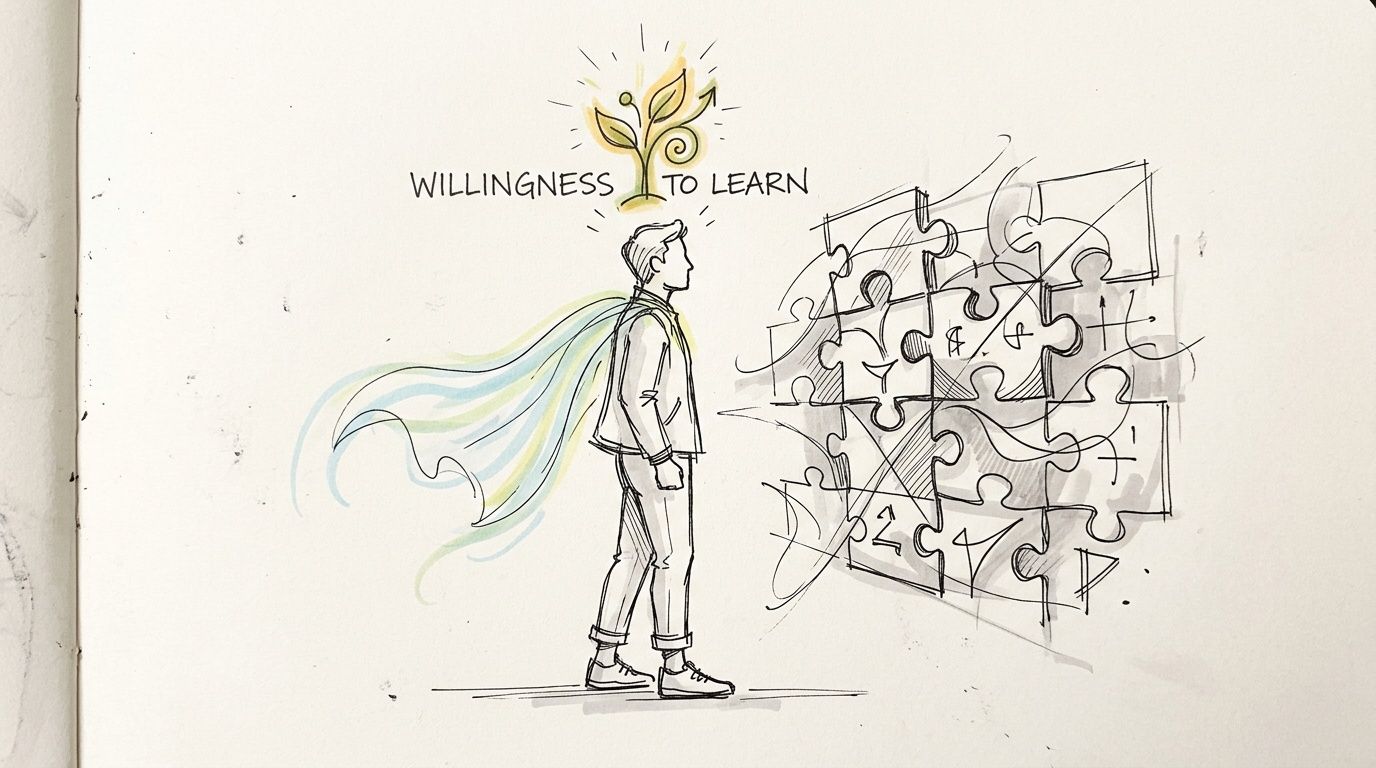
There’s also a real disconnect here. A 2024 employer survey on high-impact practices and STAR hiring found that 72% of U.S. employers reported hiring more STARs after adopting degree-optional policies, but only 38% had structured metrics to track willingness to learn. That tells you two things. First, employers value the trait. Second, many of them are still guessing.
Why that gap matters
If a hiring manager can’t measure willingness to learn, they fall back on shortcuts. Brand-name employers. Fancy school names. Job titles that sound familiar. That’s where a lot of strong candidates get filtered out even when they’ve done the actual work.
Your job is to make the invisible visible.
Practical rule: Don’t claim you’re a quick learner unless you can point to what you learned, why you learned it, and where you used it.
That means turning vague statements into proof. “Self-starter” doesn’t help much. “Completed CompTIA training, built a home lab, and documented troubleshooting steps” helps a lot more.
What actually works
A strong learning signal usually includes a few simple ingredients:
- A trigger: You noticed a gap, a new tool, or a changing requirement.
- A response: You took a course, asked for stretch work, practiced, or built something.
- A visible output: A project, certification, process improvement, portfolio update, or better result.
- A next step: You kept building instead of stopping after one lesson.
If you need help building better study habits so your effort turns into visible progress, this guide on how to learn smarter with Maeve is worth a look. And if you want more practical job-search advice built around skills-first hiring, the HiredBySkill blog is a useful place to browse.
What Employers Mean by Willingness to Learn
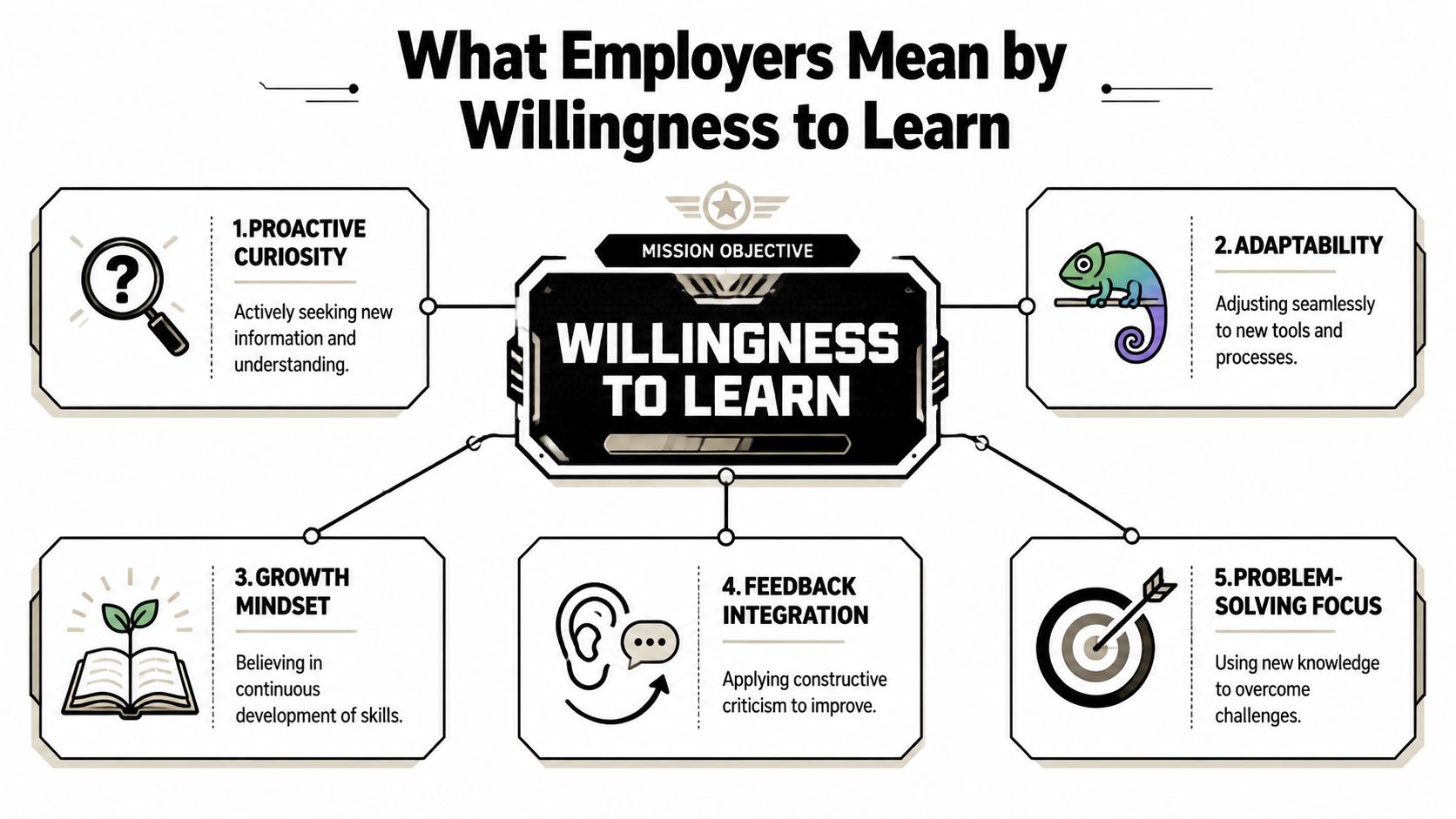
When employers say they want willingness to learn, they usually don’t mean “likes taking classes.” They mean something more useful. They want someone who can walk into a changing job and not freeze.
Think about a mechanic moving from traditional engines to hybrids. Or a gamer switching to a new engine, new controls, and a new map. The point isn’t whether they’ve seen the exact same setup before. The point is whether they can learn the pattern fast enough to become effective.
The five behaviors behind the phrase
Most hiring managers are looking for a mix of these:
Curiosity in action
You ask useful questions, look things up, test ideas, and don’t wait around for perfect instructions.Adaptability under pressure
A process changes. A customer asks for something new. A tool breaks. You adjust instead of spiraling.Feedback that gets used
Some candidates say they’re coachable. Better candidates can name a piece of feedback they got and what changed after that.Pattern recognition
You start noticing what repeats, what goes wrong, and what works. That’s how people get faster and more reliable.Problem-solving with new information
Learning matters because it leads to better decisions on the job.
Scientific research on statistical learning across the lifespan backs up something I wish more candidates understood. Your brain is built to find patterns and learn from them from infancy through old age. In plain English, your ability to learn isn’t reserved for people with formal credentials.
What this means for STARs
That matters if you came through a bootcamp, an apprenticeship, military service, self-study, or hands-on work. Your route may look different, but the underlying ability is the same. You learned by exposure, repetition, correction, and application. That counts.
Employers aren’t hiring your transcript. They’re hiring your ability to get useful faster.
A lot of candidates undersell this because they think learning only “counts” if it happened in a classroom. That’s backward. If you taught yourself Git, figured out a new POS system in a week, cross-trained into inventory, or picked up a new welding method from a lead tech, you already have proof.
A simple way to describe it
If someone asks what willingness to learn means, use language like this:
“I pick up new tools quickly, ask good questions early, and turn feedback into better work.”
That sentence works because it describes behavior, not personality. If you want help identifying where that style fits best, a career path quiz for skills-first roles can help you narrow your options.
Why This Skill Is Your Golden Ticket in a No-Degree World
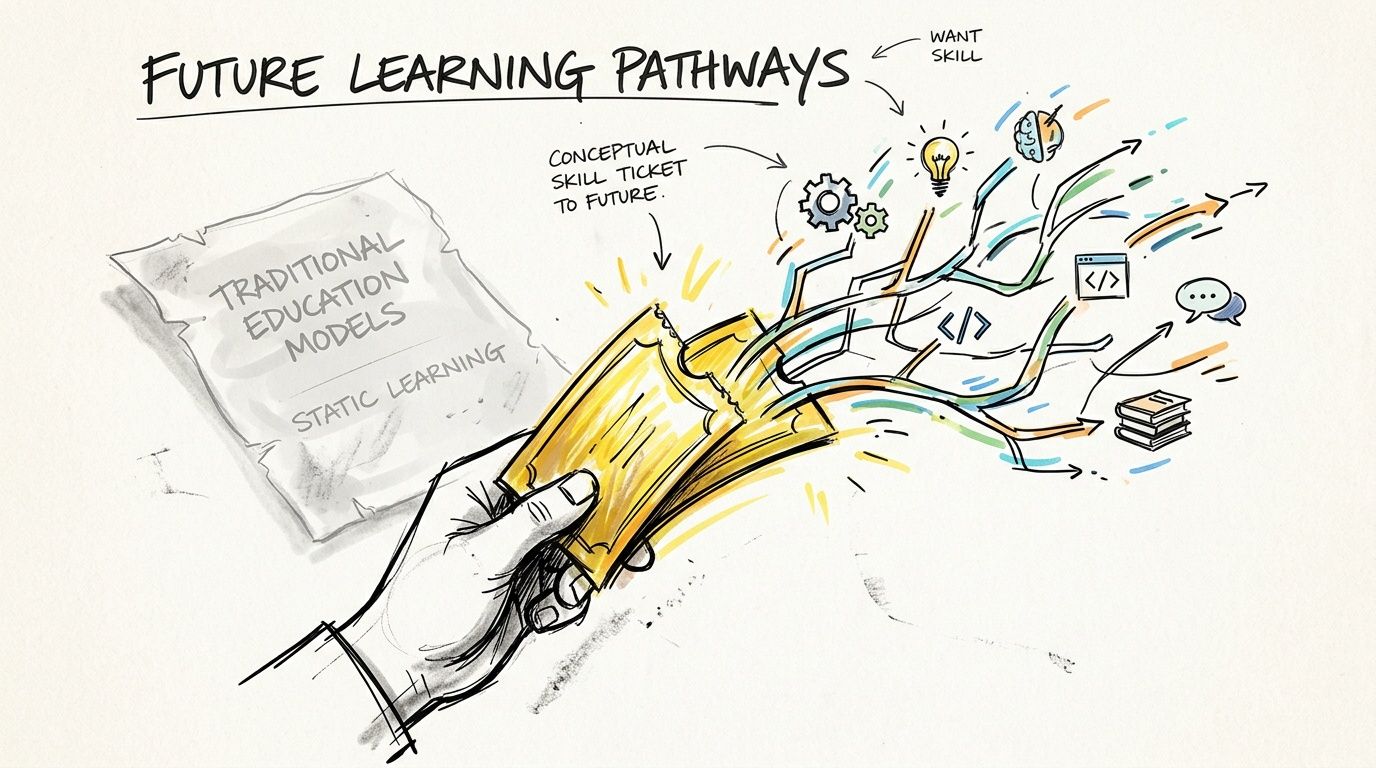
A degree can signal persistence. It can signal baseline knowledge. What it does not automatically signal is that someone can keep up when the software changes, the process shifts, or the role expands.
That’s why willingness to learn carries so much weight in degree-optional hiring. It tells employers something forward-looking. Not just what you know now, but what you’re likely to become useful at next.
Why employers bet on learners
In real workplaces, jobs drift. Support roles add light data work. Warehouse roles pick up new software. Tech jobs split into new specialties. Supervisors want people who won’t need a meltdown every time a tool gets replaced.
That’s why I tell non-degree candidates to stop apologizing for not having a traditional path and start emphasizing learning velocity. You’ve already practiced learning in the wild, where stakes are real and feedback is immediate.
A useful example comes from analytical skills. In a Harvard Medical School article on building confidence in statistical analysis, Brian Healy says learning the fundamentals of statistical analysis improves the quality of your work. The same piece notes a Bureau of Labor Statistics projection of 34% job growth for statisticians by 2024. The exact job title isn’t the point for most STARs. The point is that data literacy, pattern recognition, and analytical confidence matter in more jobs than people think.
What this looks like on the ground
A few examples:
- In tech: The candidate who can learn a new framework is often more valuable than the one who only knows one stack well.
- In trades: The worker who can cross-train on new equipment becomes harder to replace.
- In healthcare support or logistics: The person who learns systems, documentation rules, and workflow changes quickly becomes the one managers trust.
Field note: Independence grows when you understand enough to evaluate information for yourself, not just follow steps.
That’s one reason willingness to learn often turns into more responsibility. Once a manager sees that you can absorb new material without constant hand-holding, they start giving you better work.
What doesn’t work
There are two common mistakes here.
First, acting like enthusiasm alone is enough. “I’m eager to learn” is nice, but it’s weak without evidence.
Second, collecting random courses that don’t connect to your target role. Ten unrelated badges won’t beat one clear skill story.
If you’re trying to map learning into pay potential, this no-degree salary guide can help you focus on roles where your next skill move matters.
How to Show Willingness to Learn on Paper and Pixels
Most candidates bury their best evidence. They stick “fast learner” in a summary, then spend the rest of the resume listing duties. That’s backwards.
Recruiters need to see learning in motion. New tools. Recent projects. Certifications. Version updates. Process changes you handled. That’s what turns willingness to learn from a claim into a pattern.
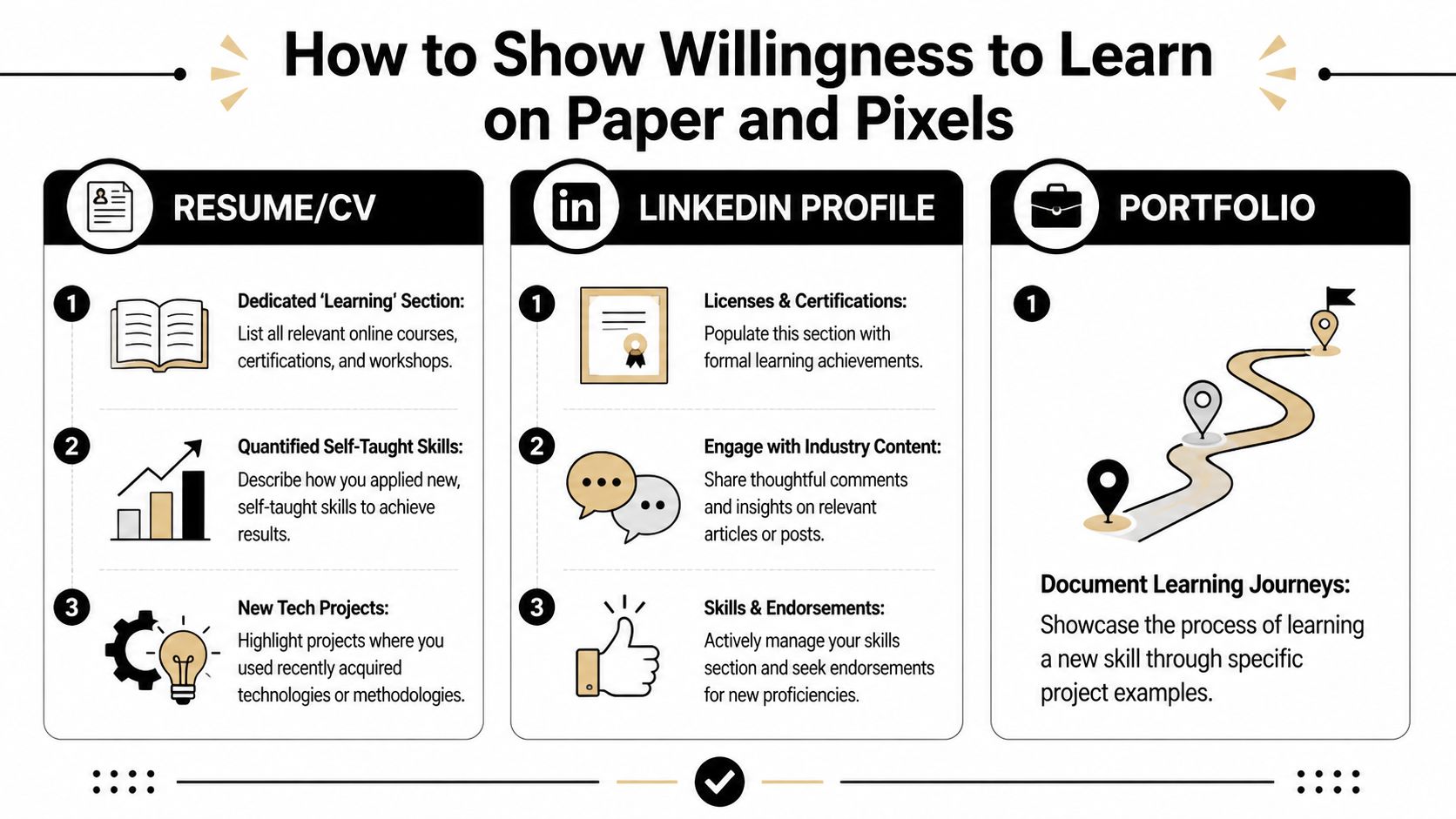
A good reason to do this comes from 2025 labor-market analytics discussed here, which say STARs who actively update their profiles with new skills and project milestones see up to 2.1 times more recruiter outreach than peers with similar experience but static profiles. Profiles that move get noticed. Profiles that sit there like abandoned garages don’t.
Resume bullets that actually prove growth
Weak bullet:
- Responsible for troubleshooting customer issues
Better bullets:
- Learned a new ticketing workflow and used it to resolve customer issues across chat and email support
- Cross-trained on inventory and front-desk systems to cover peak shifts and reduce handoff delays
- Completed Google Sheets training and built a cleaner tracking process for daily team updates
See the difference? The second version shows movement.
Use bullets like these:
- Learned and applied: “Learned [tool/process] and used it to [task or project].”
- Cross-trained into: “Cross-trained into [area] to support [team need or business need].”
- Built while learning: “Built [project/lab/workflow] while developing skills in [tool/language/platform].”
- Improved through feedback: “Revised [project/process] after manager feedback and delivered a cleaner final version.”
LinkedIn and portfolio fixes that matter
Your profile should show recency. Not just what you did two years ago.
Add these:
- Recent learning section with certifications, workshops, or short courses that match your target role
- Project updates that explain what changed between version one and version two
- Skill stack cleanup so your top listed skills match the work you want now
- Featured content such as GitHub repos, a simple Notion portfolio, a photo set of completed trade work, or a short project write-up
Here’s a useful walkthrough before you start rewriting things:
What to include by background
Bootcamp grads should show iteration. Don’t just post the final app. Show commit history, README notes, bug fixes, and what you changed after feedback.
Veterans should translate training into civilian language. “Qualified on X system” may mean less to recruiters than “trained on new equipment, followed strict procedures, and adapted quickly in high-pressure environments.”
Tradespeople should document before-and-after capability. New machine, new safety standard, new method, new material, new certification. Put it in plain language.
A portfolio doesn’t have to be fancy. It has to make your growth easy to see.
If your resume needs structure before polish, a resume builder for skills-first candidates can help you organize the evidence you already have.
Nailing the Interview with Your Learning Stories
Interviewers rarely ask, “Do you have willingness to learn?” They ask sneakier questions.
They ask about failure. Feedback. A time you had to pick up something quickly. A tool you didn’t know. A project that went sideways. They’re trying to find out whether you get better when things get messy.
That’s especially true in fast-moving fields. In this overview of technical and non-technical skills for data analysts, adaptability is described as a core requirement, especially as tools shift toward AI, cloud systems, and automation. Even outside analytics, that’s the same interview logic. Employers want proof that you can keep up.
Use the STAR method without sounding robotic
The STAR method helps because it stops rambling.
- Situation tells them where you were
- Task explains what had to get done
- Action shows how you learned or adjusted
- Result shows what changed
Don’t turn it into a speech. Keep it tight. Most strong answers are short, specific, and easy to follow.
| Question | Sample STAR Answer |
|---|---|
| Tell me about a time you had to learn something fast | “At my last job, our team switched to a new scheduling system with almost no ramp-up time. I needed to use it correctly during a busy week. I stayed after shift to practice the workflow, asked the lead for the two most common failure points, and wrote myself a quick checklist. By the end of the week, I was using the new system without supervisor help and helping newer teammates avoid the same mistakes.” |
| Tell me about a mistake you made | “In a support role, I escalated an issue too early because I misunderstood the internal process. I owned it, asked for feedback, then documented the right decision path for myself. After that, I handled similar issues more confidently and with fewer unnecessary handoffs.” |
| How do you stay current in your field | “I keep one active learning lane tied to the job I want. For me, that has meant building small practice projects, following changes in the tools I use, and updating my portfolio when I finish something worth showing. I focus on learning I can apply, not collecting random courses.” |
Three story types worth preparing
Pick one story from each category before any interview.
Fast ramp story
This is your “I learned under pressure” example. Good for bootcamp grads, restaurant leads, warehouse workers, and anyone who had to absorb a new system quickly.
Feedback story
This one proves coachability. Maybe your code review stung. Maybe a supervisor corrected your documentation. What matters is that you changed behavior, not that you were perfect.
Stretch story
You took on something just beyond your comfort zone. A new tool, a new machine, a new type of customer, a different shift responsibility.
Interview shortcut: If your answer ends with “and that taught me how to learn faster next time,” you’re usually on the right track.
One thing to avoid
Don’t say “I’m a quick learner” and stop there.
Give the interviewer a scene. A problem. A response. A result. If you want help brainstorming examples or tightening your story structure, this guide on using ChatGPT for your job search can help you practice without sounding canned.
Keep Learning Keep Earning
Willingness to learn isn’t a personality trait you sprinkle on a resume. It’s a career habit. You build it, document it, and make it visible.
That matters even more if you don’t have a degree. Your edge is not pretending to be a traditional candidate. Your edge is showing that you already know how to grow in real conditions, with real stakes, and without someone handing you a perfect roadmap.
The simple version
Keep a record of what you’re learning. Save project screenshots. Track certifications. Write down feedback that changed your work. Update your resume and profile while the details are fresh.
Do that for six months and your story gets stronger. Do that for a few years and you stop looking like someone “without a degree” and start looking like what you are, a professional who keeps leveling up.
If you want a broader framework for thinking about long-term growth, this Eztrackr career development guide is a helpful read.
Learning is an action. When employers can see the action, they stop guessing.
The best part is that this strategy travels well. It works if you’re moving from retail into operations, from the military into cybersecurity, from the trades into supervision, or from self-taught coding into your first tech role. Keep building. Keep documenting. Keep showing the next version of you.
If you want a place built for skills-first hiring, HiredBySkill is a smart next step. It’s designed for people who’ve built their value through work, training, certifications, apprenticeships, bootcamps, and grit, not just diplomas. Browse degree-optional roles, sharpen your materials, and find employers who already understand that willingness to learn is more than a buzzword.