10 Key Questions for Job Interview Success (2026 Guide)
Nail your next meeting with our guide to key questions for job interview. See STAR examples for bootcamp grads, veterans, and skills-first candidates.
Your interview is confirmed. Now what?
That email lands and your brain does the same thing almost every time. First: yes. Then: panic. What are they going to ask? What if they ask about experience you don’t have? What if your background doesn’t look “traditional” enough on paper?
Take a breath. You already did the hard part and got through the first screen in a market where only about 3% of applicants are invited to interview, according to job interview statistics summarized by High5. That matters. It means somebody looked at your resume, your projects, your certifications, or your work history and decided you’re worth serious consideration.
Now the job is simple. Not easy, but simple. Get ready for the questions for job interview conversations that come up again and again. You do not need a fake polished script. You need a strong story, clean examples, and a way to connect your skills to the role.
That’s especially true if you’re a STAR candidate, someone skilled through alternative routes like bootcamps, military service, apprenticeships, freelancing, certifications, or hands-on work. Interviews are where non-traditional candidates can beat better-looking resumes. Employers can ignore a missing degree on paper. They can’t ignore clear proof that you solve problems.
If you need a bigger prep plan before you rehearse answers, start with this guide on how to prepare for job interviews. Then come back here and tighten your responses.
Table of Contents
- 1. Tell Me About Yourself
- 2. What Are Your Greatest Strengths
- 3. What Are Your Greatest Weaknesses
- 4. Why Are You Interested in This Role Company
- 5. Describe a Challenge You Overcame and How You Handled It
- 6. What Technical Skills or Certifications Do You Have
- 7. Can You Walk Me Through a Project You've Built or Completed
- 8. How Do You Stay Current With Industry Trends and Continuous Learning
- 9. Tell Me About a Time You Failed or Made a Mistake and What You Learned
- 10. Why Are You Leaving Your Current Role Industry
- Top 10 Interview Questions Comparison
- You've Got the Answers. Now Go Get the Job.
1. Tell Me About Yourself
The interviewer has barely sat down, and you get the question that sets the tone for everything after it: “Tell me about yourself.”
For skills-first candidates, this is a gift if you use it well. You get the chance to frame your path before anyone else does. A bootcamp grad can show proof of fast skill-building. A veteran can connect leadership and accountability to business results. A tradesperson can turn field experience, customer trust, and problem-solving into a clear case for role fit.
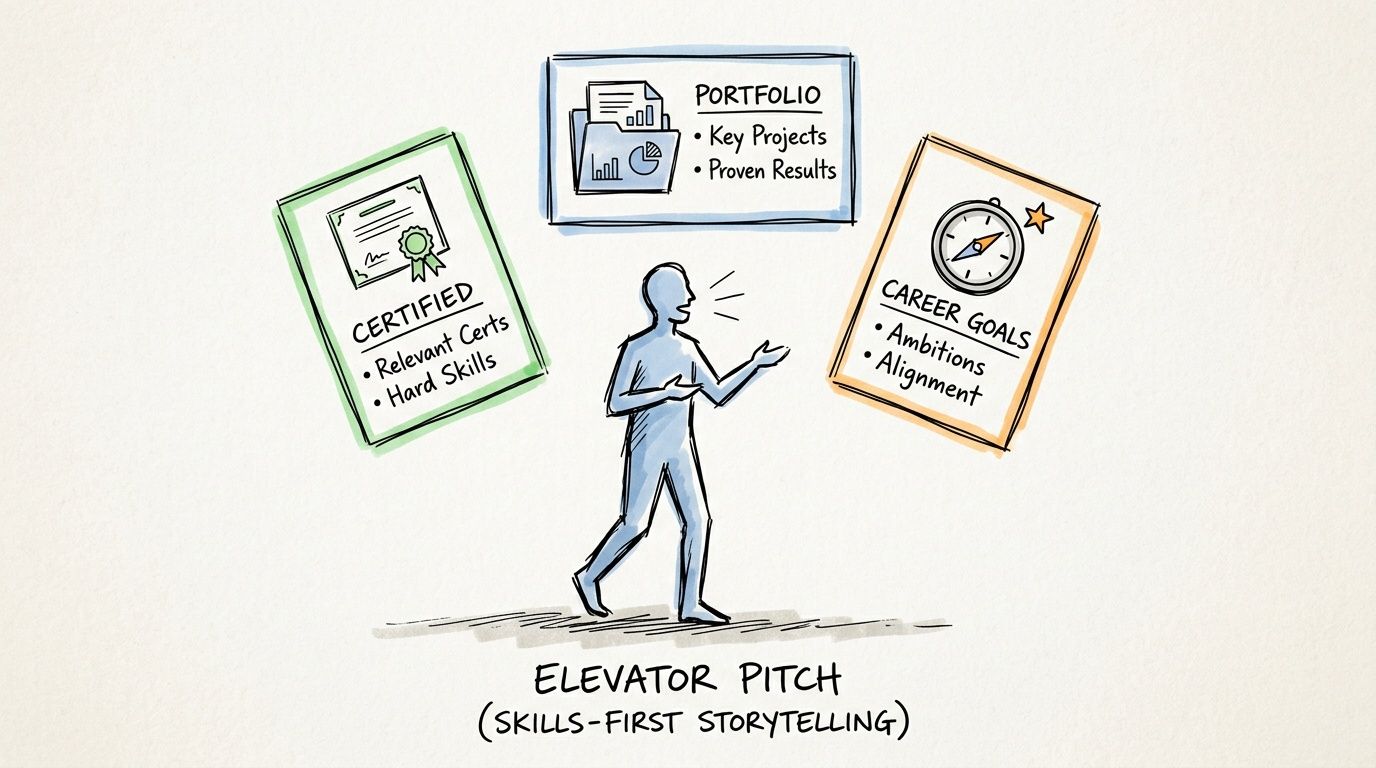
Strong answers are selective. You are not giving your autobiography. You are giving a short professional story that explains who you are, what you’ve done, and why this role makes sense now.
A simple structure that holds up in real interviews
Use a three-part answer:
- Present: State your current professional identity in plain language.
- Proof: Pull in two or three pieces of evidence from your route, such as projects, military responsibility, apprenticeship work, certifications, customer-facing experience, or measurable outcomes.
- Direction: Close with why this job is the logical next step.
That structure works because it answers the question behind the question. Interviewers want to know how to place you.
Here’s what that sounds like for different STAR candidates.
A bootcamp grad might say: “I’m an entry-level software developer with hands-on experience building full-stack projects in React and Node through a bootcamp and my own portfolio work. Before that, I worked in customer service, so I got used to solving problems quickly and explaining technical issues in a way people can use. I’m looking for a junior developer role where I can contribute as a builder and keep growing in a team that ships real products.”
A veteran might say: “I spent several years leading teams and managing operations in high-accountability environments where mistakes had real consequences. During my transition, I completed cybersecurity training and earned industry certifications, and I’ve been applying that training through labs and structured practice. Now I’m targeting roles where I can bring operational discipline, risk awareness, and a strong habit of following procedure.”
A tradesperson moving into operations or project management might say: “I’ve spent the last several years coordinating job sites, troubleshooting issues in the field, and keeping work on schedule while dealing directly with customers and crews. That gave me a strong base in planning, communication, and making decisions with incomplete information. I’m now moving into project coordination roles where that field judgment can help teams stay accurate and on time.”
Use a light STAR frame without sounding scripted
You do not need a full STAR answer here, but the same logic helps. Mention the setting, the kind of responsibility you had, and the result. Keep it brief.
A good test is this: after 60 to 90 seconds, the interviewer should know your direction and want to ask follow-up questions.
Practical rule: Keep your answer tight, specific, and pointed at the role you want next.
If your story still feels scattered, sort out your direction first with this career quiz for skills-first candidates. Once your target is clear, this answer gets much easier to write.
2. What Are Your Greatest Strengths
Don’t answer this with vague traits like “hardworking” or “people person.” Everybody says that. Interviewers remember strengths that sound specific, job-relevant, and earned the hard way.
Here, non-traditional candidates can really separate themselves. If you learned through doing, you often have more practical detail than degree-first candidates. Use it.
A tradesperson moving into leadership can talk about diagnostics, calm communication with customers, and field decision-making. A self-taught developer can talk about debugging discipline, shipping projects, and learning new tools fast. A veteran can talk about operating under pressure, training others, and following through when stakes are high.
Make your strengths sound earned
The trick is to tie each strength to evidence.
- Choose role-fit strengths: Pick two or three that directly match the job description.
- Back each one with an example: Don’t just say “I’m analytical.” Say where that showed up.
- Connect it to business value: Explain why that strength helps the employer.
For example, a cybersecurity candidate could say their biggest strength is pattern recognition under pressure. Then they can connect that to lab work, incident response training, or security exercises where they had to spot anomalies fast. A logistics candidate could say their strength is coordinating moving parts without losing accuracy, then ground that in dispatch work, warehouse systems, or route management.
If you’re not sure which strengths to lead with, use the job posting as your cheat sheet. Pull out the repeated words. If the posting keeps mentioning customer communication, troubleshooting, documentation, or teamwork, those aren’t random. They’re clues.
HiredBySkill’s career quiz for skills-first job seekers can also help you identify where your natural strengths line up with degree-optional roles. That matters, because the best answer isn’t “my greatest strength.” It’s “my greatest strength for this job.”
3. What Are Your Greatest Weaknesses
This question makes a lot of people panic, and that’s usually because they think they need to either confess a disaster or disguise a strength as a weakness. Neither works.
The best answer shows self-awareness and movement. You had a gap. You worked on it. You’re better now.
For STAR candidates, this is a strong setup because your career path already proves you can learn. If you came from the military into tech, hospitality into data, or the trades into operations, you’ve already had to close skill gaps in public.
Pick a weakness that shows maturity
Choose something real but not fatal for the role. If you’re interviewing for a data analyst job, don’t say your weakness is writing SQL. If you’re interviewing for a help desk role, don’t say you struggle with customers.
Better examples:
- A junior developer says they used to struggle with debugging large applications, so they learned Chrome DevTools, breakpoints, and a more methodical testing process.
- A veteran entering product or software work says civilian collaboration styles felt unfamiliar at first, so they learned agile workflows and got comfortable with standups, retrospectives, and iterative feedback.
- A tradesperson moving into office-based coordination says written documentation wasn’t initially their strongest area, so they built habits around cleaner notes, status updates, and work logs.
What doesn’t work is overexplaining. Say the weakness plainly. Then pivot to action.
Don’t pick a weakness just because it sounds interview-safe. Pick one that lets you show how you learn.
A strong answer sounds like this: Early on, I had a habit of trying to solve everything alone before asking for help. That slowed me down on team projects. I changed that by asking better questions earlier, using code reviews more effectively, and documenting blockers sooner. I still like figuring things out independently, but now I know when collaboration is faster and better.
That answer feels honest because it is. But it also reassures the interviewer that your weakness won’t keep repeating unchecked.
4. Why Are You Interested in This Role Company
This question exposes lazy prep fast. Generic answers sound generic because they are. “I’m excited for the opportunity” tells the interviewer almost nothing.
Good answers show you understand three things: what the company does, what this specific role needs, and why your path makes sense here.
For STAR candidates, there’s an extra layer. You want to show that you’re not just applying everywhere and hoping something sticks. You’re targeting companies that value capability, not just pedigree.
What good research sounds like
A strong answer usually combines company research with personal logic.
You might say you’re interested because the role lines up with tools you’ve already used in projects. Or because the company serves an industry you know from earlier work. Or because its hiring approach seems open to candidates from nontraditional backgrounds.
The angle matters. If you worked in healthcare support and you’re moving into healthcare IT, say that. If you were in the military and are interviewing with a defense contractor or infrastructure company, connect the dots. If you’re applying to a startup using a stack you already know, mention the stack and the kind of problems you want to solve.
A bad answer focuses on what you want to get. A better answer focuses on the match.
- Name something specific: product, mission, client type, hiring approach, team focus.
- Tie that thing to your background: show you’re not guessing.
- Make the move feel intentional: employers want focused candidates.
You can use HiredBySkill’s company directory for degree-optional employers to target organizations that already hire with a skills-first lens. That changes the tone of your answer, because you can speak to real alignment instead of wishful thinking.
One more thing. Enthusiasm helps, but only if it sounds informed. Nobody believes “I’ve always dreamed of working here” unless you can explain why.
5. Describe a Challenge You Overcame and How You Handled It
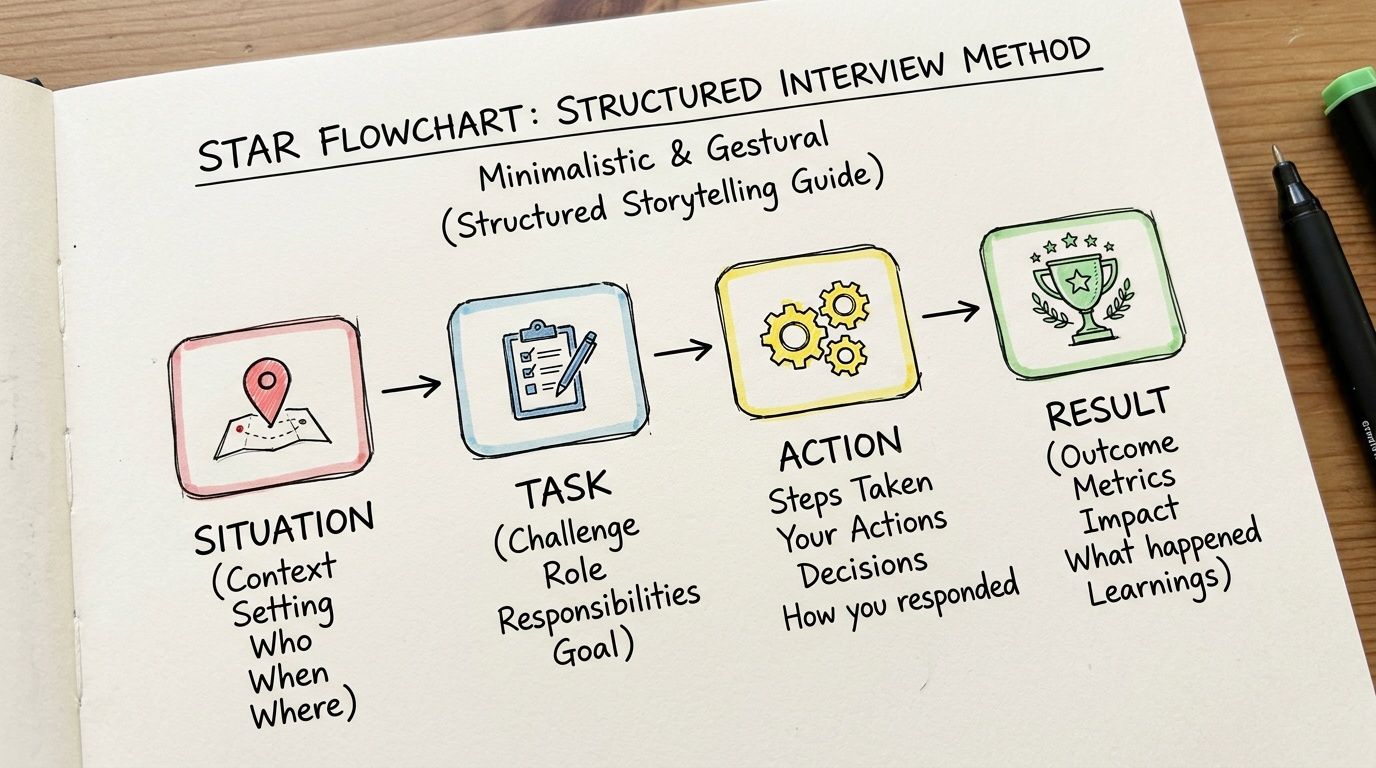
When facing structured competency questions, the STAR method earns its reputation. Employers using skills-based interviews increasingly rely on structured competency questions. TestGorilla states that 87% of employers report using structured interview questions focused on competencies over degrees in a 2024 report summarized in its market research analyst interview guide. That’s good news for candidates who can tell clear, evidence-based stories.
The wrong move here is choosing a dramatic story with no lesson. The right move is choosing a relevant challenge and walking through it cleanly.
Use STAR without sounding rehearsed
Think of STAR as structure, not theater.
- Situation: What was happening?
- Task: What did you need to do?
- Action: What did you do?
- Result: What changed because of your actions?
A bootcamp grad might talk about falling behind in one technical area during an intensive program, then building a catch-up system with office hours, peer programming, and daily practice. A veteran might talk about translating military systems experience into civilian language and building proof through labs and certifications. A tradesperson could describe a difficult field issue where diagnosis, communication, and follow-through mattered more than textbook knowledge.
The best answers stay concrete. Name the tool. Name the obstacle. Name the decision.
Field note: Interviewers usually care less about whether the challenge was huge and more about whether your response was thoughtful.
Keep your “Action” section the biggest. That’s where you show judgment. Anyone can describe a hard situation. Fewer people can clearly explain how they approached it, what trade-offs they made, and what they learned.
Also, don’t worry if your story comes from a bootcamp, apprenticeship, military assignment, freelance job, or side project. For skills-first hiring, proof is proof. Traditional office experience isn’t the only valid source of evidence.
6. What Technical Skills or Certifications Do You Have
This question sounds simple, but a lot of candidates waste it by listing tools like they’re reading tags off a product page. The interviewer doesn’t just want names. They want confidence, level, and context.
That matters even more now because skills-based hiring is common for entry-level roles. NACE notes that nearly two-thirds of employers, specifically 64.8%, use skills-based hiring for new entry-level hires in its report on skills-based hiring practices. If you don’t have a degree, this question is one of your best chances to make your qualifications feel tangible.
Answer like a builder not a keyword list
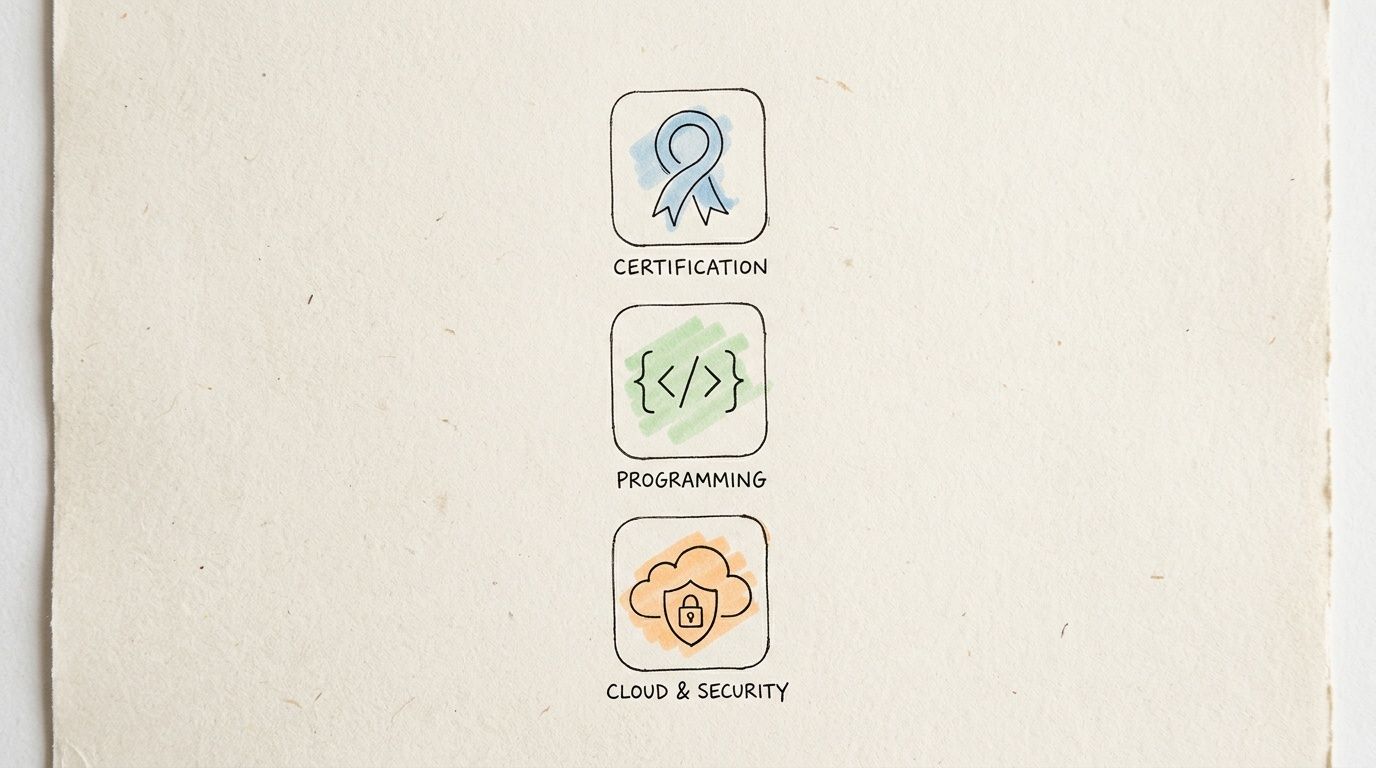
Organize your answer in buckets.
You can say: My core tools are SQL, Excel, Tableau, and Python for analysis. I’ve used them in portfolio projects and class projects involving cleaning data, building dashboards, and presenting findings. I also hold the Google Data Analytics certificate and I’m continuing to build on that with more statistics and visualization practice.
Or, for cybersecurity: I have Security+ and hands-on practice with Wireshark, Linux, vulnerability scanning, and basic incident response workflows. I’ve used those skills in labs and projects where I had to analyze traffic, identify suspicious behavior, and document findings.
A cleaner structure looks like this:
- Lead with your strongest relevant skills: not every tool you’ve ever touched.
- Add certifications second: especially if they map directly to the role.
- Finish with proof of use: projects, labs, freelance work, field experience, GitHub, or customer-facing problem solving.
If you’re aiming at software roles, browse HiredBySkill’s software engineering jobs for non-degree candidates and mirror the language you see repeatedly. That gives you a more employer-friendly way to describe your stack.
Be honest about your level. “Intermediate in SQL” is stronger than pretending to be an expert and then collapsing in follow-ups.
7. Can You Walk Me Through a Project You've Built or Completed
If you’re a bootcamp grad, self-taught developer, analyst, or cyber candidate, this might be the most important of all the questions for job interview success. A real project beats abstract potential.
Start with the problem, not the tech stack. Too many candidates open with a list of tools. The interviewer first wants to know what you were trying to build, fix, analyze, or improve.
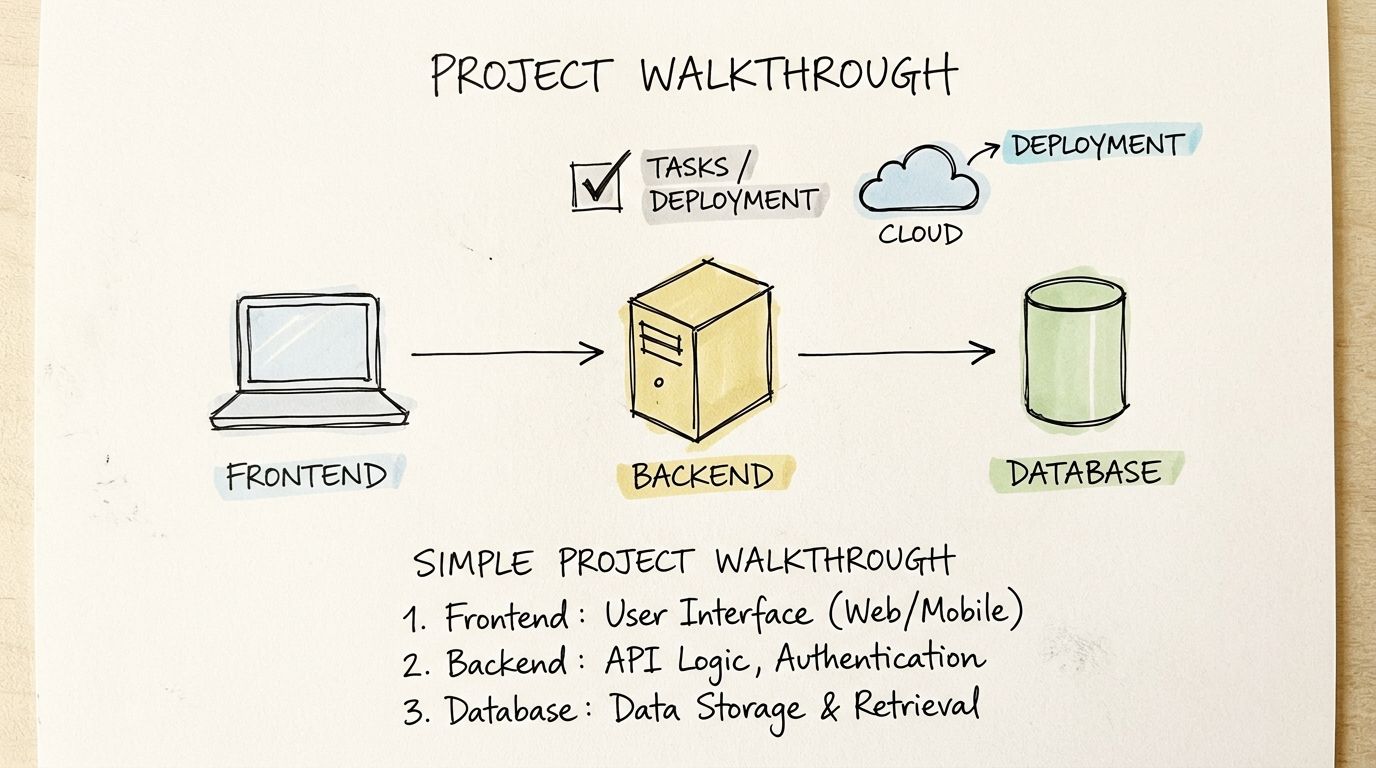
A strong walkthrough sounds something like this: I built a task management app for users who needed a simple way to assign and track work. I used React on the front end, Node on the back end, and MongoDB for storage. My main challenge was query performance and page load speed, so I adjusted how data was fetched and reduced unnecessary calls. Then I added tests and deployed it so users could try it.
Give them the tour not the full documentary
Think in five parts:
- Problem: What were you solving?
- Your role: What part did you personally own?
- Tech choices: Why those tools?
- Challenge: What got messy?
- Outcome: What worked, what changed, what you’d improve now?
If you’re in data, walk through your dataset, cleaning choices, analysis approach, and how you communicated findings. If you’re in cybersecurity, explain the environment, the threat or detection problem, the rules or tools you used, and how you balanced signal versus noise. If you’re from the trades or operations, a “project” can be a system rollout, a process improvement, a scheduling rebuild, or a customer-facing implementation. It doesn’t have to be an app.
A lot of technical interviews also test how well you can explain complexity in plain English. That’s part of the job. Don’t hide behind jargon.
Here’s a useful example of project explanation style in video form:
The best project answer makes the interviewer think, “I can picture this person doing the work here.”
That’s the target. Not “wow, smart candidate.” Useful candidate.
8. How Do You Stay Current With Industry Trends and Continuous Learning
For non-traditional candidates, this question can become a huge advantage. Your whole career path probably already proves you know how to learn outside formal classrooms.
Still, don’t answer with “I read blogs and watch YouTube.” That’s too thin. Employers want to hear a learning habit, not random consumption.
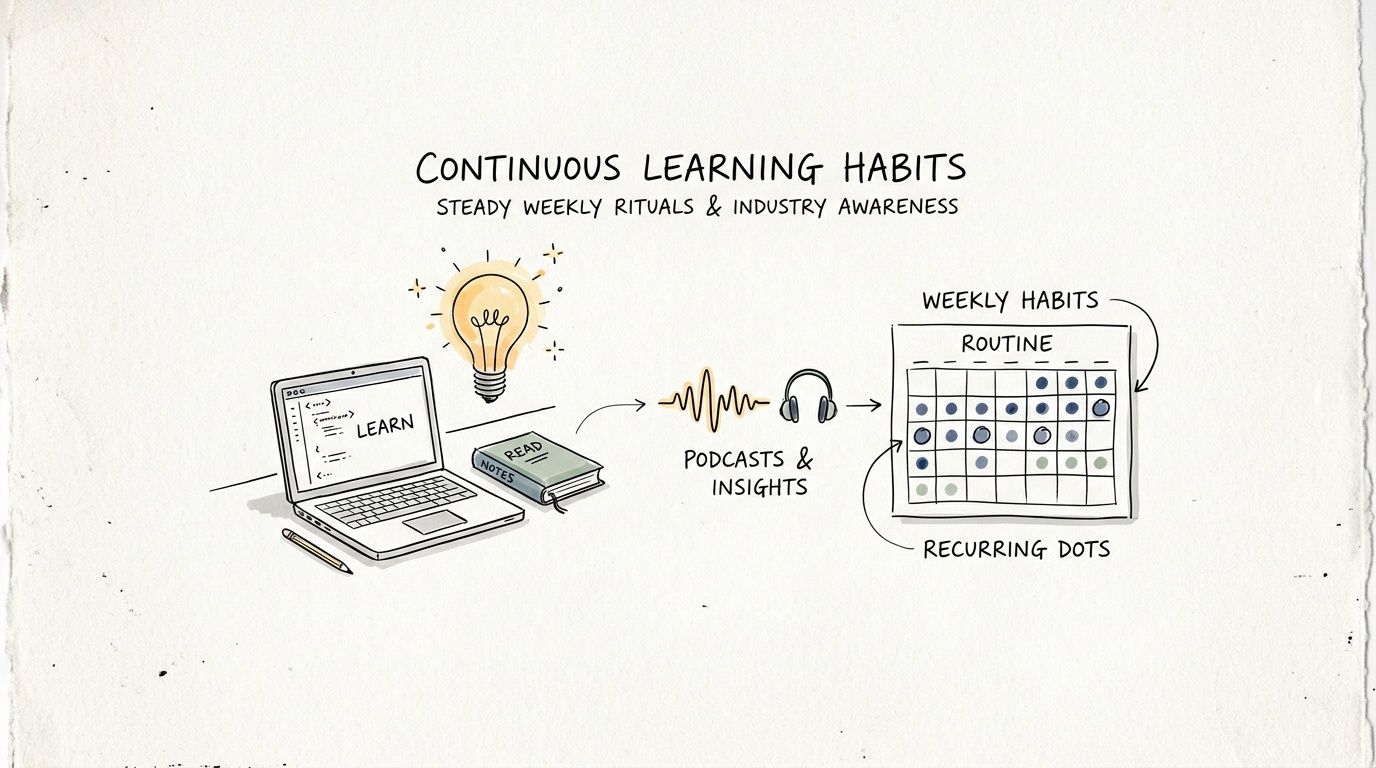
Show a learning system
A convincing answer has three ingredients: input, practice, and application.
Your input might be newsletters, vendor blogs, GitHub repos, labs, community forums, podcasts, or documentation. Your practice could be side projects, labs, debugging exercises, mock dashboards, home lab work, or volunteering to solve real problems. Application is where you tie that learning back to a project or work outcome.
For example, a junior data candidate could say they follow analytics tutorials, practice in SQL and Python, and regularly turn public datasets into dashboard projects. A cyber candidate might say they stay current through lab platforms, security writeups, and hands-on practice in detection or log analysis. A logistics professional moving into systems work might say they study process tools and then test ideas in scheduling, inventory, or workflow improvements.
This answer gets stronger when it sounds routine. Not heroic. Routine.
- Mention real sources: Coursera, GitHub, vendor docs, lab platforms, meetups.
- Show consistency: weekly practice beats occasional bursts.
- Tie learning to the job: make it relevant, not random.
If you can also mention what you’re learning right now, even better. Ongoing curiosity is more credible than a finished list of past courses.
9. Tell Me About a Time You Failed or Made a Mistake and What You Learned
You answer this question well when you show judgment under pressure.
A hiring manager is listening for four things at once. Can you admit a mistake without getting defensive? Do you understand why it happened? Did you change your process after it happened? Can they trust you with bigger responsibility next time?
Pick a real mistake with real stakes. Then spend most of your answer on what changed after it.
For STAR candidates, this question is a chance to turn an unconventional background into proof of maturity. Bootcamp grads can show how they tightened their workflow after shipping messy code or missing edge cases. Veterans can show how they adjusted after a communication breakdown, a bad assumption, or an avoidable handoff issue. Tradespeople moving into office or management roles can show how they improved planning, delegation, documentation, or follow-through after a miss in the field.
Use a STAR answer that ends with a better system
Keep the story tight:
- Situation: Name the project, task, or context.
- Task: Explain what you were responsible for.
- Action: State the mistake clearly. Then explain what you did to correct it.
- Result: Show the lesson, the new process, and the better outcome later.
The trade-off matters here. If your example is too small, you sound evasive. If it is too catastrophic, you raise doubts about judgment. Choose a mistake that was meaningful, fixable, and followed by a clear improvement.
A stronger answer sounds like this:
“I was building a reporting feature during my bootcamp capstone and rushed into implementation before confirming the data structure with my teammate. That created rework and slowed the team down. I owned it, reset expectations, and started using a short pre-build checklist for assumptions, dependencies, and test cases. On the next sprint, I used that checklist before touching the code, and we caught a schema issue early.”
That works because it shows ownership, cost, correction, and a repeatable lesson.
Here are three angles that work especially well for nontraditional candidates:
- Bootcamp grad: You moved too fast, skipped validation, or failed to ask for help early enough. Then you built a checklist, review habit, or testing routine.
- Veteran: You relied on an assumption, over-focused on execution, or did not clarify intent across teams. Then you improved communication, documentation, or escalation points.
- Tradesperson: You tried to solve everything yourself, missed a planning detail, or delayed raising a risk. Then you created a cleaner process for documenting work, coordinating with others, or flagging issues sooner.
One line matters more than candidates realize. Name the cost.
It could be lost time, rework, confusion, a missed deadline, or extra burden on the team. That makes the answer credible. Then show the change you made so the same problem is less likely to happen again.
If you need help shaping your example into a sharper STAR story, this guide on how to use AI to find a job can help you practice and tighten your wording without sounding scripted.
Candidates with a gap in their timeline sometimes worry that any failure story will raise bigger concerns. It usually does not, if the answer is grounded and specific. If part of your story connects to time away from work, this resource on explaining a career break on LinkedIn can help you frame it cleanly.
Keep the tone calm. No long defense. No heroic spin. Clear ownership and a better process will do more for you than a polished excuse ever will.
10. Why Are You Leaving Your Current Role Industry
If you’re changing fields, this question is inevitable. It’s especially common for veterans, service workers moving into tech, tradespeople shifting into management, and anyone making a serious skills-first pivot.
The best answer sounds like movement toward something, not bitterness about what you’re leaving. Employers don’t need a speech about your old manager, your old company, or your frustration with your past industry.
They need to hear that this shift is deliberate.
Make the pivot sound deliberate
A strong answer usually includes four parts:
- What you valued in your previous work
- What started pulling you toward the new field
- What you’ve done to prepare
- Why this role is the right next step
For example, a veteran might explain that military work built discipline, leadership, and systems thinking, but their long-term interest is cybersecurity in a civilian environment. Then they can point to certifications, labs, and projects as proof that the pivot is already underway.
A hospitality worker moving into software or IT can say the old role built customer empathy, organization, and composure under pressure. Then they explain they wanted deeper technical problem-solving and took action through a bootcamp, self-study, or portfolio work.
If you’ve also had a gap or pause in the process, this guide on explaining a career break on LinkedIn can help you frame it cleanly instead of defensively.
For practical job search help during a pivot, HiredBySkill’s guide on how to use AI to find a job can help you tighten targeting, applications, and prep.
One more thing. Don’t oversell the pivot as destiny. Calm confidence works better. You saw a better path, you built the skills, and now you’re pursuing it seriously. That’s enough.
Top 10 Interview Questions Comparison
| Interview Prompt | Implementation Complexity 🔄 | Resource Requirements ⚡ | Expected Outcomes 📊 | Ideal Use Cases 💡 | Key Advantages ⭐ |
|---|---|---|---|---|---|
| Tell Me About Yourself | Low 🔄, craft a 2–3 min structured pitch | Moderate ⚡, 2–5 hrs prep; portfolio highlights | 📊 Establishes credibility; reframes non‑traditional background | 💡 Opening question; set narrative for STARs | ⭐ Controls narrative; highlights relevant projects/certs |
| What Are Your Greatest Strengths? | Low 🔄, pick 2–3 role‑aligned strengths | Low ⚡, collect examples and metrics | 📊 Demonstrates fit with measurable evidence | 💡 Early-stage screening; technical fit checks | ⭐ Connects skills directly to job outcomes |
| What Are Your Greatest Weaknesses? | Medium 🔄, requires careful framing | Low ⚡, reflection + mitigation plan | 📊 Shows self‑awareness and growth trajectory | 💡 Assess maturity and learning mindset | ⭐ Reveals proactive self‑improvement |
| Why Are You Interested in This Role/Company? | Medium 🔄, needs tailored research | Moderate ⚡, company research and alignment examples | 📊 Signals motivation and cultural fit | 💡 Fit assessment; degree‑optional employers | ⭐ Demonstrates role alignment and preparation |
| Describe a Challenge You Overcame (STAR) | Medium‑High 🔄, prepare structured STAR stories | Moderate ⚡, prepare 3–4 stories with metrics | 📊 Shows problem‑solving, delivery, resilience | 💡 Behavioral interviews; proving competency without degree | ⭐ Provides concrete, evidence‑based examples |
| What Technical Skills or Certifications Do You Have? | Low 🔄, list and verify credentials | Moderate ⚡, assemble certs, GitHub, portfolio | 📊 Offers objective validation of capability | 💡 Skills‑first roles; technical screens | ⭐ Third‑party validation via certs and projects |
| Can You Walk Me Through a Project You've Built? | Medium 🔄, detailed technical walkthrough required | Moderate‑High ⚡, docs, live demo, repo access | 📊 Demonstrates applied skills and execution | 💡 Technical interviews; portfolio evaluation | ⭐ Shows end‑to‑end delivery and decision‑making |
| How Do You Stay Current With Industry Trends? | Low 🔄, describe concrete habits | Low ⚡, ongoing reading, courses, communities | 📊 Signals continuous learning and adaptability | 💡 Fast‑changing fields (tech, security, data) | ⭐ Indicates long‑term growth and self‑direction |
| Tell Me About a Time You Failed / Made a Mistake | Medium 🔄, sensitive, reflective framing | Low ⚡, prepare lesson + impact examples | 📊 Shows accountability and learning from errors | 💡 Assess resilience and behavior under pressure | ⭐ Highlights growth mindset and corrective action |
| Why Are You Leaving Your Current Role / Career Pivot? | Medium 🔄, narrative framing to show intent | Moderate ⚡, prepare pivot evidence (courses, certs, projects) | 📊 Clarifies motivation and retention likelihood | 💡 Career changers; assessing strategic pivots | ⭐ Positions transition as intentional and skill‑driven |
You've Got the Answers. Now Go Get the Job.
Interview prep gets weirdly overcomplicated online. People act like you need a perfect script, a perfect voice, a perfect origin story, and a perfect answer to every possible curveball. You don’t.
You need strong patterns. That’s it.
You need to know how to introduce yourself without rambling. How to talk about strengths without sounding generic. How to discuss weaknesses without torpedoing yourself. How to explain a project clearly. How to describe mistakes like an adult. How to make a career pivot sound intentional, because it is.
That matters even more for STAR candidates. When your background doesn’t follow the default path, the interview becomes your proof layer. It’s where you turn “non-traditional” into “memorable.” It’s where a bootcamp project becomes evidence. It’s where military leadership becomes operational credibility. It’s where trade experience becomes problem-solving, systems thinking, customer trust, and reliability.
And the opportunity is real. Employers are using skills-based hiring more often, and assessment methods now commonly include structured interviews, portfolio reviews, take-home assignments, and job simulations, as discussed by SHRM in its overview of skills-based hiring design. That means your job isn’t to look traditional. Your job is to make your capability easy to see.
A few practical reminders before your next interview:
- Keep answers focused: Most interviews run between 45 and 90 minutes, according to Qureos earlier in the article, so pacing matters.
- Ask smart questions back: Candidates who skip this often hurt themselves.
- Watch your written communication too: Resumes, follow-up emails, and portfolio copy matter because sloppy writing can knock you out before or after the call.
- Practice out loud: Silent prep is not enough. Your answers need to sound like conversation.
- Use your real background: Don’t try to impersonate a traditional candidate if that’s not your path.
This part is important. Your goal is not to “hide” your non-degree route. Your goal is to frame it well. If you built your skills through real projects, service, shift work, apprenticeships, self-study, labs, side jobs, or certifications, you already know how to work, adapt, and learn. Many employers want exactly that. They just need you to articulate it with clarity.
So rehearse these questions for job interview success. Tighten the examples. Cut the fluff. Add specifics. Practice saying your story until it sounds natural, not memorized.
Then go into the interview ready to make the easy thing happen. Help the interviewer understand what you can do, how you learned it, and why you’ll be useful fast.
That’s the game.
And when you’re ready to find employers that already value skills over pedigree, HiredBySkill is built for that exact search.
HiredBySkill is a smart place to start if you want degree-optional roles without digging through endless junk listings. You can explore HiredBySkill for skills-first jobs, employers open to non-traditional candidates, and tools that help you turn real experience into a stronger application.
Latest jobs
- Advisory Engineer — Lenovo
- Chef de Groupe Sites et Sols Pollués H/F — SOCOTEC
- Responsable d'agence H/F — Kinougarde-Complétude
- Saisonarbeiter:Innen (m/w/d) Mitte Dezember 2026 bis Ende März 2027 — Salesianer Miettex Gmbh
- Chargé d'accueil et de services hôteliers - H/F — Louvre Hotels Group
- Könyvelő (angol nyelvtudással) — Kronospan
- Pädagogische Fachkraft (gn) - intensivpädagogische Wohngruppe — Lotsenwerk GmbH
- (Junior) FP&A Controller (all genders) — Sunnic