What Is an Apprenticeship Program? A Complete Guide
What is an apprenticeship program - Curious what is an apprenticeship program? Learn how to get paid while you train for a high-demand career, with no degree
An apprenticeship program is a real job where you get paid to learn on the job, complete formal instruction, and earn higher wages as your skills grow. In 2021, the U.S. had 593,690 active registered apprentices and 241,849 new apprentices, which tells you this isn't some dusty old-school option. It's a legit path into work.
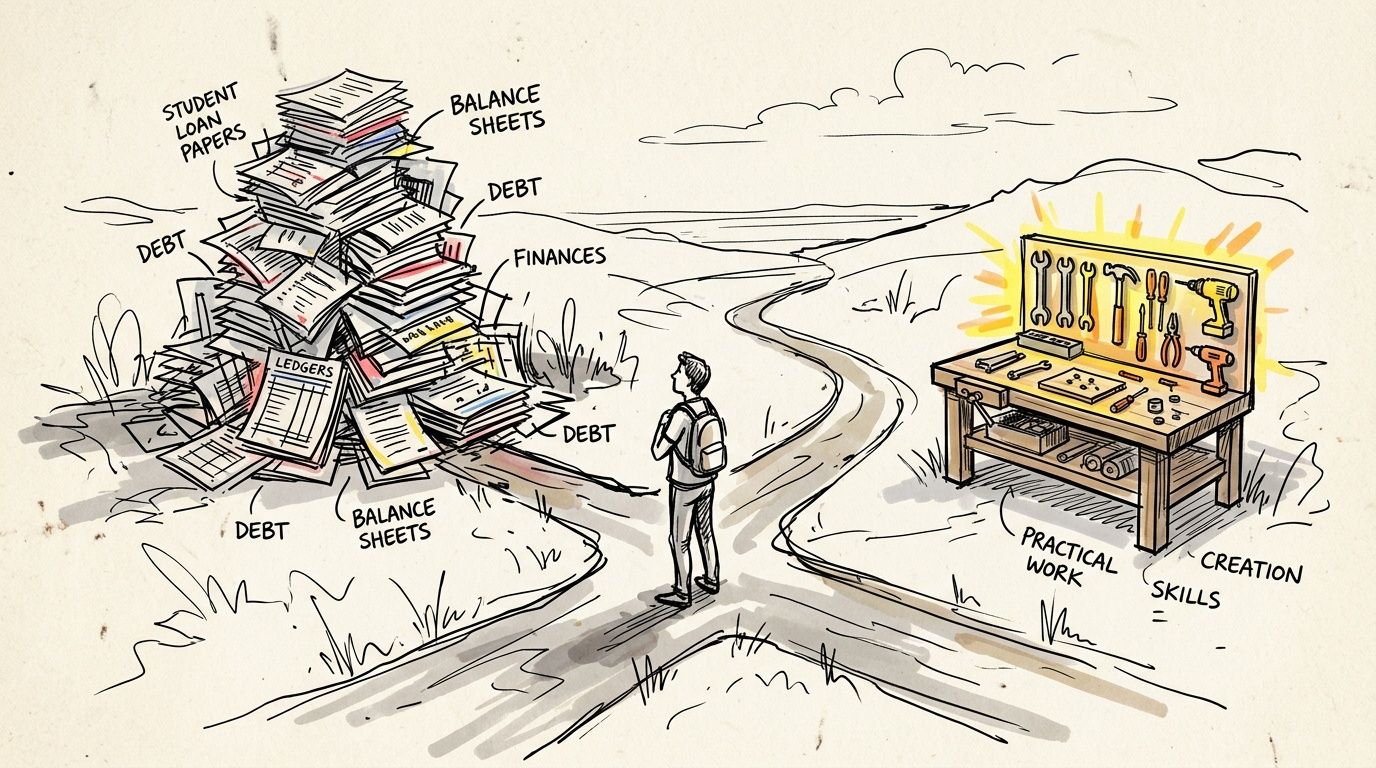
If you're staring at the usual fork in the road, college debt on one side, dead-end jobs on the other, apprenticeships are the third option hardly anyone explains well. They're not just for electricians and plumbers anymore, either. People use them to break into fields like healthcare, manufacturing, transportation, and IT.
That matters if you want a career, not just a paycheck, but also don't love the idea of borrowing money first and hoping the job part works itself out later. Apprenticeships flip that order. You start with work, build skill while earning, and come out with experience employers can use.
Table of Contents
- Forget the College Debt Debate Let's Talk Apprenticeships
- How Apprenticeships Actually Work
- The Different Flavors of Apprenticeships
- Apprenticeship vs Internship vs Bootcamp The Real Deal
- Show Me the Money The Pay and Career Path
- How to Get Hired into an Apprenticeship Program
- Ready to Start Your Apprenticeship Journey?
Forget the College Debt Debate Let's Talk Apprenticeships
Say you're 18, 24, or 34. You want a solid career. You also want rent money, groceries, and maybe the occasional luxury of not panicking every time your bank app opens.
That's where apprenticeship programs start looking a lot more interesting than the usual “just go to school and figure it out later” advice. If you're asking what is an apprenticeship program, the simple version is this: it's a paid path into skilled work where you learn by doing the actual job, not by sitting on the sidelines hoping your training eventually lines up with real hiring.
Why this path feels different
A lot of career routes ask you to pay first, train first, or guess first. Apprenticeships are different because the work is the training. You're not watching from the balcony. You're in the game.
The scale of the system often surprises observers. The U.S. Department of Labor reported more than 593,000 active registered apprentices in 2021, with new apprentices increasing by over 82% between 2008 and 2021, and the system spans fields including IT, healthcare, manufacturing, and transportation through federal apprenticeship statistics.
Apprenticeships aren't a backup plan for people who “couldn't do college.” They're a direct route for people who want skills, income, and traction at the same time.
That's the part people miss. This isn't a niche thing hiding in a welding shop. It's a workforce system with real employers, real standards, and real openings.
Who this works well for
Apprenticeships make a lot of sense if you're any of these people:
- A school leaver who wants momentum: You'd rather start building experience than spend years waiting to feel employable.
- A career switcher: You need a path that lets you earn while you pivot.
- A practical learner: You learn faster by doing the task than reading about the task.
- Someone rebuilding qualifications: If you're still sorting out academic credentials, flexible study options like gain GCSEs or A-Levels from home can pair well with a skills-first career plan.
How Apprenticeships Actually Work
To easily understand an apprenticeship, consider joining a professional kitchen. You don't become a chef by binge-watching cooking videos and hoping for the best. You work the line, learn the systems, get coached, and take on more responsibility as your skill improves.
That's basically the apprenticeship model. You're employed. You're learning. And you're expected to become fully capable over time.
The four pieces that make it real
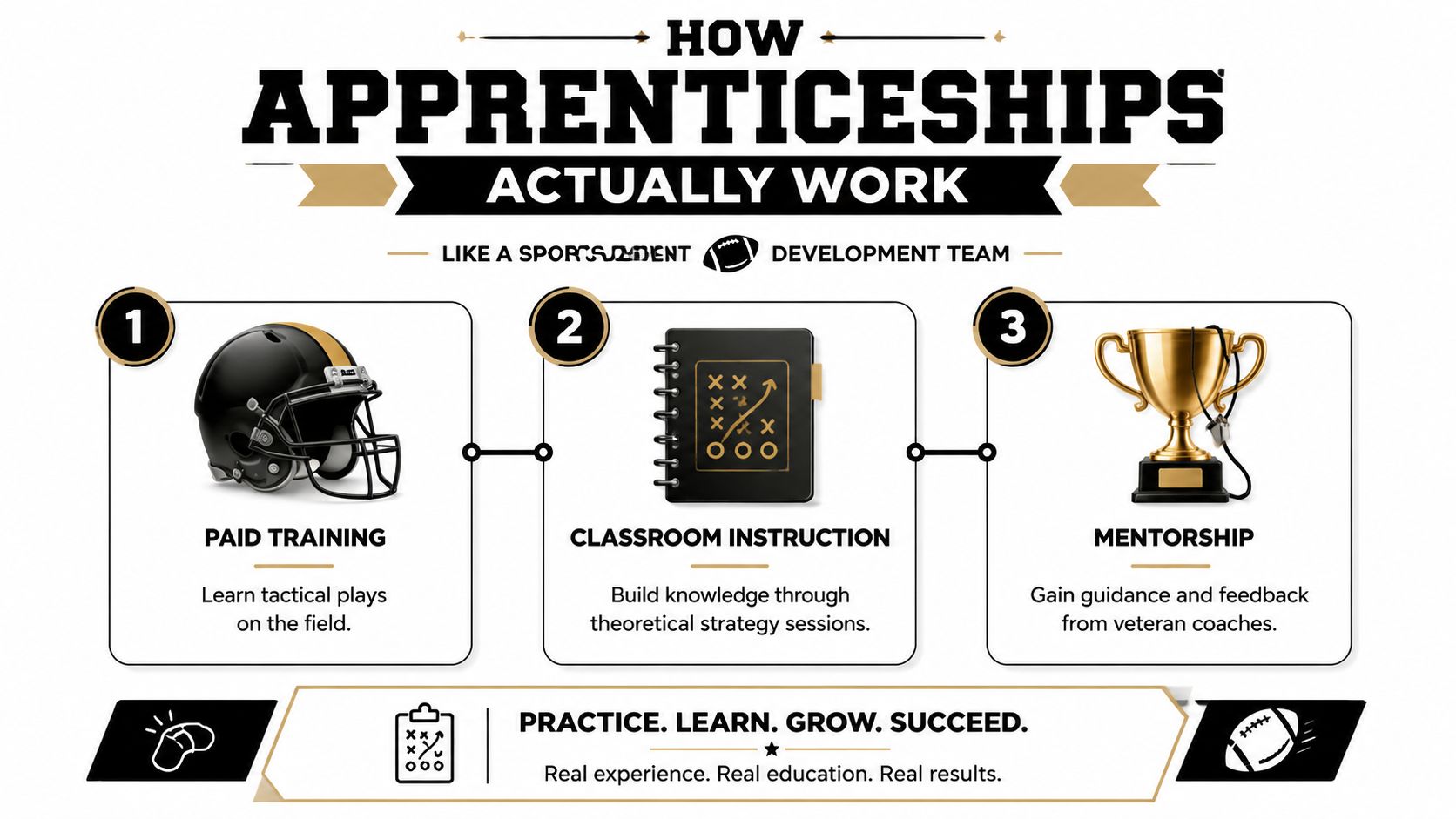
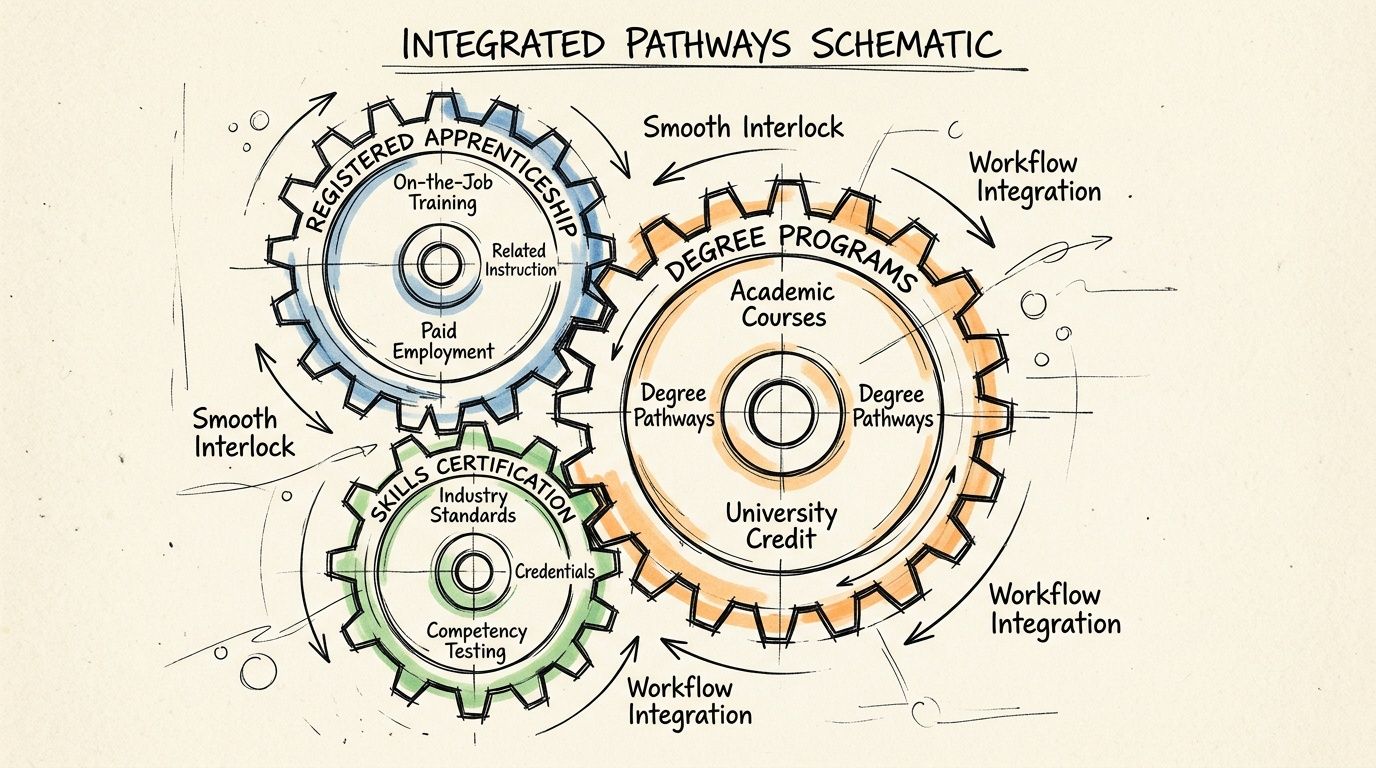
A Registered Apprenticeship isn't just an employer saying, “Shadow Steve for a while.” According to Registered Apprenticeship program requirements, it's a formal system vetted by the Department of Labor or a State Apprenticeship Agency that includes paid work experience, progressive wage increases, classroom instruction, and a portable, nationally recognized credential.
Here's what that looks like in normal-person language:
- You get paid from the start: You're not volunteering for experience.
- You train while working: The job itself is part of the learning process.
- You get structured instruction: That can include coursework or related technical learning.
- You're guided by experienced people: Good programs build mentorship into the role.
Why employers like this model too
Employers aren't doing this as a charity project. They use apprenticeships because they can train people into the exact skills the role needs while seeing performance in real time.
That's one reason apprenticeships fit well with skills-based hiring. Instead of using a degree as a rough guess about ability, employers can watch you build the ability on the job.
Practical rule: If a program is paid, structured, includes instruction, and leads to a recognized credential, you're likely looking at the real thing, not just fancy wording on a job ad.
What confuses people most
A lot of people hear “training” and think “temporary.” That's not the setup here.
An apprentice is a worker, not a spectator. You're contributing from day one, even if your responsibilities grow in stages. That's why the model feels different from a classroom-first route. You're building a resume while you build the skill.
The Different Flavors of Apprenticeships
Not every apprenticeship-shaped opportunity is the same. Some are tightly structured and portable. Others are more like employer-specific training with a nice label on top.
That distinction matters because the name of the program affects what you walk away with.
Registered apprenticeships
This is the gold-standard version. It's formal, approved, and built to lead somewhere beyond one employer's internal process.
What you usually get is clearer structure, more confidence that the training is legit, and a credential that carries value beyond the building where you earned it. If you're choosing between options and one is registered while the other is vague, the registered route usually deserves a much closer look.
Pre-apprenticeships
Think of pre-apprenticeship as the on-ramp. It helps people get ready for the full program.
That can be useful if you need basic exposure, foundational skills, confidence, or help meeting entry requirements. It's especially helpful for people who haven't had much direct access to the field yet. The trade-off is simple. It's preparation, not the main event.
Youth apprenticeships
These are designed for younger learners, often while they're still in school or just stepping out of it. The appeal here is obvious. You get earlier exposure to real work and a stronger jump into a career path before everyone else is still arguing about majors.
The challenge is that availability depends heavily on local employers, schools, and regional systems. Some areas have strong pipelines. Others are still catching up.
Employer-branded programs
Some companies run training programs that look and feel like apprenticeships but aren't formally registered. That doesn't automatically make them bad. Some are excellent.
But ask sharper questions:
| Program type | What to check |
|---|---|
| Registered | Is it approved and does it lead to a recognized credential? |
| Pre-apprenticeship | Does it clearly feed into a real apprenticeship or job path? |
| Youth | Is the work meaningful, or is it mostly observation? |
| Employer-run | Will the skills transfer if you leave that employer? |
A good apprenticeship helps you build a career asset. A weak one only teaches you how to survive one company's internal system.
If you want ideas for more traditional routes alongside newer ones, this guide to trade apprenticeship programs near me is useful for comparing what local opportunities can look like.
Apprenticeship vs Internship vs Bootcamp The Real Deal
These three paths get lumped together all the time, which is how people end up making expensive decisions with fuzzy information.
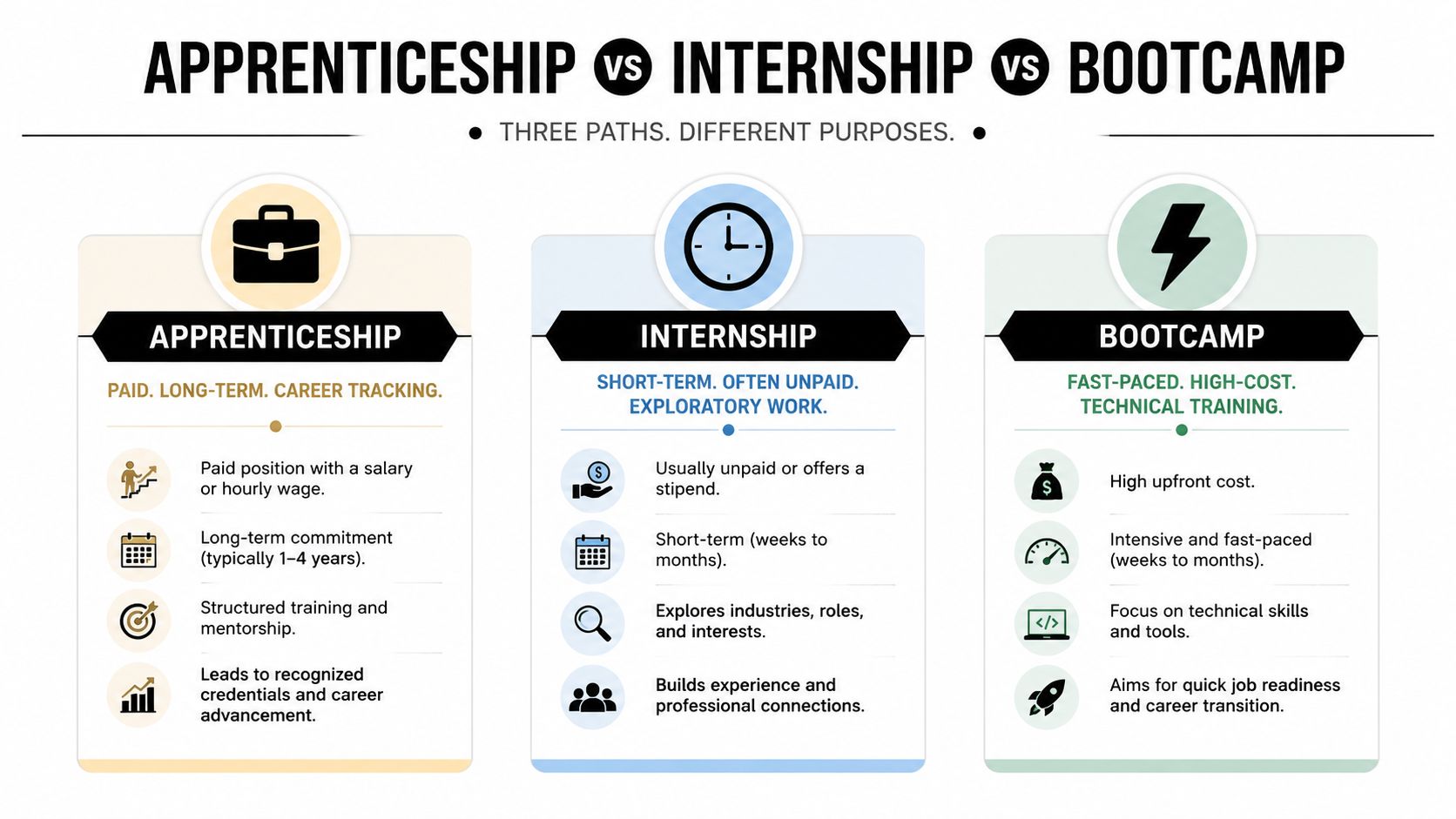
An apprenticeship is not an internship with a harder hat. And it's not a bootcamp that happens to take place at work.
The straight-up comparison
| Path | Money flow | Main purpose | What you build |
|---|---|---|---|
| Apprenticeship | You get paid while learning | Train for a skilled role | Work experience, instruction, credential |
| Internship | Pay varies | Explore a field or gain exposure | Experience, contacts, sample work |
| Bootcamp | You usually pay tuition | Learn skills quickly | Technical training, projects, short-term acceleration |
The biggest practical difference is cash flow. The Department of Labor explains that apprenticeships combine paid on-the-job training with classroom instruction, which is why they work well for people who need income while learning through federal apprenticeship guidance.
Who each option fits best
An internship is often useful when you want to test-drive a field. It can help you answer, “Do I even like this kind of work?” It's less reliable if your main concern is stable income and a direct long-term path.
A bootcamp can make sense if you want concentrated technical training fast and can handle the tuition trade-off. It often works best for people who already have some career cushion, savings, or employer support.
An apprenticeship is the most practical option when your biggest question is, “How do I switch into a skilled career without pausing my entire financial life?”
The hidden question people should ask
Don't just ask which one teaches skills. Ask which one matches your reality.
- Need income now: Apprenticeship usually makes the most sense.
- Want to explore before committing: Internship can help.
- Need fast, focused instruction: Bootcamp may fit if you can absorb the upfront cost.
- Need both work experience and training: Apprenticeship is built for that combo.
If paying for training would put you under pressure before the job search even starts, that's not a small detail. That's the decision.
Show Me the Money The Pay and Career Path
Let's talk about the part people really mean when they ask about apprenticeships. Is this a smart move for your wallet and your future, or just a nice-sounding training idea?
The short answer is that the structure is built around growth. Not instant superstar money. Growth.
Progressive wages are the point
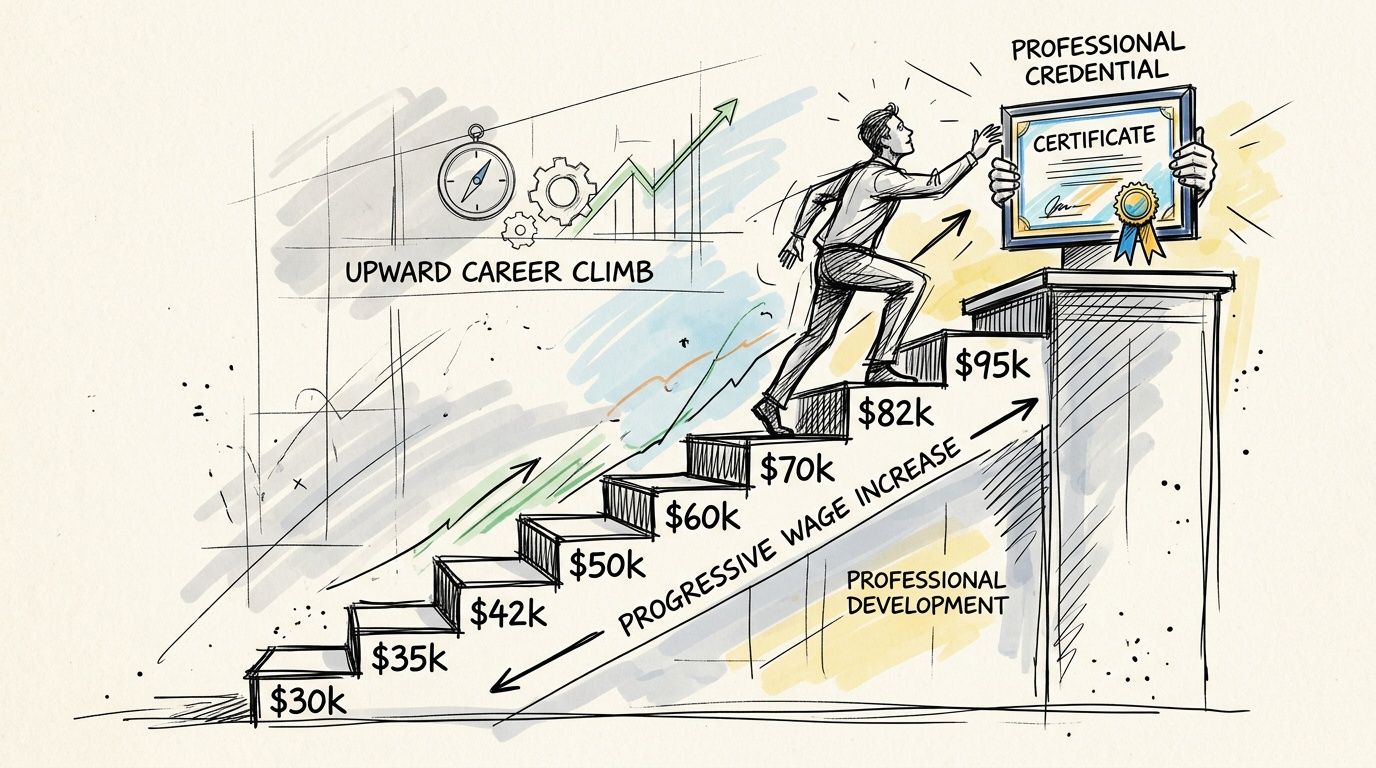
Apprenticeships typically start at a training wage and increase as you gain skill. That “progressive wage” idea matters because it turns learning milestones into earning milestones.
You're not stuck in forever-beginner pay if the program is doing its job. The whole setup is meant to move you from learner to fully skilled worker with pay that rises along the way.
That's also why this path feels more grounded than a lot of alternatives. You're not waiting until graduation day for the financial story to begin.
The credential is bigger than one job
A strong apprenticeship doesn't just leave you with “experience.” It leaves you with proof.
That proof matters because employers outside your current workplace can understand it. A portable, nationally recognized credential tells the market you didn't just help out. You completed structured training in a real occupation.
If you're trying to think long term, that changes how you evaluate the role. It's not only about today's paycheck. It's about what the training makes possible next, including how you talk about pay in later job searches. If you need help framing the full value of a role, this breakdown of total compensation expectations is worth reading.
Yes, some apprenticeships can connect to college credit
This is one of the coolest under-the-radar parts. Some apprenticeship pathways can translate workplace learning into academic credit.
For example, Bluegrass and other KCTCS colleges describe an Associate in Applied Science pathway where someone who completes a certified apprenticeship may receive up to 42 semester credit hours after completing 12 college credit hours, within a program totaling around 60 to 64 credits, as explained in their Apprenticeship Studies program details.
That means the choice isn't always “apprenticeship or college.” Sometimes it's apprenticeship first, credit later, debt avoided.
A quick explainer can help make that pathway feel more concrete:
How to Get Hired into an Apprenticeship Program
The biggest mindset shift is this: you're not applying to school. You're applying for a job.
That changes everything about how you search, how you present yourself, and how you follow up.
Start where the openings actually live
Apprenticeship opportunities are employer- or sponsor-driven, which means you usually apply directly to the organization offering the role. Apprenticeship.gov describes it as a place where job seekers can find openings in industries such as finance, manufacturing, government, and tech through the federal career seeker portal.
Good places to look include:
- Employer career sites: Search by job title, not just by the word “apprenticeship.”
- Union and trade organization listings: Especially useful in skilled trades and transportation.
- Community colleges and workforce programs: Many help connect applicants to employer-sponsored roles.
- Skills-first job boards: Platforms such as HiredBySkill can help you find degree-optional roles and frame your experience around practical ability rather than formal education.
Apply like someone who understands the job
Most candidates undersell themselves because they think they need to sound “academic.” That's rarely the move here.
Employers hiring apprentices often want signs that you can show up, learn fast, communicate, and stick with a process. So your application should highlight things like:
- Hands-on experience: Even if it came from a hobby, military service, customer-facing work, or fixing things for family and friends.
- Reliability: Attendance, consistency, shift work, deadlines.
- Trainability: Times you learned a tool, system, or process quickly.
- Interest in the field: Not vague passion. Specific curiosity.
You don't need to look finished. You need to look ready.
Get more specific than “apprenticeship”
Search the occupation, too. A cybersecurity apprenticeship, pharmacy technician apprenticeship, machining apprenticeship, or automotive apprenticeship will usually surface better results than broad searches alone.
If motorsport or vehicle work is your thing, this expert guide for aspiring pit lane staff is a good example of how niche apprenticeship routes can look in practice.
Ready to Start Your Apprenticeship Journey?
Apprenticeships make sense for people who want a career path that starts with work, not debt. You earn while learning, build real skills in real conditions, and come out with experience that isn't hypothetical.
That's why the answer to what is an apprenticeship program matters more than it sounds. It's not just a training format. It's a different way to enter the labor market, especially if you're a STAR, switching careers, or trying to move into a stronger field without spending years on the bench.
The best next move is simple. Start looking at roles where employers care about what you can do and how quickly you can grow, not whether you followed one traditional script. That's also where directories of no degree jobs can help you widen the search beyond the old college-only filter.
A good apprenticeship can give you three things at once: income, skill, and momentum. That combo is hard to beat.
If you want a practical next step, HiredBySkill lets you browse degree-optional roles across industries, explore apprenticeship-friendly paths, and build a skills-first job search around what you can do.
Latest jobs
- Data Center Fiber Optic Specialist (ISP / OSP & High-Density AI Infrastructure) — InfiniSource Consulting Solutions
- Life Enrichment Coordinator — Prairie View Manor
- Dealership Receptionist — CMA's Lexington Park Honda
- Host — JALEO VEGAS LLC
- Busser — JALEO VEGAS LLC
- Dining Server — Albany Senior Living by Cogir
- Outside Sales Rep – Commercial/OTR Tires — Purcell Tire & Service Centers
- Senior Training Management Analyst — CSA Global LLC