10 Best Vocational Training Jobs for 2026
Ditch the degree, not the dollars. Explore high-paying vocational training jobs in tech, trades, and healthcare. Start your new career path today.
Forget the “college or bust” script. It's outdated, expensive, and not the best move for a lot of people. Some of the strongest career paths now sit in vocational training jobs, where employers care more about whether you can fix the system, secure the network, wire the panel, or keep the operation moving than whether you sat through four years of lectures.
That shift isn't small. In the U.S., jobs requiring vocational skills are projected to grow 10 percent over the next decade, compared with 4 percent for other forms of training, according to Mississippi Business Journal's coverage of vocational demand. The same piece notes that by 2031, 72 percent of jobs are expected to require postsecondary education or training, which means “no degree” doesn't mean “no training.” It means getting strategic.
The smartest move is to stop asking, “What jobs can I get fast?” and start asking, “Which skills put me in demand, get me paid, and still leave room to grow?” That's the key. And if you're exploring alternatives, this guide on autistic job programs is also worth a look for skills-first options.
Below, you'll get more than a list. You'll get the actual playbook. What to train for, which certs matter, what hiring pipelines look like, and how to position yourself so employers take you seriously even without a bachelor's degree.
Table of Contents
- 1. HVAC Technician
- 2. Electrical Technician/Electrician
- 3. Plumbing Technician/Plumber
- 4. Welding Technician/Welder
- 5. Cybersecurity Analyst
- 6. Network Technician/Administrator
- 7. Medical/Surgical Technologist
- 8. Commercial Driver CDL Truck Driver/Logistics
- 9. Air Conditioning and Refrigeration Technician
- 10. Data Analytics Specialist
- 10-Point Comparison of Vocational Training Jobs
- Your Next Move How to Land These Vocational Jobs
1. HVAC Technician
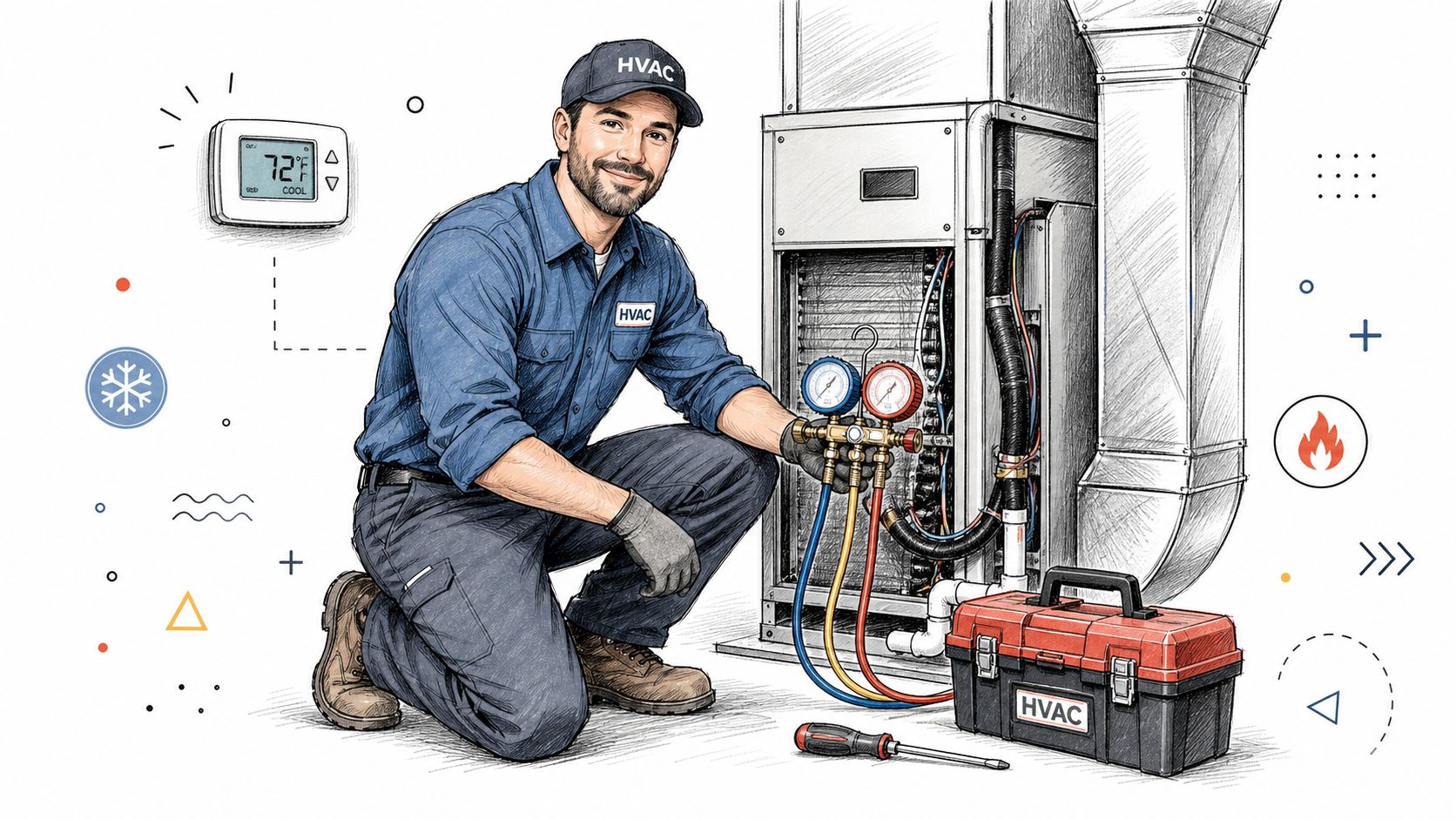
HVAC is one of those careers people sleep on until their heat dies in January or the AC quits in July. Then suddenly, the technician who can diagnose airflow issues, replace a blower motor, or tune a rooftop unit becomes the hero of the day. That's why HVAC stays near the top of vocational training jobs worth considering.
You can enter through trade school, a contractor-sponsored training path, or a union apprenticeship. Big names like Lennox, Carrier, and Trane all have dealer networks, and independent service companies in busy metro areas hire helpers who can grow fast if they show up ready to learn.
Start with the cert that makes you employable
If you want to get hired faster, make EPA Section 608 certification your first move. Employers don't want a trainee who still can't legally handle refrigerants. Get that done early, then learn how to read gauges, trace electrical faults, and talk to customers without sounding lost.
A strong path looks like this: helper role, EPA cert, hands-on troubleshooting, then specialization. Commercial systems are usually the best long-term lane if you like larger equipment, service contracts, and steadier work.
- Target property managers: Apartment complexes, office parks, and retail centers often need recurring HVAC service, not one-off calls.
- Learn diagnostics fast: Anyone can swap parts. Techs who can diagnose failures become valuable quicker.
- Don't ignore customer skills: Residential companies love techs who can explain repairs clearly and sell maintenance plans without being pushy.
Practical rule: Be the tech who fixes the issue on the first visit and explains it in plain English. That combo gets you callbacks, referrals, and trust.
If you like hands-on work, problem-solving, and a job that doesn't disappear when office jobs get weird, HVAC is a solid bet.
2. Electrical Technician/Electrician
Electricians build the systems everything else depends on. Homes, hospitals, warehouses, solar installs, EV chargers, data centers. None of it works without power done right. If you want a trade with range, this is it.
The classic route is still the best route. Join an apprenticeship, log your hours, learn code, and move toward journeyman licensing. Union programs through IBEW are strong, but plenty of non-union contractors also train well, especially in commercial construction and service work.
Best lane if you want bigger upside
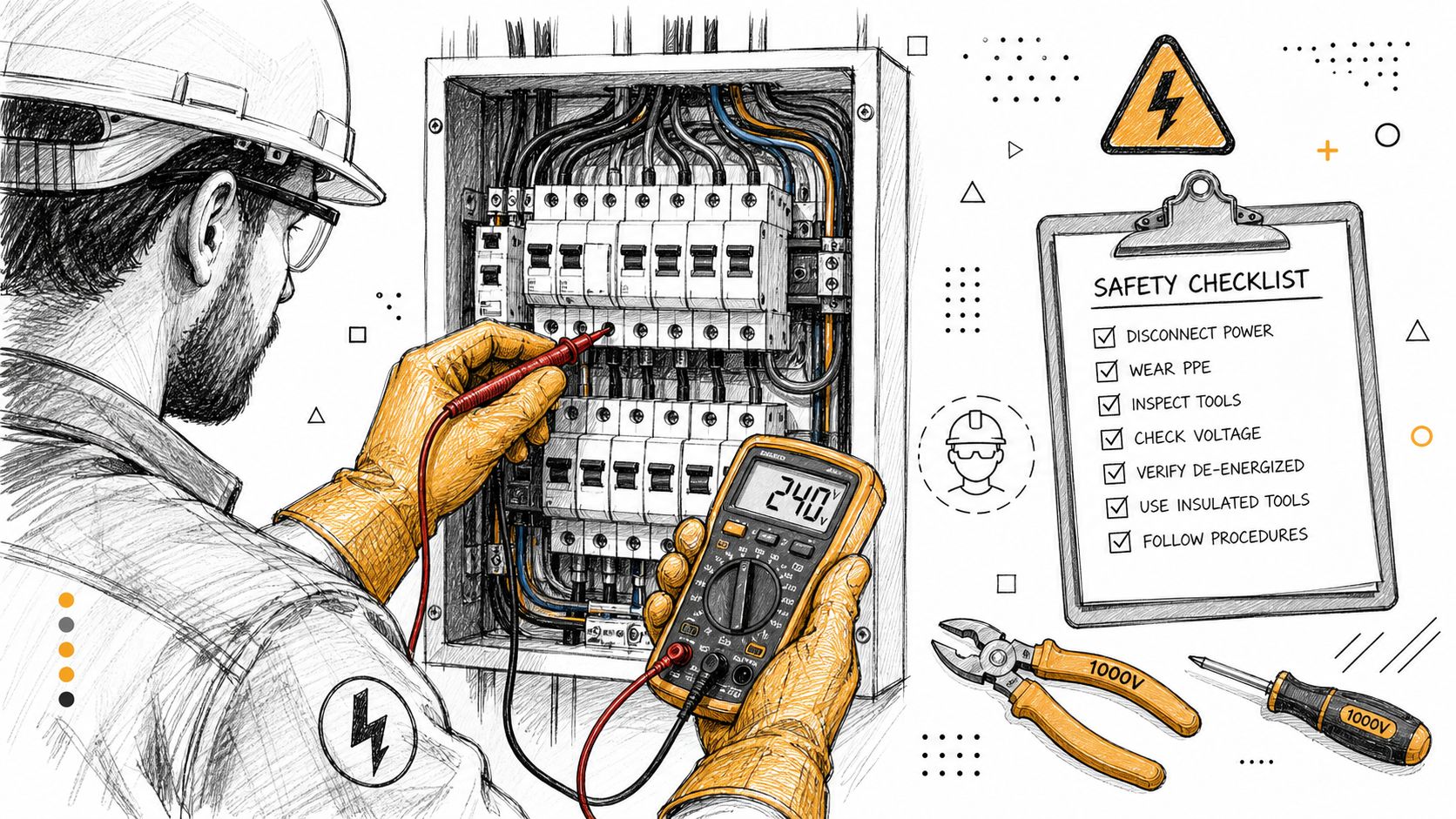
Residential wiring teaches fundamentals. Commercial and industrial work usually expand your ceiling. You'll read plans, bend conduit, troubleshoot panels, install controls, and deal with larger systems that make your skill set harder to replace.
Then there's the newer stuff. Solar companies like Sunrun and Tesla Energy need electricians. So do contractors installing EV charging infrastructure and smart-building systems. If you want ideas beyond the usual path, check out these high-paying jobs without a degree.
Here's how to play it smart:
- Follow the license path: Apprentice first, then journeyman, then master if your state supports it.
- Stay current on code: NEC updates matter. Good electricians don't “wing it” from memory.
- Build contractor relationships: General contractors and property managers remember the electrician who solves problems without drama.
Clean work wins. Fast work gets attention. Clean work that passes inspection gets you rehired.
This is one of the best vocational training jobs for people who want serious skill depth and room to branch into renewable energy, controls, or independent contracting later.
3. Plumbing Technician/Plumber
Plumbing isn't glamorous. It is valuable. Very valuable. If water, gas, drainage, and fixtures run through a building, plumbers stay busy. That's why this trade keeps producing stable careers for people who want practical work and clear advancement.
The entry route is straightforward. You learn through an apprenticeship, work under licensed plumbers, and build enough field judgment to handle installs, service calls, and code-compliant repairs. Union programs through the United Association are well known, but local contractors, franchise networks like Mr. Rooter, and independent shops also train people up.
How to become the plumber people call first
A rookie plumber usually starts with basics. Cut and fit pipe, install fixtures, clear drains, read plans, and learn local code. True money and security come when you can diagnose quickly and handle ugly situations calmly, especially in commercial or emergency service work.
There's also a practical edge here. Plumbing often creates repeat business. A homeowner who trusts you for a water heater install will call you again for a leak, remodel, or fixture upgrade. A restaurant manager who sees you fix a line fast may keep your number forever.
- Choose your lane early: Residential gives you variety and customer interaction. Commercial often means larger projects and fewer weekend surprises.
- Invest in modern tools: Hydro jetting gear, inspection cameras, and thermal imaging help you work smarter.
- Get serious about reputation: In plumbing, referrals are gold. So are five-word reviews like “showed up and fixed it.”
Green plumbing is another smart niche. Greywater systems, water-saving fixtures, and efficiency upgrades can separate you from the crowd, especially in markets where property owners care about utility costs and compliance.
If you want one of the most reliable vocational training jobs out there, plumbing deserves a long look.
4. Welding Technician/Welder
Welding can take you in a lot of directions fast. Fabrication shop. Construction site. Shipyard. Pipeline crew. Aerospace plant. That range is part of the appeal. You're learning a core skill that transfers across industries, and that makes welding one of the most flexible vocational training jobs on this list.
A short vocational program can get you started, but your real credibility comes from passing tests and producing clean work. Employers want to know whether you can run the process they need, in the position they need, under real conditions.

Certs and niches that actually matter
Start with the fundamentals. MIG, TIG, stick, and flux-core all show up in different shops and field settings. Then stack AWS certifications that fit the jobs you want. If you love precision work, look toward aerospace or specialty fabrication. If you like tougher environments and field crews, pipeline and structural work may fit better.
Boilermakers apprenticeships, shipbuilders like Huntington Ingalls and General Dynamics, and major manufacturers all hire welders with solid test results. Some candidates also break in through local fab shops, then move into better niches once they've built proof.
- Keep a project portfolio: Photos, material notes, and process details help when you don't have years of experience yet.
- Treat safety like part of the trade: Shops notice who respects procedures and who acts reckless.
- Learn adjacent tech: Robotic welding and CNC familiarity can make you more useful, especially in manufacturing.
If you're looking for training routes, these trade apprenticeship programs near you can help you map options.
A quick visual primer helps if you're still deciding whether welding fits your style:
Welding rewards people who can stay precise under pressure. If that sounds like you, this trade can open doors in a hurry.
5. Cybersecurity Analyst
Cybersecurity is one of the smartest degree-optional lanes on this list because the hiring signal is clear. Show that you can spot problems, explain risk, and work through real incidents, and employers will take you seriously. A lot of solid candidates get in by proving skills first, then stacking credentials once they're already working.
The best route is usually not “cybersecurity” as a first job title. Start where companies hire beginners. IT support with security tasks, junior SOC roles, compliance support, identity and access administration, and vulnerability management are all realistic entry points. That path works because it gives you something hiring managers care about most. Evidence.
The bootcamp to job path that works
Start with basics. Networking, Windows and Linux fundamentals, user access, log analysis, and common attack types come first. Then get CompTIA Security+ if you need a clean, recognized credential to get past resume filters.
After that, build proof you can show. Use TryHackMe or Hack The Box. Set up a home lab. Write short incident summaries that explain what happened, how you investigated it, and what you would fix. If you want a step-by-step plan, this guide on how to get into cybersecurity without a degree lays out the process clearly.
Here's my advice. Skip the fake “ethical hacker” branding until you have actual hands-on work to back it up. Entry-level hiring managers are usually more impressed by a candidate who can explain phishing triage, MFA gaps, suspicious PowerShell activity, or basic SIEM alerts than someone tossing around buzzwords.
Platforms that focus on skills-first hiring can help here, especially if your resume is light on formal experience. HiredBySkill fits this lane well because it rewards candidates who can show certs, labs, projects, and practical readiness instead of just listing a degree. If you're comparing paths across industries too, these healthcare jobs that don't require a degree are another good reminder that skills-based hiring is spreading well beyond the trades.
The fastest way to sound credible in cybersecurity is to describe what you tested, what you found, and what you changed.
That gets you interviews. Clear thinking gets you hired.
Once you're in, the upside is strong. You can move into cloud security, endpoint protection, governance and compliance, or threat detection. If you like solving messy problems and you're willing to keep learning, this path can pay off fast.
6. Network Technician/Administrator
Network roles are a sweet spot for people who like systems, troubleshooting, and visible results. When the office can't connect, the warehouse scanners go down, or a remote team loses access, network techs step in and fix the mess. That kind of usefulness travels well across industries.
You don't need to start with a huge title. Junior support, help desk with networking exposure, field technician work, and NOC roles can all lead into network administration. Certifications like CompTIA Network+ and Cisco CCNA give employers a clean signal that you know the basics.
How to build proof before someone hires you
This is one of the easiest tech tracks for self-built evidence. Use Cisco Packet Tracer or GNS3. Build a small lab. Configure VLANs, routing, DHCP, firewall rules, and basic troubleshooting scenarios. Then document it like a pro.
A hiring manager may forgive limited job history if your portfolio shows clean diagrams, setup notes, and a real understanding of why the network works the way it does.
A few smart moves:
- Learn to explain clearly: End users and managers don't care about your jargon. They care whether you solved the issue.
- Pair networking with security: That combination makes you more useful right away.
- Look at cloud-adjacent paths: AWS, Azure, and hybrid environments increasingly blur the old “network only” lane.
One more thing matters here. Public job-training resources are increasingly steering workers toward training-planning support, resume help, and interview prep instead of a single fixed path, as explained by USA.gov's job training resources. That's especially useful in network roles, where practical proof and communication matter as much as classroom time.
If you want a technical career without pretending to be a software engineer, network administration is a smart pick.
7. Medical/Surgical Technologist
If you want healthcare without spending years in school, surgical technology is one of the strongest options. You're part of the operating room team. You prep instruments, maintain sterile fields, support procedures, and help keep the room running smoothly when everyone needs precision.
This role suits people who are calm, organized, and not rattled by pressure. You don't need to be chatty. You do need to be sharp, dependable, and serious about process.
What gets you hired faster in healthcare
Start with an accredited surgical technologist program, then move straight into certification if your market expects it. Hospitals, ambulatory surgery centers, and specialty surgical centers all hire, but your first employer will care a lot about whether you understand sterile technique and can function as part of a team.
Cardiac, orthopedic, trauma, and robotic surgery settings can become attractive specialties once you've got core experience. Military medical backgrounds can also transfer well here because the environment rewards discipline and consistency.
- Prioritize accredited training: Healthcare employers care about program quality.
- Practice teamwork language: Surgeons, nurses, and techs all need to trust your communication.
- Show adaptability: Employers like candidates who can support different specialties, not just one narrow case type.
For more degree-optional care roles, browse these healthcare jobs that don't require a degree.
There's also a broader reason healthcare training is worth respecting. Evidence from a policy review found that vocational programs perform best when they combine classroom instruction with work-based experience, and 7 of 12 evaluated programs with an internship or similar work component improved employment and or earnings, according to J-PAL's review of vocational and skills training programs. Surgical tech training fits that logic well because employers want people who can perform, not just people who passed a quiz.
8. Commercial Driver CDL Truck Driver/Logistics
Driving isn't just “sit in a truck and go.” Good commercial drivers manage time, safety, inspections, route discipline, paperwork, customer interaction, and sometimes specialized cargo rules. If you want vocational training jobs with a fast entry ramp, CDL work belongs near the top.
Many people get in through a short CDL program, then join a larger fleet for structured experience. Companies like J.B. Hunt, Schneider National, and Werner Enterprises are common starting points. From there, drivers often branch into dedicated routes, regional work, last-mile delivery, refrigerated freight, tanker, or hazmat.
The smartest entry route
Start with CDL-A through a reputable school. Then choose a first employer that trains, not one that throws you keys and disappears. Your first year is about building a clean safety record and learning how freight operations work in real life.
Specialization is where strategy matters. Hazmat, tanker, oversized, and refrigerated loads often create better opportunities than staying in the most crowded lane forever. If you're still figuring out licensing, these steps for getting your CDL are a useful starting point.
Reliability is your brand in logistics. If dispatch trusts you, better routes and better options usually follow.
This field also benefits from strong market visibility. Indeed currently lists 44,000+ vocational training jobs, and job-training resources keep emphasizing that workers need help identifying what training fits their goals. For CDL candidates, that means choosing the right freight type and employer setup, not just grabbing the first school you find.
If you like independence, motion, and a job that plugs directly into the economy, trucking and logistics can be a great fit.
9. Air Conditioning and Refrigeration Technician
This one deserves its own lane because commercial refrigeration is not just “HVAC, but colder.” Restaurants, supermarkets, cold storage warehouses, and food-service operations lose money fast when refrigeration systems fail. That urgency makes skilled HVAC/R techs extremely valuable.
Many individuals enter through HVAC training, then lean into refrigeration. Once you understand refrigerant cycles, controls, leak detection, compressors, and commercial service workflows, you can move into more specialized work that many general HVAC techs avoid.
Why this niche pays off
Think about who needs this work done right away. Grocery stores. Restaurant groups. Food distributors. Ice machines, walk-ins, reach-ins, rack systems, and industrial refrigeration setups don't wait politely until next week.
EPA Section 608 matters here too, but the bigger differentiator is comfort with commercial troubleshooting. Type II and Type III knowledge, after-hours emergency readiness, and strong diagnostic habits can make you a go-to technician for accounts that need reliability more than cheap labor.
A few ways to stand out:
- Build repeat commercial relationships: Restaurant and supermarket managers remember the tech who shows up prepared.
- Learn controls, not just parts swapping: Better diagnostics separate strong techs from average ones.
- Consider industrial niches: Ammonia systems and larger refrigeration environments can become a premium lane if you want deeper specialization.
This is one of the best vocational training jobs for people who want steady technical work with a clear service need and less competition than general residential HVAC.
10. Data Analytics Specialist
Data analytics is proof that vocational training jobs now stretch far beyond traditional trades. If you can pull clean data, analyze it, and explain what it means to a business, you can build a real career without waiting around for a four-year degree to validate you.
Bootcamps, certificate programs, and self-directed learning all work here. The catch is simple. You need evidence. Not “I'm a fast learner.” Not “I'm passionate about data.” Actual projects.

The portfolio-first route
Start with SQL and Excel. They're still everywhere. Then add Python, Tableau, or Power BI depending on the kinds of roles you want. Build projects that answer business questions, not school-style exercises.
Good portfolio examples include sales trend analysis, churn analysis, inventory dashboards, customer segmentation, and operations reporting. Use GitHub, a clean Notion page, or a personal site to show the work. If you're job hunting soon, this guide on how to get a job without a degree will help you frame your skills clearly.
The vocational training market itself is projected to grow from USD 654.82 billion in 2026 to USD 856.58 billion by 2031 at a 5.52% CAGR, and IT training is projected to grow at 9.7% CAGR through 2031, according to Mordor Intelligence's vocational training market report. That doesn't guarantee you a job. It does tell you where training demand and employer attention are moving.
If you can turn messy data into a decision someone can act on, you're already doing analyst work.
This path works especially well for career switchers who like tools, logic, and storytelling more than abstract coding for its own sake.
10-Point Comparison of Vocational Training Jobs
| Role | Implementation complexity 🔄 | Resource requirements ⚡ | Expected outcomes ⭐ | Ideal use cases 💡 | Key advantages 📊 |
|---|---|---|---|---|---|
| HVAC Technician | Moderate–high: 4–5 year apprenticeship; mix mechanical/electrical | Tools, vehicle, EPA Section 608, diagnostic equipment | ⭐ Stable demand; $50k–$65k+ annually | Residential/commercial install, maintenance, emergency repairs | 📊 Recession-resistant demand; path to business ownership |
| Electrical Technician / Electrician | High: 4–5 year apprenticeship; licensing and NEC compliance | Insulated tools, safety gear, journeyman/master licenses | ⭐ High earning potential; $56k–$100k+ with experience | Construction, industrial, renewable energy, EV charging | 📊 Transferable skills; strong union representation; high-pay specialties |
| Plumbing Technician / Plumber | Moderate–high: 4–5 year apprenticeship; code knowledge | Pipe tools, licensing, backflow training, hazardous-proc precautions | ⭐ Consistent demand; $50k–$90k+ as master plumber | Residential/commercial installs, leak/drain emergencies, green plumbing | 📊 Essential service; strong self-employment potential |
| Welding Technician / Welder | Low–moderate: 6 months–2 years training; process variety to master | Welding PPE, torches, AWS certifications, access to fabrication shops | ⭐ Solid pay $50k–$65k; $70k–$100k+ in specializations | Manufacturing, construction, shipbuilding, pipeline, aerospace | 📊 Short training to entry; portable skills; high specialization premiums |
| Cybersecurity Analyst | Variable: bootcamps → advanced certs; continuous learning required | Labs/tools, certs (Security+, CEH, CISSP), threat intel platforms | ⭐ High pay: $60k–$130k+; strong job growth and security | SOCs, enterprise/cloud security, incident response, remote roles | 📊 Critical demand; remote-friendly; multiple specialization paths |
| Network Technician / Administrator | Moderate: vendor certs/bootcamps; practical lab experience needed | Network gear/labs, certs (Network+, CCNA), cloud basics | ⭐ Solid pay $50k–$95k+; clear progression to architect roles | SMB IT, data centers, cloud/hybrid networking support | 📊 Affordable cert pathways; steady demand; career progression |
| Medical / Surgical Technologist | Low–moderate: 12–24 month accredited program; CST certification | Accredited program, clinical rotations, CST credential | ⭐ Stable healthcare role; $48k–$70k+; meaningful patient impact | Hospitals, ambulatory surgical centers, specialty ORs | 📊 Short training; defined certification path; steady demand |
| Commercial Driver (CDL) | Low: CDL training 4–8 weeks; endorsements for specialties | CDL-A, DOT medical card, vehicle, endorsements (hazmat, tanker) | ⭐ Good pay $50k–$90k+; owner-operator and bonus opportunities | Long-haul logistics, last-mile delivery, refrigerated/hazmat loads | 📊 Rapid entry; high demand; flexible/independent work |
| Air Conditioning & Refrigeration Technician | High: HVAC apprenticeship with refrigeration focus (4–5 yrs) | EPA 608 Type II/III, refrigeration tools, ammonia training for industrial | ⭐ Premium pay $55k–$75k+; strong commercial demand | Supermarkets, restaurants, cold storage emergency service | 📊 Specialized skills command higher rates; emergency overtime income |
| Data Analytics Specialist | Moderate: bootcamps (12–16 wks) or self-study; stats/programming learning curve | SQL/Python/Tableau, portfolio projects, certifications or bootcamp | ⭐ Strong pay $55k–$120k+; remote-friendly; growth to data science | BI teams, marketing/finance analytics, product analytics | 📊 Fast pathways; high demand; measurable business impact |
Your Next Move How to Land These Vocational Jobs
Feeling fired up is good. Acting on it is better.
The biggest mistake people make with vocational training jobs is treating them like a vague backup plan. That's how you end up bouncing between random programs, collecting half-useful certificates, and still not getting interviews. Pick a lane. Commit to it. Build proof that matches the lane. Then apply like someone who already belongs there.
Here's the pattern that works across almost every job on this list. First, choose a target role based on how you like to work. If you want hands-on, physical problem-solving, go toward HVAC, electrical, plumbing, welding, CDL, or refrigeration. If you prefer systems and screens, look at cybersecurity, networking, or data analytics. If you want healthcare without a long degree path, surgical tech stands out.
Second, get the certification or training employers recognize. Not the shiny one with the coolest marketing. The one hiring managers expect. EPA Section 608 for HVAC and refrigeration. Apprenticeship hours and licensing progress for electrical and plumbing. AWS certs for welding. Security+ for cyber. Network+ or CCNA for networking. Accredited training and certification prep for surgical technology. CDL-A for commercial driving. SQL-led portfolio work for analytics.
Third, stack evidence. Many applicants often become complacent at this stage. Employers don't just want “trained.” They want believable. That means photos of completed welding work, a home lab for networking, documented cyber exercises, a clean analytics portfolio, or references from a field supervisor. In trades, your proof may be simpler. Showing up on time, learning fast, and not making expensive mistakes goes a long way. In tech, proof usually needs to be visible online.
There's also a bigger reason this strategy works. Long-term outcomes for vocational routes can be strong when the match is right. Research highlighted by the American Economic Association found that vocational students earned 6 percent more than general education peers by age 33, and employment outcomes were stronger for people with vocational qualifications. That's the part people often miss. This isn't just about getting your first job. It's about building a career path with staying power.
When you're ready to apply, use employers and platforms that already understand skills-first hiring. Don't waste energy trying to convince degree-obsessed companies to change their minds. Go where your training, certifications, apprenticeship hours, military experience, bootcamp work, or real-world skills already count.
That's where HiredBySkill becomes useful. You can filter for degree-optional roles, look by industry or city, and focus on jobs that match how employers hire in these fields. Build a skills-based resume with their free tool. Search by trade, tech specialty, healthcare support role, or logistics path. Then start applying to companies that care about what you can do.
You do not need to wait until you feel perfectly ready. You need a direction, a credible skill base, and a plan you can execute this month. Pick one path from this list. Find the cert, program, apprenticeship, or bootcamp that leads directly to work. Build proof. Apply consistently. Keep leveling up after you get in.
That's how people win with vocational training jobs. Not by hoping. By moving.
If you want a faster path into degree-optional work, check out HiredBySkill. It's built for people getting hired through skills, certifications, apprenticeships, military experience, bootcamps, and real-world know-how, not just college degrees. You can browse roles across tech, trades, healthcare, logistics, and more, build a stronger resume, and target employers already open to skills-first talent.
Latest jobs
- Customer Service Representative — Tilson Homes
- Industrial Construction & Refractory Technician — Abstrakt Marketing Group LLC
- Traveling Concrete Superintendent — Abstrakt Marketing Group LLC
- PT Dishwasher — DOUBLE EAGLE RESORT INC
- Operations Account Manager — Weber Distribution LLC
- Director of Supply Chain — GoMacro LLC
- BAR PREP — Little Ruby's Cafe
- Arcade Attendant — FAMILY ENTERTAINMENT GROUP LLC