8 Powerful Career Statement Examples for 2026
Nail your first impression with these 8 career statement examples for every background. Get templates for tech, trades, veterans, and career changers.
That Dreaded “About Me” Box? Let's Crush It.
You've got the skills, the drive, and the work ethic. But turning all of that into three or four sharp sentences can feel way harder than it should. A career statement has to do a lot of work fast. It needs to show what you do, what you're good at, and why someone should keep reading. If you came up through a bootcamp, the military, an apprenticeship, or your own late-night self-teaching marathon, that pressure can feel even worse because most advice out there still acts like everyone took the same college-to-career path.
That's exactly why solid career statement examples matter. You need examples that sound like real people, not generic “results-driven professional” mush. The good news is that skills-first hiring is moving your way. In 2025, 85% of employers are using skills-based hiring, up from 81% the previous year, and 76% use skills tests to validate ability, according to TestGorilla's State of Skills-Based Hiring 2025. Translation: employers are getting better at valuing what you can do.
We've pulled together eight career statement examples built for real-world, nontraditional paths. If you also want your profile to look as polished as your wording, it helps to create high-impact AI headshots before you hit apply.
Table of Contents
- 1. The Skills-Forward Entry-Level Statement
- 2. The Military Transition Statement
- 3. The Apprenticeship-to-Advancement Statement
- 4. The Self-Taught Specialist Statement
- 5. The Mid-Career Pivot Statement
- 6. The Senior Practitioner / Mentor Statement
- 7. The Credentials-First Government & Defense Statement
- 8. The Personal Brand / Niche Expert Statement
- 8-Point Career Statement Comparison
- Your Turn Build a Statement That Opens Doors
1. The Skills-Forward Entry-Level Statement
If you're a bootcamp grad, certification-first applicant, or career-switcher, stop apologizing for being “entry level.” Your statement should sell readiness, not years. Hiring managers don't need a novel. They need evidence that you've built relevant skills and can use them on day one.
This style works best when you lead with tools, projects, and certifications. Not “passionate about technology.” Not “eager to learn.” Everybody writes that. Name the stack. Name the work. Name the result.
Lead with proof, not potential
A lot of career statement examples online still assume a degree-heavy background, even though more than 300,000 job seekers apply annually for skills-based roles that rely on certifications or experience instead of diplomas, while fewer than 5% of online career statement guides address bootcamp, military, or apprenticeship paths, according to this U.S. Department of Labor resource discussion. That gap is exactly why your wording has to do extra work.
Use specifics right away:
- Name the credential: Google Career Certificate, AWS Certified Cloud Practitioner, Security+, or PMP-in-progress.
- Name the tools: Python, React, Docker, AWS, Splunk, SQL.
- Name the work: capstone projects, freelance builds, lab environments, GitHub repos.
Practical rule: If a hiring manager can't tell what you actually do from your first sentence, rewrite it.
A strong example
“Entry-level product and operations candidate with hands-on project management training through Google Career Certificates and experience building workflow documentation, stakeholder updates, and project roadmaps in simulated and freelance environments. Comfortable with Jira, Sheets, and cross-functional collaboration, and ready to support delivery teams with organized execution and strong communication.”
That works because it sounds grounded. It doesn't beg. It doesn't explain away a missing degree. It focuses on usable value.
If you're writing a resume to match this kind of statement, study how to list qualifications on a resume so the summary and skills section tell the same story.
2. The Military Transition Statement
Veterans often undersell themselves in civilian hiring because they either leave out key experience or pack their statement with terms civilian recruiters don't understand. Fix that fast. Your statement should translate leadership, systems experience, clearances, and technical training into language employers already use.
You're not “starting over.” You're repositioning.

Translate service into business language
A Navy IT specialist moving into cybersecurity should sound like someone who secures networks, follows compliance standards, and responds to incidents. An Army logistics NCO should sound like someone who manages operations, inventory flow, and team execution under pressure.
Keep the parts civilians already recognize. Security clearances stay. Security+ stays. Advanced technical school stays. Then swap the jargon.
- Instead of military-only shorthand: use “led team operations,” “managed secure systems,” or “coordinated logistics across multiple functions.”
- Instead of task lists: describe the business value, like uptime, efficiency, readiness, training, or process discipline.
- Instead of vague pride statements: mention transition prep, including translating military experience to a civilian resume.
Civilian employers don't need less of your military background. They need a clearer translation of it.
A strong example
“Cybersecurity and IT operations professional transitioning from military service with hands-on experience managing secure networks, supporting users in high-pressure environments, and working within strict security protocols. Active clearance, Security+ certification, and a track record of team leadership make me well prepared for analyst roles focused on incident response, system reliability, and operational security.”
That statement does three things right. It keeps the candidate's strongest assets visible, it avoids unexplained military jargon, and it points directly to the target role. That's the whole game.
3. The Apprenticeship-to-Advancement Statement
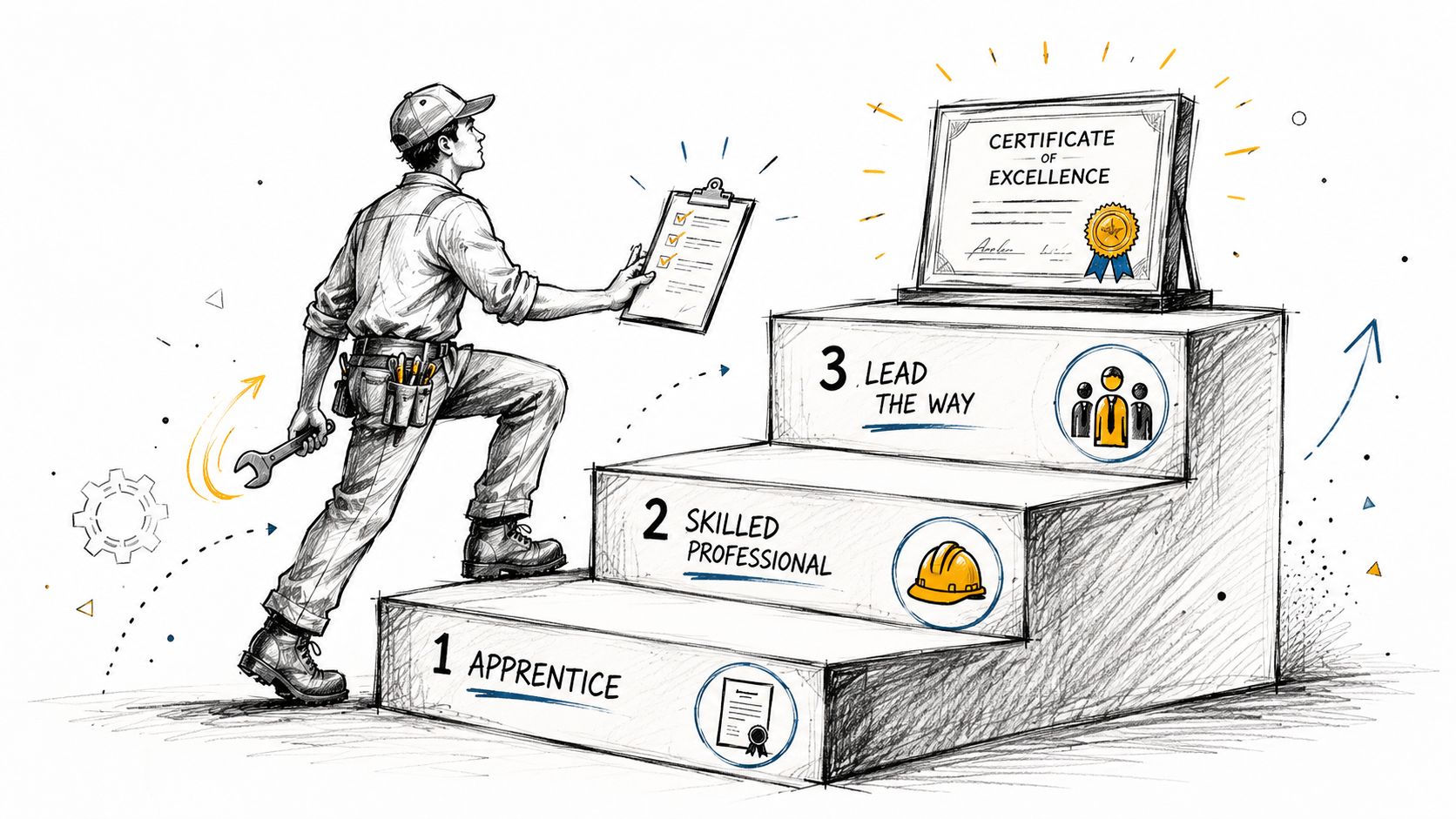
Trade pros get stuck when they write statements that sound too modest. If you've spent years in the field, earned licenses, trained newer workers, or handled customers on the job, you already have advancement material. Your statement should sound like someone stepping up, not someone just clocking in.
This matters even more in skills-first hiring because employers are weighing practical ability heavily. NACE's Job Outlook 2026 says employers prioritize critical thinking, communication, and teamwork in 20% more candidates than ever before, and 70% of employers now rely on skill-based hiring processes instead of GPA or degree requirements, according to NACE.
Show mastery and readiness
If you're an electrician moving toward foreman, or an HVAC tech aiming for service manager, start with the highest proof point you've earned. That might be your license, EPA certification, supervisor training, or years running jobs independently.
Then add the stuff that gets people promoted:
- Customer-facing skill: strong service communication and repeat-client trust
- Team value: mentoring apprentices or coordinating crews
- Operational value: safety focus, scheduling discipline, clean documentation
A strong example
“Licensed electrician with deep field experience in commercial and residential work, known for safe execution, reliable troubleshooting, and strong crew coordination. Ready to step into a foreman-level role by combining hands-on technical knowledge, jobsite leadership, and a track record of training newer team members.”
If you're building a statement for a trade role, spend a little time reviewing local and career-path options through trade apprenticeship programs near me. It helps you match your wording to where you want to go next, not just where you've been.
4. The Self-Taught Specialist Statement
This one is for the people who learned on nights, weekends, lunch breaks, and pure stubbornness. You built the skill before anyone gave you the title. Good. Your statement should make that obvious.
Self-taught candidates often make one big mistake. They spend too much space explaining how they learned and not enough showing what they can do now.

Your portfolio is the credential
For self-taught developers, designers, analysts, and marketers, your body of work is the ultimate closer. The statement should point to it without sounding defensive. Skip “despite not having a degree.” Employers already know what's on your resume. Use the space to prove competence.
A strong self-taught statement usually includes three ingredients:
- Your specialty: UX design, Python data analysis, front-end development, content strategy
- Your proof: portfolio, shipped projects, freelance work, open-source contributions
- Your target: agency work, product team role, analyst role, client-facing position
Your statement shouldn't argue that self-taught learning counts. It should make the employer forget to ask.
A strong example
“Self-taught front-end developer with a portfolio of responsive web projects built with React, JavaScript, and modern CSS. I've developed my skills through consistent project work, public code samples, and real-world problem solving, and I'm ready to contribute to product teams that care about clean interfaces, fast iteration, and user-focused builds.”
There's a reason this approach lands better than generic mission-statement fluff. Analysis of more than 1,200 job seeker forum posts found that 68% of users ask how to translate hands-on experience into a compelling narrative, while 74% of hiring managers in non-degree sectors reject career statements that don't name specific tools, certifications, or quantified outcomes, and only 11% of online resources give targeted examples, according to Indeed's career development discussion.
If you're aiming for software roles, this guide on how to become a software developer without a degree is worth a look while you tighten up your wording.
5. The Mid-Career Pivot Statement
Career pivots fall apart when the statement sounds confused. Don't write like you're asking permission. Write like you've made a decision and backed it up with action.
The easiest structure is simple. Start with the new direction. Then connect your old experience to it. Then mention the fresh training, certification, or project work that proves you're serious.
Make the pivot sound intentional
SMART goal thinking helps here because it forces your pivot to sound concrete instead of dreamy. Professional development resources often use examples like aiming to be promoted to Project Lead within the next five years by sharpening project management skills and earning a PMP, or making a career change from Graphic Designer to Web Developer within three years through a structured study plan and daily commitment, as shown in GoSkills' career goals statement examples.
That same logic works for a pivot statement. Clear target. Clear bridge. Clear action.
A strong example
“Data analyst in transition from hospitality operations, bringing years of customer-facing problem solving and process improvement experience into analytics work. I've built new skills in SQL, spreadsheets, and dashboard reporting through focused training and hands-on projects, and I'm now pursuing analyst roles where I can turn messy operational data into clear business decisions.”
This style works because it frames your old career as an asset, not baggage. Hospitality teaches service and pace. Sales teaches persuasion and pattern recognition. HR teaches systems thinking and people data. Use that.
If your pivot still feels messy on paper, browse how to get a job without a degree and pull language from roles that already fit the direction you want.
6. The Senior Practitioner / Mentor Statement
Once you've got serious experience, your statement needs to do more than say you're “seasoned.” That word tells employers almost nothing. Senior-level career statement examples should show scope, judgment, and the ability to make other people better.
If you've spent years building systems, training teams, or solving ugly problems nobody else wanted, say that plainly.

Lead with scale, then add mentorship
A senior network architect shouldn't sound like a task-doer. A master electrician shouldn't sound like only a solo technician. Senior people are paid for range, judgment, and impact.
That means your statement should touch at least two of these:
- Operational scope: the kind of systems, clients, or environments you've handled
- Leadership value: mentoring juniors, training crews, setting standards
- Strategic thinking: solving root problems, improving reliability, advising stakeholders
A strong example
“Senior infrastructure professional with deep experience designing secure, reliable systems and guiding teams through complex technical work. Known for mentoring junior talent, improving operating standards, and bringing calm, practical judgment to high-stakes decisions, I'm best positioned in roles that blend hands-on expertise with leadership and advisory impact.”
For senior candidates, vague adjectives are a trap. “Experienced.” “Dedicated.” “Results-oriented.” None of that hits. Name the level of work. Name the people you help. Name the kind of decisions you own.
7. The Credentials-First Government & Defense Statement
Government, defense, and contractor roles play by different rules. In these searches, your clearance, compliance knowledge, and certifications often matter before anything else. So put those items first. Not later. Not buried in line three.
This isn't the place for a poetic summary. It's the place for precision.
Put non-negotiables first
If you hold an active clearance, lead with it. If you've worked inside NIST, CUI, FedRAMP, HIPAA, or other tightly regulated environments, say so. If your certifications are central to the role, stack them near the top of the statement in a way that reads cleanly.
A government and defense statement should answer these questions immediately:
- Can this person meet the access requirements?
- Do they understand regulated environments?
- Can they perform in security-sensitive work?
A strong example
“Cybersecurity professional with active clearance, Security+ certification, and hands-on experience supporting secure environments with strict compliance requirements. Skilled in security operations, user support, and policy-driven technical work, with a focus on roles that require disciplined execution, documentation accuracy, and protection of sensitive systems.”
In regulated hiring, clarity beats personality. Lead with what qualifies you to enter the room.
If you're applying across both public-sector and commercial roles, keep two versions of this statement. One should be credentials-first. The other can be broader and more conversational. That small tweak saves a lot of missed matches.
8. The Personal Brand / Niche Expert Statement
If you've built an audience, a reputation, or a recognizable niche, that is not extra fluff. That is part of your professional proof. Use it. Just don't make the statement sound like an influencer bio.
The trick is to connect your platform to business value. Your audience matters because it shows trust, clarity, consistency, and subject-matter relevance.
Make your audience part of your value
Maybe you teach coding tutorials. Maybe you write about cloud architecture for startups. Maybe you run a niche consulting brand in operations or product strategy. The statement should identify the niche first, then tie your visibility to the role.
There's also a smart way to structure the proof. Resume guidance for skills-based candidates recommends tying skills to outcomes using a formula of what you did, how you did it, and the impact, such as automating MIS reporting to save 15 hours a month and support faster decisions across three departments, as outlined in LinkedIn's skills-based resume writing guidance. That same formula works beautifully in a personal-brand statement.
A strong example
“Content and developer education specialist with a strong niche in beginner-friendly coding and technical communication. I've built a trusted body of work through tutorials, public content, and community engagement, and I'm a strong fit for roles where product education, audience trust, and clear technical storytelling directly support growth.”
If you're using LinkedIn as your main platform, spend time mastering LinkedIn personal branding so your headline, About section, featured links, and career statement all reinforce the same message.
8-Point Career Statement Comparison
| Approach | Implementation Complexity 🔄 | Resource Requirements 💡 | Expected Outcomes ⭐ / 📊 | Ideal Use Cases 📊 | Key Advantages ⭐ |
|---|---|---|---|---|---|
| The Skills-Forward Entry-Level Statement | Low–Medium, assemble projects & certs; straightforward framing | Moderate, bootcamp/cert costs, portfolio/GitHub time | Faster shortlisting for skills-first roles; junior role placement | Bootcamp grads, career-changers, entry-level tech roles | Highlights demonstrable skills; ATS-friendly; shows initiative |
| The Military Transition Statement | Medium, requires translating jargon into civilian terms | Low–Medium, TAP tools, veteran networks, translation help | High impact for defense/government roles; clearances boost hireability | Veterans with technical training or active clearances | Leverages discipline, leadership, and security clearances |
| The Apprenticeship-to-Advancement Statement | Medium, document licenses, projects, progression | High, years of field experience, licenses, continuing ed | Clear path to foreman/manager or business ownership; higher pay | Licensed tradespeople seeking supervisory or owner roles | Trusted credentials; direct job performance; wage premium |
| The Self-Taught Specialist Statement | Low–Medium, curate portfolio and evidence of projects | Low, time investment, online courses, portfolio hosting | Portfolio-driven hires in creative/tech; credibility varies by industry | Self-taught developers, designers, creatives without degrees | Demonstrates initiative, cost-effective learning, practical results |
| The Mid-Career Pivot Statement | High, must balance past career with new focus convincingly | Moderate, reskilling (courses/bootcamps), networking, certifications | Positions candidate as strategic, transferable-skill hire; may face commitment scrutiny | Professionals intentionally changing industries or roles | Reframes experience as asset; brings maturity and cross-domain insight |
| The Senior Practitioner / Mentor Statement | Medium, focus on impact, mentorship, and thought leadership | High, long track record, speaking/writing, mentoring activities | Opens leadership, advisory, and high-comp roles with premium pay | Experienced leaders, mentors, senior technical staff (10+ yrs) | Commands respect; scalable team impact through mentorship |
| The Credentials-First Government & Defense Statement | Medium, strict, compliance-focused ordering of credentials | High, obtaining/maintaining clearances and formal certs | Strong fit for federal/contract roles; job security and benefits | Clearance holders, federal contractors, defense IT/security roles | Clearances and compliance expertise unlock specialized, scarce roles |
| The Personal Brand / Niche Expert Statement | Medium, requires consistent messaging and niche clarity | High, content production, audience building, monetization efforts | Leads to consulting, speaking, and advisory opportunities; highly differentiated | Content creators, consultants, indie entrepreneurs with audiences | Audience and reputation act as tangible assets; strong differentiation |
Your Turn Build a Statement That Opens Doors
You've seen enough career statement examples now to spot the pattern. The best ones aren't fancy. They're clear. They tell the reader what you do, what proof you have, and where you're headed next. That's it. Short, sharp, specific.
If you're on a nontraditional path, this matters even more because so many employers still need help understanding how your experience translates. A lot of career advice is still stuck in an old model where college pedigree does the talking for you. For STARs, your statement has to do that work instead. The upside is that skills-first hiring keeps moving in your favor, and employers are paying more attention to demonstrated ability.
You should also know what not to do. Don't write a mini autobiography. Don't open with “motivated professional seeking opportunity to grow.” Don't hide your tools, credentials, or target role behind vague personality words. And definitely don't force your story into degree-centric language that doesn't fit your path. If you learned through military service, apprenticeships, bootcamps, side projects, freelance work, or years on the job, that's not a weakness to explain away. It's your angle.
One useful shortcut is to build your statement around three parts. First, your current professional identity or direction. Second, your strongest proof, such as tools, certifications, hands-on experience, leadership, or portfolio work. Third, the kind of role or contribution you want next. Keep it tight enough to scan in seconds, but detailed enough to feel real.
Here's another insider move. Customize your statement for clusters of jobs, not every single posting. Make one version for entry-level tech support, one for junior data roles, one for trade leadership roles, one for cybersecurity analyst applications, and so on. You don't need twenty versions. You need a few strong ones that match the language employers already use.
History backs up this more targeted approach. Career goal statements have shifted from generic personal summaries to outcome-driven statements built around how you'll achieve your next step, including examples like moving from marketing coordinator to marketing manager through specific training and project work, or changing from nursery employee to primary school teacher by completing a PGCE and gaining relevant experience, as discussed in Indeed's overview of career goal statements. That shift fits nontraditional candidates perfectly because it rewards action, not pedigree.
One final tip. Quantified achievements help when you have them. In one Canadian case study of 120 tech candidates, using a C.A.R. style career statement with measurable results increased interview conversion by 34% over generic summaries, and candidates who quantified achievements received 2.3x more recruiter callbacks, according to Professional Resumes Canada case studies. So if you've got a result you can back up, use it.
Take these examples, steal the structure, swap in your own proof, and make it sound like you. Your next opportunity is a lot closer once your introduction stops underselling you.
HiredBySkill is built for people exactly like you. If you want degree-optional roles in tech, cybersecurity, data, healthcare support, logistics, hospitality, or the trades, start browsing jobs on HiredBySkill and use the platform to find employers that care more about skills, certifications, and real experience than a diploma.
Latest jobs
- New Home Consultant — Fletcher Building
- Accountant - Supervisor Level — Bowman & Company LLP
- Service Technician — DAIOHS U S A INC
- Full Charge Bookkeeper — Bowman & Company LLP
- Substitute Administrative Assistant- St. Peter the Apostle Catholic School — St Peter the Apostle Catholic School
- Media Specialist- St Peter the Apostle Catholic School — St Peter the Apostle Catholic School
- Depot Supervisor — DAIOHS U S A INC
- Court Maintenance Worker — Royal Oaks Country Club Houston