Marketing Skills for CV: Land Your Dream Job in 2026
Level up your job search with the top 10 marketing skills for cv. Learn what recruiters want and how to showcase them for 2026 success, even without a degree.
Your CV is a marketing campaign. If it isn't selling your value in a few seconds, recruiters move on.
That stings a bit when you're a STAR, especially if you learned marketing through a bootcamp, freelance gigs, military service, creator work, volunteering, or by building your own thing after hours. You might have real skills, real wins, and real grit, but a blank CV still makes it feel like none of that counts. It does. The trick is translating your work into proof that hiring teams and applicant tracking systems can read fast.
The old version of a resume leaned hard on degrees and job titles. That model is fading. Marketing has become a measurable, tech-heavy field, and employers increasingly want proof that you can connect actions to outcomes with metrics, platforms, and tools, not just say you're creative or “good with people” according to recent marketing skills guidance. That's good news if you came up through an alternative route.
This guide gets straight to the point. You'll find the most useful marketing skills for CV writing right now, plus the part most articles skip: how to frame each skill when your experience came from side projects, community work, client freelancing, or self-taught practice. You'll also see resume-ready snippets you can adapt.
If you're polishing your CV and your profile at the same time, it's worth learning how to maximize LinkedIn for success.
Table of Contents
- 1. Digital Marketing & Social Media Strategy
- 2. SEO (Search Engine Optimization) & SEM
- 3. Content Marketing & Copywriting
- 4. Data Analytics & Marketing Metrics
- 5. Email Marketing & Marketing Automation
- 6. Video Marketing & Content Production
- 7. Brand Strategy & Positioning
- 8. Marketing Technology (MarTech) & CRM Platforms
- 9. Paid Advertising (PPC, Facebook Ads, LinkedIn Ads)
- 10. Customer Relationship Management (CRM) & Sales Enablement
- Top 10 Marketing Skills for CV, Comparison
- Skills, Not Diplomas, Get You Hired
1. Digital Marketing & Social Media Strategy
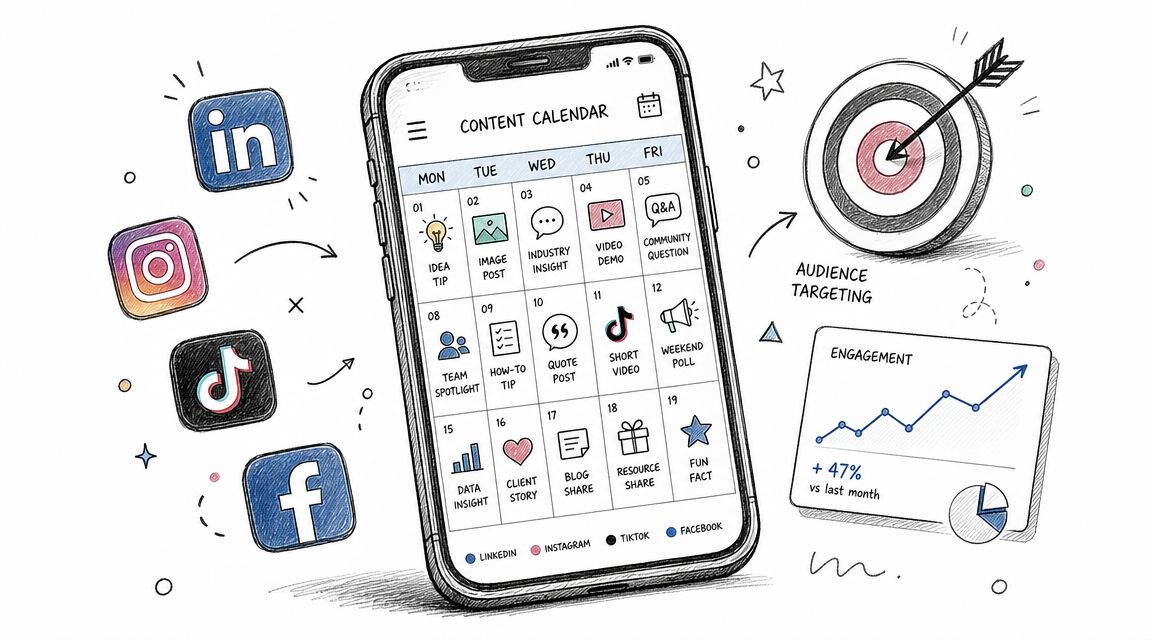
Social media isn't just posting. Good marketers choose channels, shape messaging, plan a content calendar, test formats, and track what moves people to click, reply, subscribe, or buy.
For a STAR, this is one of the easiest marketing skills for CV improvement because you can build proof without waiting for a company to “give you experience.” If you ran Instagram for a family business, built a TikTok for your own product, or managed LinkedIn content for a nonprofit, that counts.
What to show on your CV
Recruiters want specifics. Name platforms like LinkedIn, Instagram, TikTok, Meta Ads Manager, Buffer, Later, or Sprout Social. Mention whether you handled organic content, paid promotion, audience research, community replies, or reporting.
A weak line says: “Managed social media accounts.”
A stronger line says:
Built and scheduled multi-platform social content for a local service business across Instagram and LinkedIn, created monthly content calendars, tracked engagement trends, and adjusted posting strategy based on performance data.
That works because it shows process. It sounds like real work, not resume filler.
- Use platform names: Write the exact tools and channels you touched.
- Show ownership: Say whether you planned, created, published, optimized, or reported.
- Add context: Freelance, volunteer, creator, side project, and bootcamp client work all belong on a CV.
- Frame the document well: If you're not sure how to position project work, this guide on the purpose of a resume helps you think like a marketer instead of an applicant begging for a chance.
Practical rule: If you can show screenshots of calendars, post variations, and reporting dashboards in a portfolio, this skill becomes much more believable.
Certifications from Meta Blueprint, HubSpot Academy, and Hootsuite can help, but they don't replace proof. A certificate gets attention. A small portfolio gets interviews.
2. SEO (Search Engine Optimization) & SEM
You do not need a marketing degree to make this skill credible. You need proof that you can help a page get found, attract the right search, and connect that traffic to a business goal.
That makes SEO and SEM a strong fit for STARs. Search work is visible. A hiring manager can review a live page, a keyword map, a Search Console screenshot, an ad draft, or a before-and-after title tag and see whether you understand the job.
Candidates often undersell this area by listing “SEO” as a standalone skill. A better approach is to name the work, the tools, and the result you were aiming for. That might include keyword research in Semrush or Ahrefs, on-page edits in WordPress, metadata rewrites, internal linking, indexing checks in Google Search Console, or cleanup of redirects and broken pages. For SEM, include Google Ads, ad groups, keyword match types, negative keywords, landing page alignment, and performance reporting.
The University of Arizona Eller resume guidance for marketing roles also points candidates toward showing role-specific technical skills clearly, including analytics, SEO, and platform familiarity, because employers often screen for the actual systems used on the job as outlined by the University of Arizona Eller guidance.
For STARs, framing matters as much as the skill itself. If your experience came from freelance work, a personal site, a volunteer project, or a bootcamp build, say that plainly. Hiring teams care less about where you learned and more about whether you can explain what you changed, why you changed it, and what happened after. If you need help presenting nontraditional experience, this guide on how to list qualifications on a resume is useful.
A practical CV line looks like this:
Optimized service-page titles, headers, internal links, and metadata for a local business website, tracked indexing and query performance in Google Search Console, and supported higher visibility for intent-driven search terms.
If you also ran paid search, show the trade-off. Organic search builds over time. Paid search gets faster feedback but costs money and punishes weak landing pages. Candidates who understand both usually sound more job-ready because they can connect search intent to budget, conversion goals, and measurement.
Use evidence that a reviewer can verify. Portfolio items for this skill can include a keyword brief, a page optimization checklist, screenshots from Search Console or GA4, ad copy tests, or a short case study showing your decisions. Even one small project is enough if it is documented well.
For readers who still mix the two up, this guide on clarifying SEO vs SEM is a useful refresher.
3. Content Marketing & Copywriting
You open a CV and see no marketing degree, but the candidate links to a few sharp blog posts, a landing page rewrite, and an email sequence that clearly speaks to one audience. That gets attention fast. For STARs, content and copywriting often become the proof that closes the credibility gap.
A lot of career changers already have this skill. Teachers know how to explain. Customer support pros know the questions buyers ask. Retail managers know what makes people act. Journalists, creators, admins, veterans, and freelancers often know how to write with clarity under pressure. The mistake is presenting that experience as a soft skill instead of marketing work.
Hiring teams want to see what you made, who it was for, and what happened after. “Excellent communication skills” tells them nothing. A sample, a result, and a clear explanation of your choices do.
Resume snippet
Your portfolio can do a lot of the heavy lifting here. Useful samples include blog posts, landing pages, nurture emails, product descriptions, newsletters, case studies, lead magnets, LinkedIn posts, and video scripts. Paid client work helps, but it is not the only valid evidence. Personal projects, volunteer work, bootcamp builds, and freelance samples all count if the work is relevant and documented well.
A stronger bullet looks like this:
Wrote SEO-informed blog posts, email copy, and landing page content for a bootcamp client project, matched messaging to customer pain points, and supported a lead-generation campaign with channel-specific copy.
The framing matters. Indeed's marketing skills guidance points back to the same hiring standard: use role-relevant skills, show proof, and include measurable outcomes when you have them. For STAR candidates, that usually means translating nontraditional work into business language. Name the audience, the format, the goal, and the result.
If you have numbers, use real ones. If you do not, show the evidence another way. Mention deliverables, revision rounds, conversion intent, SEO input, stakeholder feedback, publication dates, or before-and-after screenshots. Strong content candidates know there is a trade-off here. Brand writing can be hard to measure directly. Conversion copy is easier to tie to clicks, sign-ups, or inquiries. Both matter, but they should be framed differently on a CV.
A few ways to make this skill land better:
- Show range: Include both educational and conversion-focused writing, so employers can see you can adapt by channel and goal.
- Use frameworks with restraint: AIDA, PAS, and problem-solution structures are helpful if you can apply them clearly.
- Name the tools you used: Google Docs, Notion, Grammarly, WordPress, HubSpot, ConvertKit, Klaviyo, Surfer SEO, or CMS workflows.
- Support your training the right way: If you need help placing courses, certifications, or bootcamp work, this guide on how to list qualifications on a resume can help.
Good copywriting matches message, audience, channel, and offer.
That is why STAR candidates can compete well here without a traditional degree. If your samples are credible, your thinking is clear, and your CV shows how the work supported a business goal, this skill carries weight.
4. Data Analytics & Marketing Metrics
A hiring manager opens your CV, sees "marketing analytics," and looks for one thing right away. Can you connect activity to business results, or are you just naming tools?
That question matters even more for STAR candidates. If you do not have a traditional marketing degree, this skill helps you prove how you think. A clean dashboard, a sensible test, or a before-and-after report can carry more weight than a course title because it shows judgment, not just exposure.
Marketing teams trust people who can measure performance, spot changes, and explain what to do next. Brainner highlights that strong marketing analyst resumes often use concrete outcomes such as a 20% increase in conversion rates, a 30% reduction in customer acquisition costs, and a 50% rise in organic traffic to show impact. Use numbers like that only when they are true and traceable in your own work.

What hiring teams actually want
They want evidence that you can read performance data and make a practical call. GA4, Looker Studio, Excel, Google Sheets, HubSpot reporting, Shopify analytics, Meta Ads Manager, and basic A/B testing are all useful here. The trade-off is simple. Listing every platform you touched makes you sound broad, but naming the few you used to answer a real business question makes you sound credible.
If you are early in your career, do not try to sound like a senior analyst. Show that you can track the right metrics, notice patterns, and recommend an adjustment.
A stronger CV bullet looks like this:
Built weekly campaign reporting in Google Sheets and Looker Studio, tracked CTR, conversion rate, and traffic by channel, and used the findings to recommend landing page and audience changes.
That works because it shows tools, metrics, and action.
A STAR-friendly version can be just as strong:
Analyzed performance for a local business Instagram and website using GA4, Meta reporting, and spreadsheet tracking, then adjusted posting times and calls to action based on click and inquiry trends.
If paid work is limited, portfolio evidence still counts. Use anonymized client dashboards, public datasets, mock campaign reports, bootcamp projects, or your own side project. Include screenshots, date ranges, and a short note on what decision the data supported.
A few ways to make this skill land better:
- Name the metrics you understand: CTR, CAC, LTV, ROAS, conversion rate, bounce rate, traffic growth, or assisted conversions.
- Show interpretation, not just tracking: "Monitored campaign data" is weak. "Used campaign data to shift budget toward the higher-converting ad set" is stronger.
- Add business context: Say whether the goal was leads, purchases, booked calls, newsletter sign-ups, or lower acquisition cost.
- Use portfolio proof: A dashboard screenshot, test summary, or monthly report sample often says more than a long skills list.
Field note: I have seen candidates with no degree beat stronger pedigrees here because they could explain one dashboard clearly, defend their metric choices, and show what changed after they acted on the data.
Good analytics language on a CV shows judgment under real constraints. You do not need advanced statistics. You need clear measurement, honest evidence, and a record of turning numbers into decisions.
5. Email Marketing & Marketing Automation
Email still matters because it sits close to conversion, retention, and customer relationships. It also gives STARs a nice advantage. You can practice this skill with low-cost tools, your own newsletter, a community project, or a small business client.
The common mistake is making email sound narrow. It isn't just “sent newsletters.” Strong email work includes segmentation, subject line testing, campaign planning, flow logic, copywriting, list hygiene, and automation setup in tools like Mailchimp, Klaviyo, HubSpot, or ActiveCampaign.
A better way to frame email work
If you built a welcome sequence for a creator, a re-engagement flow for an ecommerce side hustle, or a lead nurture series in a bootcamp project, say that plainly. Mention the trigger, audience segment, and purpose.
A credible CV line:
Created email campaigns and automated flows in Mailchimp and HubSpot, segmented audiences by interest and behavior, and supported lead nurturing with targeted messaging.
That sounds much stronger than “experienced in email marketing.”
Use this section of your CV to show operational thinking.
- Mention compliance awareness: GDPR, CAN-SPAM, unsubscribe handling, and consent basics matter.
- Name the workflow: Welcome series, abandoned cart, event reminder, post-download nurture, win-back, or upsell.
- Show testing habits: Subject lines, send timing, calls to action, or audience segments.
If you have metrics, use them. If you don't, describe setup quality, logic, and goals. A lot of hiring managers can tell when someone really built automations versus watched one course and copied the terminology.
6. Video Marketing & Content Production
Video skills open doors because almost every brand now needs some form of short-form or long-form content. The bar for getting started is lower than people think. A smartphone, decent lighting, a lapel mic, and basic editing in CapCut or DaVinci Resolve can take you pretty far.
That makes video one of the most practical marketing skills for CV builders who learned by doing. If you ran Reels for a local gym, cut product clips for an Etsy store, or scripted YouTube explainers for a side project, you've already got material.
Here's the visual side of that work:

Portfolio proof beats vague claims
Don't write “video editing experience” with no backup. Give hiring teams a link to edited clips, scripts, thumbnails, or channel assets. Show whether you handled concepting, scripting, filming, editing, captions, hooks, publishing, or performance review.
A strong bullet:
Produced short-form video content for social channels, wrote scripts, edited in CapCut, optimized captions and hooks for platform fit, and organized assets for repeatable publishing.
That one line shows process, tools, and channel awareness.
If your work leans visual and you're pairing applications with design-heavy roles, this example of an example cover letter for graphic designer can help you sharpen how you talk about creative output in a professional way.
Short-form video rewards clarity. The same is true on your CV.
A practical reference point for the craft is below.
Creators often undersell this skill because they think “that was just content.” It wasn't just content. It was audience research, messaging, production, editing, and distribution.
7. Brand Strategy & Positioning
Brand strategy sounds senior, but parts of it show up much earlier than people think. If you've ever clarified who a business serves, what makes it different, how it should sound, or why customers should care, you've touched positioning.
A lot of STARs already do this in freelance, retail, founder, or community work. They just don't label it correctly.

How to show strategy without a brand manager title
You don't need to claim ownership of an entire brand. That's where candidates lose credibility. Instead, describe the strategic tasks you supported.
For example:
Conducted competitor and audience research for a startup project, helped refine brand messaging, and contributed copy and content aligned to the company's value proposition.
That sounds grounded.
You can also include portfolio pieces like a messaging framework, a tone-of-voice guide, persona summaries, competitor comparisons, or a homepage positioning rewrite. These artifacts make strategic thinking visible.
- Stay honest about scope: “Supported positioning work” is often better than “led brand transformation.”
- Use customer language: Show you can connect features to buyer pain points.
- Tie it to skills-first hiring: Strategy learned through work experience counts, which is exactly why what skills-based hiring means matters for STARs.
Candidates sometimes think strategy can't go on a CV unless it came from a fancy title. That's not true. What matters is whether you can show the decisions you made and the reasoning behind them.
8. Marketing Technology (MarTech) & CRM Platforms
A hiring manager opens your CV and sees HubSpot, Salesforce, GA4, Mailchimp, and Zapier in one line. Nice. Then they ask the key question. What did you do inside those tools?
That gap matters, especially for STARs. If you built your skills through contract work, a bootcamp, freelancing, nonprofit projects, or your own business, MarTech can be one of the clearest ways to prove job readiness without a marketing degree. Systems work leaves evidence. Lists, workflows, dashboards, automations, contact records, campaign builds, and reporting snapshots all show that you can step into a team and handle the stack.
A stronger CV bullet sounds like this:
Built and maintained campaign workflows in HubSpot and Zapier, cleaned contact data, set up lifecycle stages and tags, and supported reporting in GA4 and Looker Studio for weekly performance reviews.
That works because it shows actions, not just software names.
What hiring teams want to see
Tool fluency is useful. Operational judgment is better. The strongest candidates show how they used platforms to keep marketing work organized, accurate, and measurable. Salesforce highlights this directly in its overview of what MarTech includes and how these tools support customer data, automation, and campaign execution.
Good details to include:
- Workflow setup: automations, lead routing, forms, tags, triggers, sequences, or campaign tracking
- Data hygiene: imports, deduplication, field mapping, segmentation, and list cleanup
- Reporting support: dashboards, UTM tracking, funnel snapshots, and weekly performance exports
- System coordination: connecting marketing tools with CRM, ecommerce, or project management platforms
If you only completed tutorials, label that experience accurately in a projects section or portfolio. If you used the tools in real work, even at a small scale, say what changed because of your setup.
STAR-friendly ways to frame this skill
Candidates without degrees often undersell systems work because it feels technical or behind the scenes. Hiring teams usually read it another way. They see someone who can keep campaigns from breaking, keep data usable, and help sales and marketing stay aligned.
Portfolio proof helps a lot here. Useful artifacts include a sample automation map, screenshots of list segmentation, a dashboard you built, a lead capture flow, or a short note explaining how you fixed a sync or tagging problem. Pair that evidence with a clear line about how you picked up the tool. A credible track record of learning new tools quickly on the job is far more convincing than a vague claim about being a fast learner.
Be precise about scope. "Supported CRM cleanup and email workflow setup" is stronger than "owned the full MarTech stack" if that is what you did. Precision builds trust fast.
9. Paid Advertising (PPC, Facebook Ads, LinkedIn Ads)
Paid media can be a great lane if you like testing, targeting, and making decisions fast. It also has a clean logic to it, which many STARs love once they get hands-on with a budget.
But this is not the place for bluffing. If you haven't launched campaigns, don't pretend you “managed paid acquisition.” Hiring teams will spot that in two questions.
Strong evidence on a CV
Good evidence includes campaign setup screenshots, audience targeting rationale, ad creative variations, landing page alignment, reporting exports, and a short explanation of what you changed after launch. Google Ads, Meta Ads Manager, and LinkedIn Campaign Manager are all worth naming if you've used them.
A realistic bullet:
Supported paid campaign setup in Google Ads and Meta Ads Manager, drafted ad copy variations, reviewed CTR and conversion trends, and helped refine audiences and creative based on performance.
That works because it doesn't oversell. It still sounds useful.
Use this skill when you can back it with one of these:
- A small real campaign: Even a modest freelance or self-funded test teaches more than theory.
- A simulation or bootcamp project: Fine if you label it clearly.
- A platform certification plus portfolio proof: Certification alone rarely closes the gap.
Paid media is one of those areas where honesty wins. “Supported optimization and reporting” is much stronger than inflated language you can't defend in an interview.
10. Customer Relationship Management (CRM) & Sales Enablement
Marketing and sales aren't separate planets. In many roles, they share tools, lead stages, customer notes, and reporting. If you understand that handoff, you're more valuable than a candidate who only thinks in campaigns.
This skill is especially strong for people coming from customer support, account coordination, retail, admissions, recruiting, or operations. Those backgrounds often build the exact habits CRM work needs: clean records, follow-through, documentation, and understanding where leads get stuck.
Resume language that sounds credible
You don't need to be a Salesforce admin to list CRM skill. You do need to be clear about what you handled. That could mean updating contacts, managing pipeline stages, logging activity, creating lists, supporting lead routing, building templates, or preparing collateral for sales teams.
A strong bullet might read:
Maintained CRM records in HubSpot, supported lead follow-up workflows, organized sales enablement materials, and improved visibility between marketing outreach and sales activity.
That sounds practical because it is.
- Name the platform: HubSpot, Salesforce, Pipedrive, Zoho, or another system.
- Show coordination: Mention how your work supported sales conversations or lead progression.
- Include documentation: Playbooks, templates, sequences, call notes, or process docs count.
Most teams don't need a poet in the CRM. They need someone accurate, organized, and consistent.
If that sounds like you, this belongs on your CV even if your title never included the word “marketing.”
Top 10 Marketing Skills for CV, Comparison
| Skill | Implementation 🔄 | Resources ⚡ | Expected outcomes 📊 | Ideal use cases 💡 | Key advantages ⭐ |
|---|---|---|---|---|---|
| Digital Marketing & Social Media Strategy | Moderate→High (multi‑platform, ongoing updates) | Low–Medium (content tools, some ad spend, time) | Increased reach, engagement and measurable conversions (short–medium term) | Brand growth, audience engagement, talent/customer acquisition | Versatile, measurable ROI; accessible entry with portfolio |
| SEO (Search Engine Optimization) & SEM | High (technical audits + continuous optimization) | Medium (SEO tools; SEM requires ad budget) | Sustained organic traffic growth; measurable paid ROI (3–6 months) | Search-driven brands, e‑commerce, long‑term lead gen | Data‑driven, scalable traffic gains; strong ROI over time |
| Content Marketing & Copywriting | Moderate (consistent production & editorial process) | Low (writing tools, time; low tooling cost) | Improved authority, inbound leads and SEO support (medium term) | Thought leadership, blogs, email/content funnels | Low barrier to entry; portfolio‑based hiring; transferable skills |
| Data Analytics & Marketing Metrics | High (statistics, tools, attribution modeling) | Medium–High (analytics platforms, training, dashboards) | Optimized campaigns, clearer attribution, efficiency gains | Performance marketing, executive reporting, optimization roles | Critical for measurement; enables data‑driven decisions |
| Email Marketing & Marketing Automation | Moderate (workflow design, compliance) | Low–Medium (platform fees, templates, time) | High ROI, improved retention and lead nurturing (fast once automated) | E‑commerce, lifecycle marketing, lead nurturing | Highly profitable channel; automatable and revenue‑focused |
| Video Marketing & Content Production | Moderate→High (concept → production → edit) | Medium–High (equipment, editing time, software) | Strong engagement, brand differentiation and shareability | Social video, product demos, audience growth strategies | Highest engagement rates; highly shareable portfolio content |
| Brand Strategy & Positioning | High (research, stakeholder alignment, subjective) | Low–Medium (research time, workshops) | Long‑term brand equity, clearer messaging and market fit | Rebrands, market entry, premium/positioning shifts | High strategic impact; commands higher value and trust |
| Marketing Technology (MarTech) & CRM Platforms | High (integrations, automation, technical setup) | Medium–High (platform licenses, integrations, training) | Improved ops efficiency, unified data, scalable campaigns | Scaling orgs, marketing ops, complex tech stacks | Specialized, high‑demand skill; strong career progression |
| Paid Advertising (PPC, Facebook/LinkedIn Ads) | Moderate (campaign setup and continuous optimization) | High (ad spend for testing + creative resources) | Immediate traffic and conversions (as budget allows) | Performance campaigns, rapid testing, direct response | Direct revenue impact; quickly measurable ROI |
| CRM & Sales Enablement | Moderate→High (process, adoption, alignment) | Medium (CRM costs, customization, training) | Better lead‑to‑sale conversion, aligned marketing & sales | B2B sales teams, revenue operations, account management | Bridges marketing and sales; clear impact on conversion rates |
Skills, Not Diplomas, Get You Hired
A strong marketing CV doesn't try to hide a nontraditional path. It uses that path as proof of initiative.
That's the part a lot of candidates miss. If you taught yourself GA4, built a content portfolio after work, helped a friend's business with email campaigns, learned Meta Ads in a bootcamp, or picked up HubSpot while working in customer support, you're not “less qualified.” You're showing the exact adaptability many marketing teams need. The key is packaging that experience so it reads as professional evidence, not as a random collection of hustle.
The strongest marketing skills for CV writing now tend to share a few traits. They're measurable. They're connected to real tools. They show decision-making, not just activity. And they reflect what modern marketing has become: analytical, platform-driven, and increasingly shaped by automation and AI literacy. That's why specific systems, clear deliverables, and honest scope matter so much.
Your project work does count. A volunteer email flow counts. A creator content calendar counts. A bootcamp capstone counts. A freelance landing page rewrite counts. A small ecommerce test counts. The difference between weak and strong CV writing isn't whether the work was glamorous. It's whether you can describe what you did, why you did it, what tools you used, and what happened next.
A few trade-offs are worth remembering.
First, don't stuff your CV with every marketing buzzword you can think of. A shorter list with real proof beats a giant skill cloud every time. Second, don't chase “strategy” language so hard that you skip the execution details. Most hiring teams want both, but they trust candidates who can explain the nuts and bolts. Third, don't wait for perfect experience before applying. Build one good portfolio piece per skill area and your CV gets dramatically stronger.
For STARs, this is an advantage. You already know how to learn on the fly, solve messy problems, and make progress without a formal roadmap. That's useful in marketing. Employers using skills-first hiring increasingly care less about where you learned and more about whether you can do the work. Your job is to make that obvious.
So update the bullets. Add the tools. Clean up the wording. Swap vague claims for proof. Link your portfolio. Make your LinkedIn match your CV. Then start applying for roles where your work can speak for itself.
You don't need a fancy diploma to build a serious marketing career. You need evidence, clarity, and a CV that markets you as well as you'd market any brand.
HiredBySkill makes that next step a lot easier. On HiredBySkill, you can find degree-optional roles, build a stronger resume, explore career paths, and connect with employers who care about what you can do, not just where you went to school. If you're a STAR ready to turn real skills into real opportunities, it's a smart place to start.