Purpose of a Resume: Your 2026 Guide to Job Success
Discover the true purpose of a resume in 2026. Master marketing your skills, beating ATS, and landing interviews for skills-first jobs, no degree needed.
You've probably done this already. Opened a blank doc, typed your name at the top, and then frozen.
What goes on a resume if your path doesn't look neat? Maybe you learned on the job. Maybe you came through military service, a bootcamp, an apprenticeship, freelancing, or years of figuring things out in real workplaces instead of classrooms. Maybe you're a STAR, skilled through alternative routes, and you're trying to make a piece of paper explain what you can do.
That's where people get the purpose of a resume wrong.
A resume is not proof that you followed the “standard” route. It's not a trophy shelf. It's not your whole life story squeezed into one page. The purpose of a resume is much simpler, and much more useful. It helps an employer quickly see your value and decide whether to talk to you next.
For STARs, that purpose matters even more. In a skills-first hiring world, your resume isn't just a summary. It becomes a strategic tool that markets your skills, translates your experience, and helps you get past filters that still expect traditional signals.
Table of Contents
- Your Resume Is Not a Biography It Is a Movie Trailer
- How the Game Changed with Skills-First Hiring
- Your Resumes First Job Is Beating the Bots
- Tell Your Story with Numbers Not Just Words
- Choosing the Right Format for Your Career Path
- Your Resume Is Done Now Put It to Work
Your Resume Is Not a Biography It Is a Movie Trailer
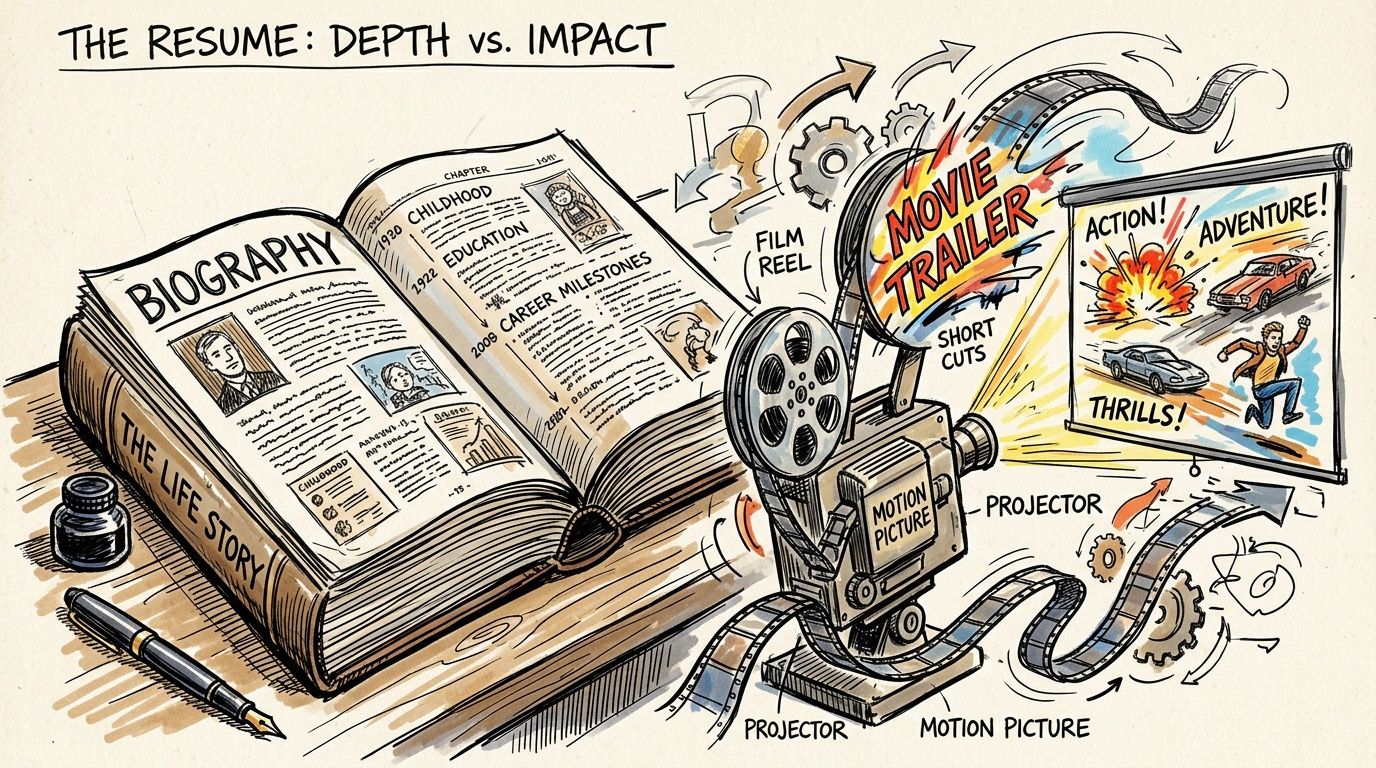
A movie trailer doesn't explain every scene. It gives the highlights, creates interest, and makes you want to see what happens next.
That's the best way to think about the purpose of a resume.
Your resume is not the full documentary of your working life. It's the trailer. Its job is to show the strongest moments, hint at what you're capable of, and earn the interview. That idea goes back a long way. The resume's roots reach to Leonardo da Vinci's 1481 to 1482 letter describing his skills to a potential employer, and today resumes still exist to concisely summarize qualifications and secure interviews. Resumes with quantified achievements are 40% more likely to land interviews, while recruiters spend under 10 seconds on their initial scan, according to Flair's resume statistics roundup.
What your trailer has to do fast
Most resumes need to pull off several jobs at once:
- Grab attention: Show quickly why you fit this role.
- Guide the scanner: Help a recruiter spot the important parts in seconds.
- Create a story: Connect your experience so your path makes sense.
- Set up the interview: Give the hiring manager things to ask about.
- Support networking: Make it easy for someone to recommend you.
If that sounds like a lot for one document, that's because it is. But it also explains why stuffing in every duty, every class, and every side note usually backfires. A trailer packed with random scenes is just noise.
Your resume should make a person think, “I want to learn more,” not “I need a nap.”
What readers often get wrong
The biggest confusion is this: people think “complete” means “effective.”
It doesn't.
A strong resume is selective. If you're writing a summary at the top, keep it focused. If you need help shaping that part, Professional Careers Training's personal statement guide gives useful examples for making the opening sound clear instead of fluffy. The same rule applies to headlines too. A sharp headline can frame your whole story in one line, which is why this guide on what a resume headline is is worth a look.
A resume is comparable to editing a trailer. You keep the scenes that prove the movie is worth watching. You cut the rest.
How the Game Changed with Skills-First Hiring
The old version of resume advice assumed something: your education would do a lot of the talking for you.
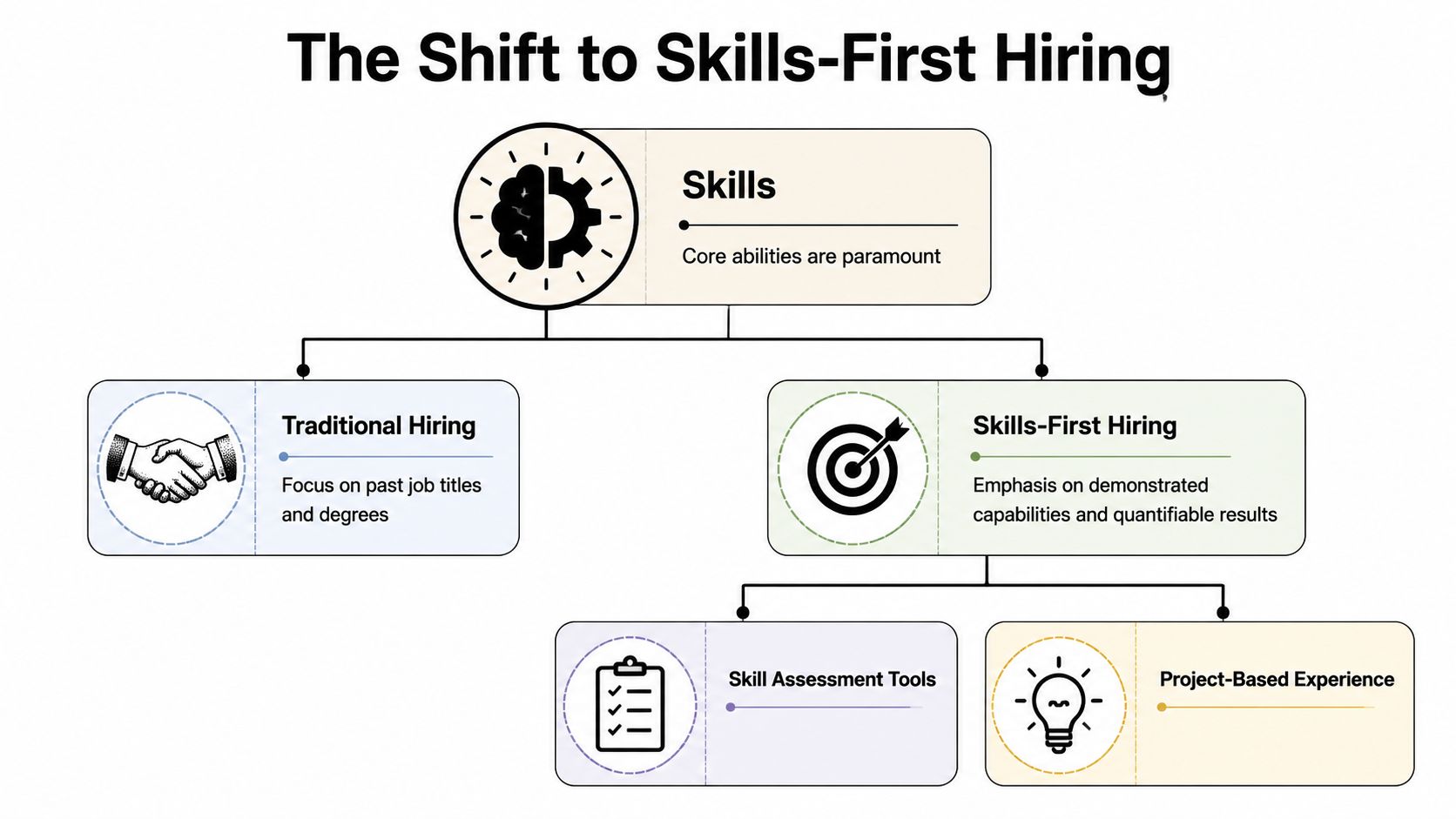
That assumption doesn't hold up as well anymore, especially for jobs where employers need proof of ability, not just proof that you sat in a classroom. For STARs, the purpose of a resume has changed. It's no longer just a career snapshot. It works more like a skills portfolio that helps employers understand what you can do right now.
According to Honor Society's article on shortened resumes, for STARs this shift to a skills portfolio approach boosts interview rates by 35%, and the same source notes that skills-based hiring is rising 20% year over year in 2025 LinkedIn reports.
The old resume logic versus the new one
Here's the difference in plain English.
| Approach | What the resume mainly proves |
|---|---|
| Traditional hiring | Where you studied, what titles you held, and whether your background looks familiar |
| Skills-first hiring | What problems you can solve, what tools you use, and what results you've created |
That change is a big deal if your best credentials came from work itself.
A veteran can highlight leadership, logistics, systems discipline, and training experience. A bootcamp graduate can feature shipped projects, GitHub work, and practical tools. A tradesperson can show certifications, safety knowledge, equipment, and measurable output. A customer support worker can show retention, call handling, training, and process improvement.
None of that is “less than” a degree. It's different evidence.
What STARs need to emphasize
A skills-first resume gives prime space to proof points such as:
- Certifications and licenses: OSHA, ServSafe, CompTIA, AWS, CDL, industry-specific credentials.
- Projects that show the work: Apps built, systems repaired, teams trained, workflows improved.
- Transferable strengths: Scheduling, troubleshooting, documentation, client communication, quality control.
- Hands-on learning: Apprenticeships, military training, freelance work, shadowing, internal promotions.
Practical rule: If a hiring manager removed your education section entirely, would your resume still prove you can do the job? If not, add stronger evidence.
If you want a grounded explanation of how employers validate ability beyond degrees, this piece on boost hiring performance with skill verification is useful background. And if you want the broader hiring context, this guide to what skills-based hiring means breaks the concept down in plain language.
A simple mindset shift is essential. You are not trying to apologize for a nontraditional path. You are trying to translate it.
Your Resumes First Job Is Beating the Bots
Before a person reads your resume, a system often does.
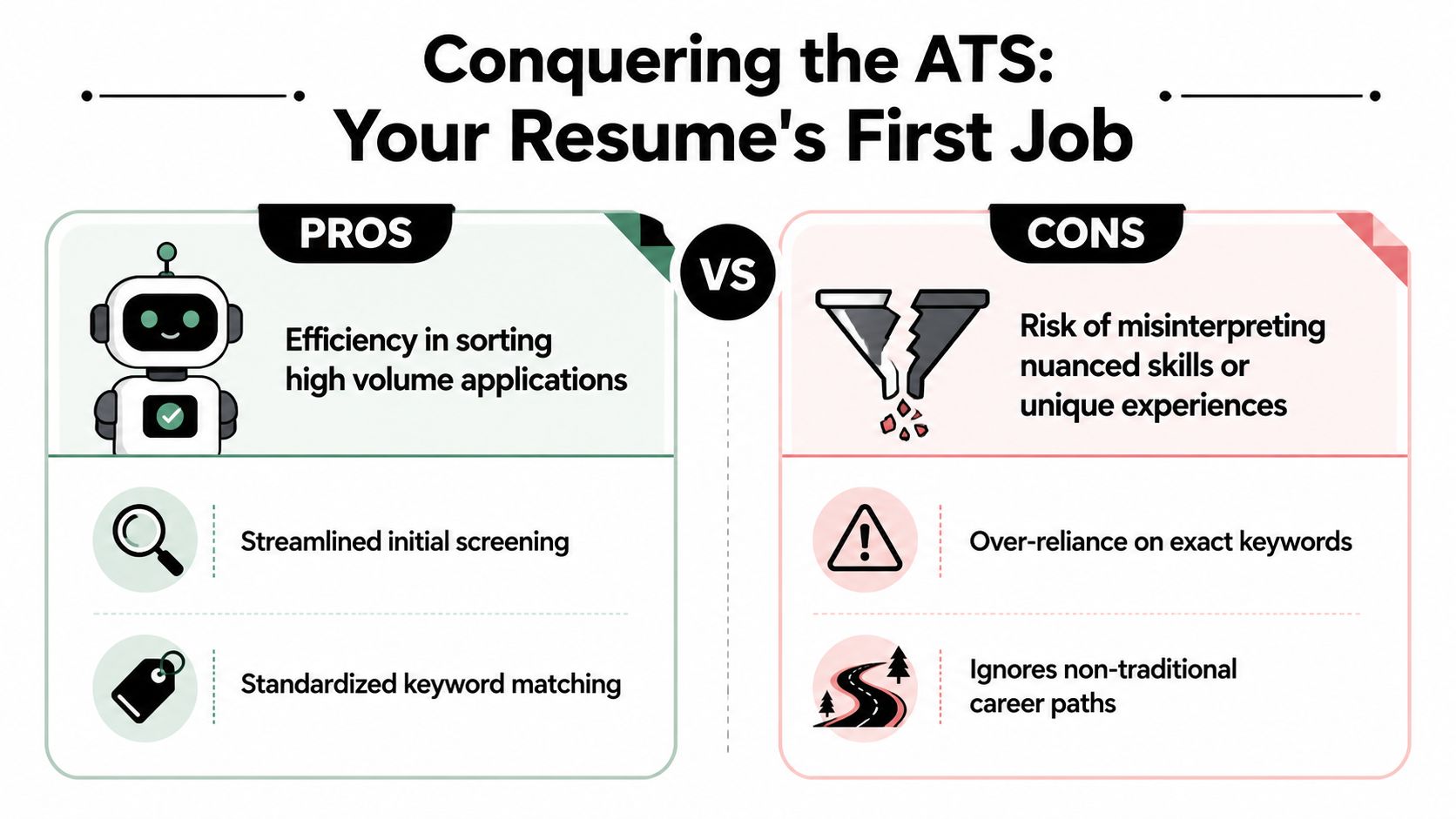
That system is usually an applicant tracking system, or ATS. Think of it as a digital bouncer. It's not deciding whether you're interesting at a dinner party. It's checking whether your resume is readable, relevant, and aligned with the job it was told to screen for.
According to the University of Houston-Downtown resume guide, with AI-driven skills-first hiring on the rise in 2026, a resume acts as a machine-readable credential. The same source cites Jobscan data saying 85% of Fortune 500 ATS reject unparsed resumes, and that using 15 to 25 specific skills keywords can increase pass rates by 50% or more.
What the bot is looking for
An ATS usually scans for structure and relevance. It wants to find recognizable sections, common job terms, and skills that match the posting.
That means fancy design can hurt you. So can unusual headings, text boxes, icons, graphics, and clever wording that a human might enjoy but software might not understand.
Here's the practical version.
- Use standard headings: Go with Experience, Skills, Education, Certifications, Projects.
- Mirror the job language: If the posting says “inventory management,” don't replace it with “stock wizardry.”
- Keep the layout simple: Single column is usually safer than a design-heavy format.
- List hard skills clearly: Tools, software, equipment, methods, and certifications should be easy to spot.
- Save storytelling for the interview: On the page, clarity wins.
A quick before and after
Weak version:
- Helped with customer issues
- Worked with team software
- Responsible for scheduling
Stronger, ATS-friendly version:
- Resolved customer support issues using Zendesk
- Tracked service requests and updates in CRM software
- Coordinated weekly staff scheduling and shift coverage
The second version is more specific, easier for a recruiter to scan, and easier for software to parse.
If a machine can't read your resume, a human won't get the chance to like it.
One more thing. Getting past the ATS is only step one. If you're targeting developer roles, you'll also need to be ready when the interview invite lands. A practical resource for that next stage is preparing for software developer interviews, especially if your resume opens the door and technical screening comes next.
Tell Your Story with Numbers Not Just Words
Once your resume gets seen, the next question is blunt: can you prove impact?
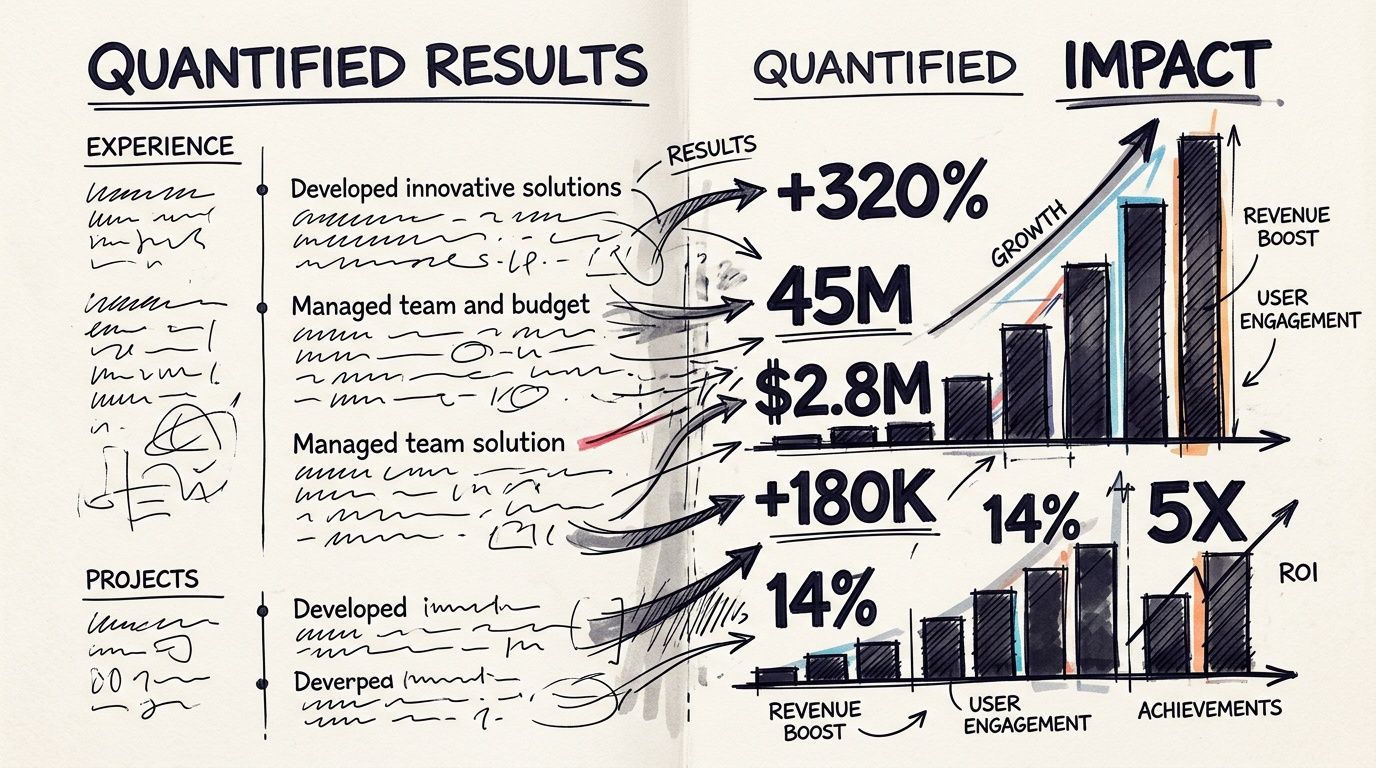
This is where a lot of resumes go soft. They list duties instead of value. They say “responsible for,” “helped with,” or “worked on.” That language tells me you were present. It doesn't tell me why you mattered.
According to Indeed's guide on quantifying your resume, resumes with quantified bullet points are 2.5 times more likely to be shortlisted, and 68% of employers value quantified results over purely qualitative descriptions.
Use STAR, but keep the spotlight on the result
You've probably heard of STAR: Situation, Task, Action, Result.
For resume bullets, you don't need to spell out the whole story like you would in an interview. You just need enough of it to show the action and the outcome. The result is the part many people skip, but it's the part that turns a bland bullet into a persuasive one.
A simple formula:
Action verb + what you did + result
Before and after examples
Here's how that looks in real life.
Retail
- Before: Assisted customers and handled store tasks
- After: Helped customers find products, processed purchases, and supported daily floor operations during busy shifts
That's better, but still not sharp. Add numbers if you have them.
- Stronger: Assisted customers, processed transactions, and supported floor operations during high-volume shifts, helping the team stay on pace during peak hours
Warehouse
- Before: Worked in shipping and receiving
- After: Managed shipping and receiving tasks, tracked incoming items, and kept orders moving accurately through the workflow
Tech project
- Before: Built a web app using React
- After: Built a React web app with user authentication, dashboard views, and API integrations as part of a portfolio project
Training role
- Before: Trained new employees
- After: Trained new employees on daily procedures, documentation, and customer workflows to shorten ramp-up time and improve consistency
If you have real numbers, use them. If you don't, don't make them up. You can still add weight through scope, pace, tools, frequency, or complexity.
Ways to quantify even when your job wasn't “about numbers”
People often think only sales or finance jobs can use metrics. Not true.
Try looking for:
- Volume: tickets handled, orders packed, customers served, shifts covered
- Frequency: daily, weekly, monthly responsibilities
- Scope: team size, number of locations, number of systems used
- Speed: reduced time, faster turnaround, quicker handoffs
- Quality: fewer errors, cleaner records, smoother operations
- Ownership: opened, trained, documented, coordinated, maintained
Quick test: Replace “responsible for” with “did what, using what, with what result?” That one question fixes a lot of weak bullets.
There's also a confidence benefit here. Writing with specifics helps you see your own experience more clearly. If you're trying to move into a new field, that matters. This article on willingness to learn is a good reminder that employers value potential, but your resume still has to show where that potential comes from.
Choosing the Right Format for Your Career Path
Resume format isn't just design. It's strategy.
The layout you choose affects what a hiring manager notices first. That matters a lot when your background doesn't move in a straight line. For many STARs, the best format is the one that puts relevant skills and proof near the top, instead of forcing a reader to decode your path.
Start with the big picture.
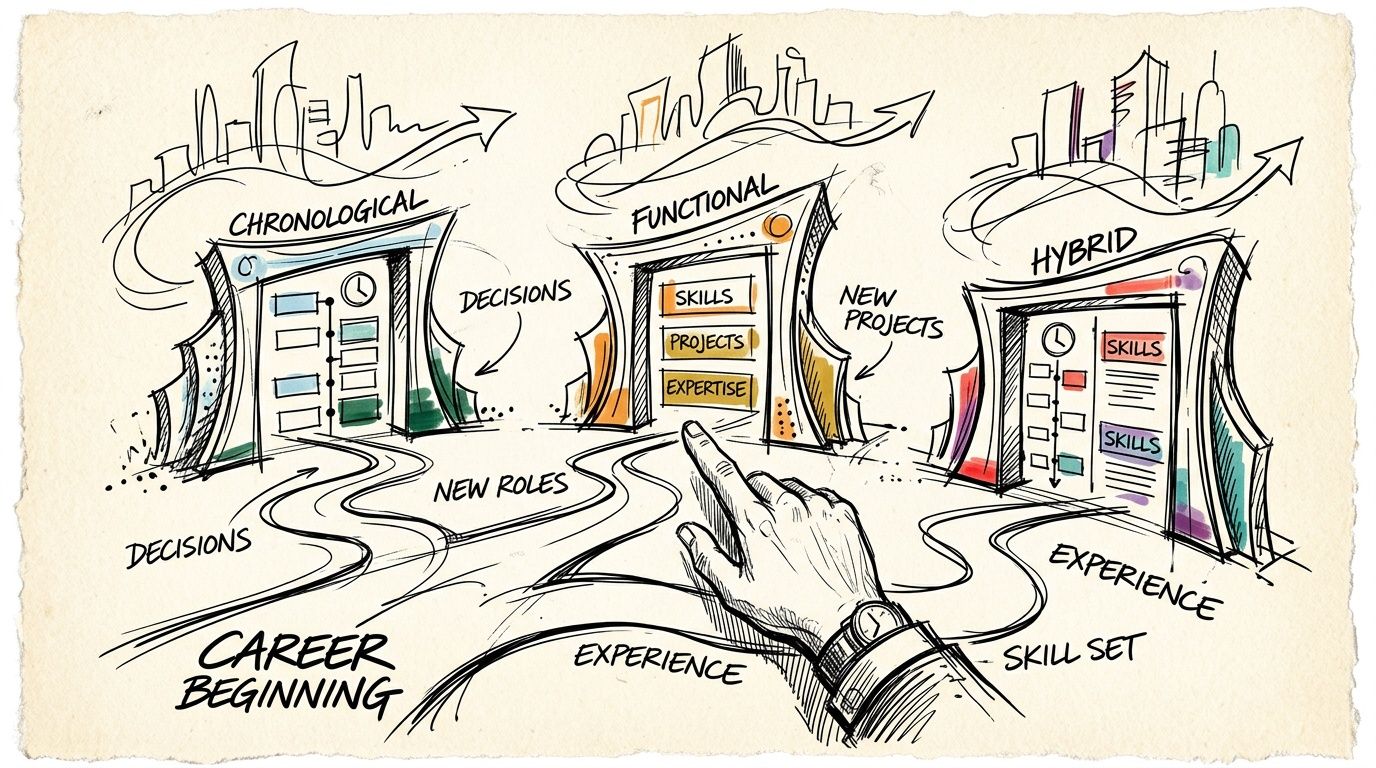
The three main formats
| Format | Best for | Watch out for |
|---|---|---|
| Chronological | People with a steady, relevant work history | Can hide transferable skills during a career pivot |
| Functional | People changing fields or emphasizing skill groups | Some employers prefer to see a clear job timeline |
| Combination | STARs with useful experience plus transferable skills | Takes more editing to keep it clean |
A chronological resume leads with job history. That works if your recent roles already line up with the target job.
A functional resume groups experience by skill area. That can help if your titles don't tell the full story. A veteran, for example, might lead with operations, team leadership, logistics, and training instead of expecting a civilian employer to interpret military titles correctly.
A combination resume mixes both. For many STARs, that's the sweet spot.
Why the skills section matters so much
For career pivots, a dedicated skills section can do heavy lifting. According to MyPerfectResume's technical skills guide, Yale OCS data shows that structured skills sections can improve a trades or tech pivot success by 35% when they clearly list proficiencies employers scan for.
That's why format and section order matter. Put your strongest, most relevant evidence where tired human eyes can find it fast.
If you want a side-by-side breakdown before choosing, this guide on chronological vs functional resume formats is a practical next read.
A short visual explainer can help if you're still torn between layouts:
Your Resume Is Done Now Put It to Work
A polished resume sitting in a folder is like a great movie trailer nobody ever sees.
The whole point of this document is movement. It should help you get found, get screened in, and get invited to talk. For STARs, that means using it as a skills-marketing tool, not a career confession booth. Lead with what you can do. Show proof. Keep it readable. Make it easy for both software and humans to say yes to the next step.
Then use it where it fits.
One practical option is HiredBySkill, a skills-first job platform for degree-optional roles. It includes tools such as a resume builder and a feature that lets you paste your resume to check how well it matches a role. That kind of feedback is useful when you're tailoring applications and trying to make your skills easier to spot.
A resume works best when it opens a conversation. The interview is where you bring the full film.
When those interviews start coming in, don't stop at the document. Prep for the conversation too. These questions for job interviews can help you turn your resume bullets into strong, clear talking points.
Your path doesn't need to look traditional to look valuable. It just needs translation.
If you're ready to use your resume instead of endlessly tweaking it, explore HiredBySkill. You can search degree-optional jobs, filter by industry or location, and use the platform's tools to shape a resume that puts your skills front and center.