7 STAR Method Resume Examples to Land a Job in 2026
Struggling to write your resume? Steal these 7 STAR method resume examples for tech, trades, and more. Perfect for skills-first job seekers!
Your resume is a story. The STAR method is your pen.
You've got the skills. You've put in the work. But your resume still reads like a stale list of duties: answered phones, fixed issues, helped customers, supported the team. That kind of resume doesn't show what you're skilled at. It just shows that you showed up.
That's the problem. Recruiters scan fast, and task lists blur together. A stronger resume shows context, action, and proof. The STAR method, built around Situation, Task, Action, and Result, helps you do exactly that, and major career guidance sources consistently recommend turning experience into concise, outcome-focused bullets with measurable impact when possible, rather than vague responsibility lists (Indeed's STAR resume guide).
If you're a STAR in the other sense too, meaning skilled through alternative routes, this matters even more. Military service, apprenticeships, bootcamps, certifications, shift work, and hands-on experience all build real ability. Your resume just has to make that ability obvious. If you want extra practice for interviews after rewriting your bullets, this list pairs nicely with these sample behavioral interview questions.
Table of Contents
- 1. Technical Problem-Solving in Software Development
- 2. Military Experience Translating to Civilian Technical Skills
- 3. Apprenticeship and Hands-On Trade Skills Mastery
- 4. Customer Service Excellence and Revenue Impact
- 5. Project Leadership and Cross-Functional Collaboration
- 6. Self-Directed Learning and Skill Acquisition Through Bootcamps or Online Platforms
- 7. Cost Reduction and Efficiency Improvement Through Process Innovation
- 7-Point STAR Resume Comparison
- Now, Go Write Your Success Story
1. Technical Problem-Solving in Software Development

A hiring manager opens your resume and sees “Built a React app.” That tells them almost nothing. For STAR candidates, especially bootcamp grads and self-taught developers, the stronger move is to show the technical problem you handled, the choice you made, and the result a user or team experienced.
That is the difference between a class project and evidence of job-ready judgment.
For software roles, a good bullet reads like a short incident summary with a business outcome attached. Resume Genius makes this point well in its guide to STAR resume bullets. The strongest examples explain the issue, the action, and the result without wasting space on generic task language.
Show the issue, the action, and the impact
Weak:
- Helped improve app performance
- Worked on frontend updates
- Fixed issues in production
Stronger:
- Investigated slow search results in a React storefront, reduced unnecessary API calls, and improved response time for shoppers during peak use
- Traced repeated login failures in a Node.js app to broken session handling, fixed the auth flow, and restored reliable sign-in
- Reworked tangled CSS and component logic in a dashboard, cutting update time for new features and making the UI easier to maintain
These bullets work because they show technical reasoning. Recruiters can see what went wrong, what part of the system you touched, and whether you solved a real problem instead of just following a tutorial.
Numbers help, but they are not required. I would rather see a clear before-and-after story than a vague bullet stuffed with tools. “Used Python” is filler. “Used Python to automate invoice parsing and reduce manual review for operations staff” shows purpose.
Bootcamp and no-degree candidates often have one extra hurdle. They need to prove that project work was more than coursework. So name the constraint. Mention the bug, bottleneck, or user complaint. If the project is polished, include a GitHub repo or live demo on the resume itself.
That framing matters for the HiredBySkill audience because STAR resumes win by making skills visible, not by hoping a degree fills in the gaps. If you are still building that story, this guide on how to become a software developer without a degree can help you position your path clearly.
One practical rule I give clients. Every software bullet should answer this question: what got better because you were there? If the bullet cannot answer that, rewrite it until it can.
2. Military Experience Translating to Civilian Technical Skills
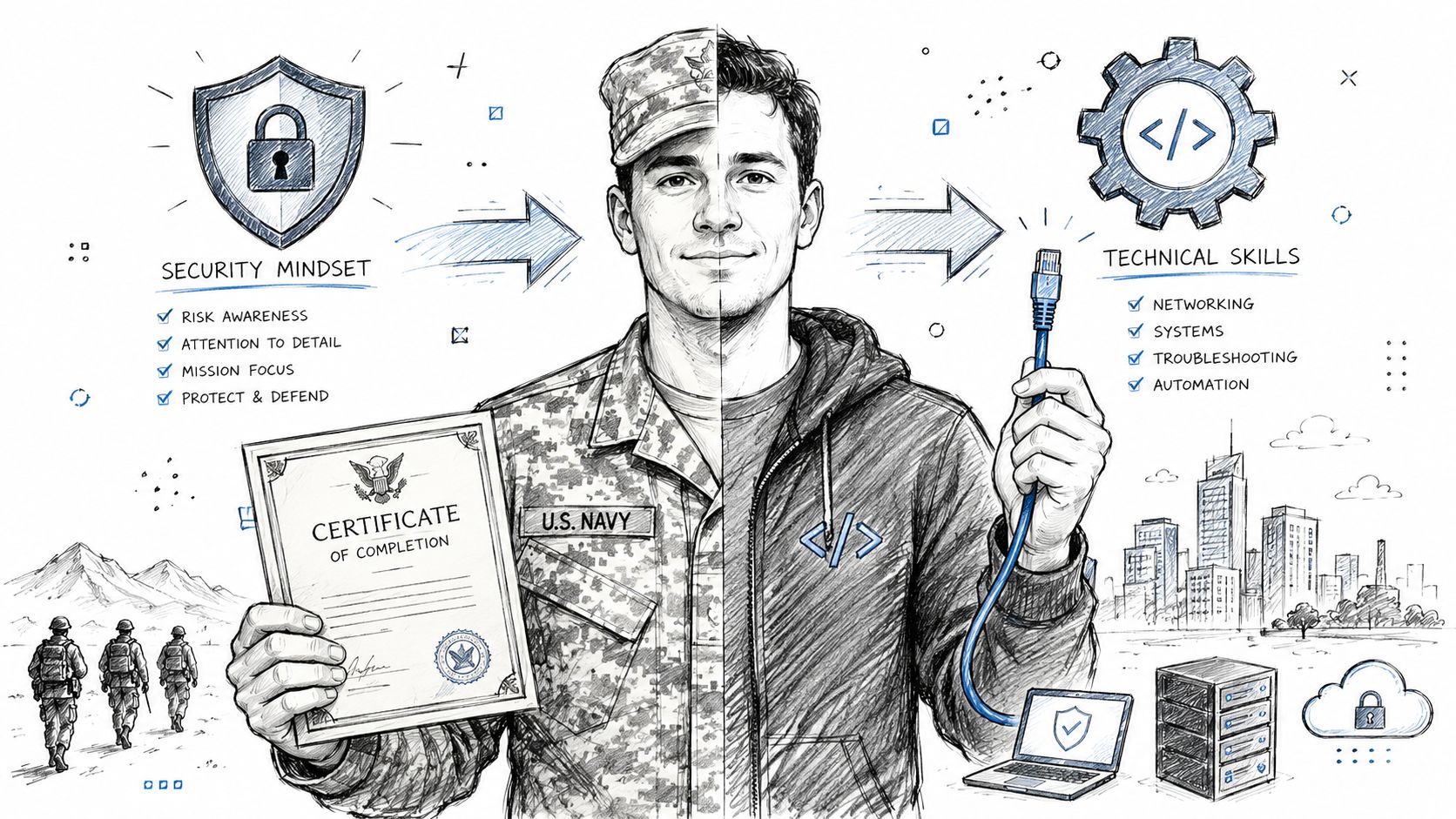
Veterans often undersell themselves by keeping the language too internal. The experience is strong. The wording is what trips people up. Civilian recruiters might not know the difference between your unit responsibilities and your day-to-day technical work.
So translate first. Then write the bullet.
Translate the role before you describe the win
“Managed communications systems for battalion operations” might be completely accurate, but it's still fuzzy to a private-sector hiring team. Try this instead:
- Supported secure network operations in high-reliability environments, troubleshooting outages and maintaining continuity for mission-critical communications
- Trained personnel on technical procedures, compliance requirements, and equipment use in fast-moving operational settings
- Coordinated logistics, inventory, or systems readiness across multiple teams under strict deadlines
That reads civilian. It also preserves what matters: complexity, trust, training, and reliability.
Military experience often maps cleanly to operations, IT support, cybersecurity, logistics, compliance, and team leadership. The trick is naming the work in commercial terms without watering it down.
A stronger civilian-friendly example
Weak:
- Served as squad leader responsible for equipment and personnel
Stronger:
- Led team operations, maintained accountability for equipment readiness, and trained new personnel on procedures that supported safe, consistent execution
Another:
- Monitored secure systems, followed compliance protocols, and responded quickly to technical issues in high-stakes environments
You'll notice these examples don't invent flashy metrics. That matters. Plenty of service members have impact that is obvious but not publicly quantifiable. A credible bullet beats an exaggerated one every time.
If you're converting service experience into recruiter-friendly language, this walkthrough on translating military experience to a civilian resume is a useful next step.
3. Apprenticeship and Hands-On Trade Skills Mastery

Trade resumes get weak when they sound like generic labor. Strong trade resumes show skill progression, code awareness, safety habits, and the ability to work cleanly with other people on real deadlines.
That's good news for apprentices. You don't need a polished corporate background. You need proof that someone trusted you with real work and that you grew.
Use proof that hiring managers already trust
For apprenticeships and hands-on roles, the proof points are often different from office jobs:
- Licenses and credentials: Put certifications, permits, and training near the top.
- Equipment and systems: Name the tools, machinery, or systems you can handle safely.
- Code and safety: Mention inspections, standards, lockout procedures, or compliance habits.
- Training progression: Show how your responsibilities expanded over time.
A resume bullet in the trades can absolutely use STAR without sounding stiff. In fact, it often sounds more believable because the work is so concrete.
Trade resume bullets that sound real
Examples:
- Assisted with commercial HVAC installations, coordinated material prep, and supported lead technicians to keep projects moving on schedule
- Applied updated code requirements during residential electrical work, completed pre-inspection checks, and helped reduce avoidable rework
- Learned diagnostic procedures under journeyman supervision, handled service calls professionally, and built trust with repeat customers
What doesn't work is padding. “Dynamic team player with strong work ethic” says nothing. “Completed installs safely, maintained organized work areas, and followed inspection-ready procedures” says much more.
Field note: In the trades, reliability is a result. So is safety. If you don't have clean revenue numbers, use evidence like passing inspections, fewer callbacks, stronger customer trust, or broader task ownership.
If you're building that path right now, these resources on trade apprenticeship programs can help you find the next credential or training step.
4. Customer Service Excellence and Revenue Impact
Customer-facing roles create more resume value than people think. The problem is that most resumes bury it under phrases like “assisted customers” and “resolved complaints.” Those bullets are true, but they're asleep.
Customer service STAR bullets wake them up.
When the result isn't neatly tracked
This is one of the biggest gaps in a lot of star method resume examples. Guidance usually pushes candidates toward percentages, dollars, and time saved. That's useful, but it leaves out huge groups of workers in retail, hospitality, caregiving, food service, and early-career support roles. Resume-Now's discussion points to this exact problem and notes that workers skilled through alternative routes often need help translating reliability, customer satisfaction, safety, task volume, training, and peer support into resume language without making numbers up (Resume-Now on STAR resumes and STAR workers).
If you don't have a dashboard full of metrics, use credible outcomes:
- Fewer escalations
- Smoother handoffs
- Repeat customer trust
- Cleaner shift transitions
- Faster problem resolution
- Better onboarding for new teammates
Examples for retail, hospitality, and support
Try bullets like these:
- De-escalated customer issues calmly, coordinated with supervisors when needed, and helped preserve positive service experiences during busy shifts
- Improved front-desk flow by organizing check-in steps and communicating clearly with guests, reducing confusion during peak periods
- Trained new hires on POS procedures, customer communication, and store standards so they could contribute faster and make fewer avoidable mistakes
These bullets work because they show action and result, even without hard numbers.
What usually fails is this:
- Responsible for customer satisfaction
- Helped customers with questions
- Worked in a fast-paced environment
Those aren't achievements. They're job descriptions.
5. Project Leadership and Cross-Functional Collaboration
A lot of STARs undersell this part.
Someone on the team had to keep the rollout on track, translate between departments, catch blockers early, and ensure the work landed. In no-degree roles, military transitions, apprenticeships, and bootcamp-heavy paths, that person is often not the one with the leadership title. It is the one people trust when work starts getting messy.
That belongs on a resume.
Strong STAR bullets for project leadership show how you handled coordination across functions, not just that you participated. Recruiters scan for evidence that you can organize people, priorities, and timelines. They want to see who you worked with, how you kept progress moving, and what changed because of your involvement.
A simple formula works well:
- Scope: Which teams, stakeholders, or partners were involved
- Action: How you coordinated communication, priorities, or handoffs
- Outcome: What improved, such as fewer delays, faster adoption, or clearer execution
Here is the difference.
Weak:
- Worked with multiple departments on new system rollout
Stronger:
- Coordinated operations, support, and finance teams during a system rollout, tracked open issues, and kept implementation on schedule through weekly follow-ups and clear owner assignments
Another strong example:
- Led communication between warehouse staff, supervisors, and vendors during a process change, clarified new procedures, and helped the team adopt updated steps with minimal disruption
For STAR candidates, this section is often where real-world leadership shows up. A former service member may have coordinated logistics across units. An apprentice may have kept field crews, suppliers, and inspectors aligned. A bootcamp grad may have served as the link between product, design, and engineering on a capstone or freelance build. Different settings, same hiring signal. You can get people moving in the same direction.
One caution. Do not inflate your role into full project ownership if you were really the point person for one piece of the work. Hiring managers can spot that fast. A better move is to name your actual lane clearly and show the effect of your coordination.
If you need help deciding where to place leadership examples, certifications, and applied skills, this guide to how to present qualifications on a resume can help.
6. Self-Directed Learning and Skill Acquisition Through Bootcamps or Online Platforms

A hiring manager opens your resume, sees a bootcamp, and asks one question right away. What can this person do now?
That is the standard STAR candidates need to meet. A certificate can help you get past the first glance, but proof of applied skill is what gets interviews. For no-degree candidates, bootcamp grads, and self-taught career changers, the strongest resume bullets show that you learned fast, practiced on real work, and produced something useful.
Applied learning is the story
Good bullets in this category connect three things clearly:
- what you learned
- where you used it
- what happened because you used it
Examples:
- Completed a data analytics program, built SQL queries and spreadsheet reports for current operations work, and helped the team spot recurring inventory issues faster
- Finished cybersecurity training, created a home lab to practice log review and incident response, and documented repeatable steps for common alerts
- Learned front-end development through a bootcamp, shipped portfolio projects with responsive layouts, and improved code quality based on recruiter and mentor feedback
These bullets work because they show behavior, not just coursework. You committed time, practiced outside a formal degree path, and turned training into output.
That matters for the HiredBySkill audience. STARs often gain skills through alternative routes because they are already working, supporting families, leaving the military, or changing fields without the luxury of a four-year reset. Employers who hire for ability over pedigree want evidence that the learning stuck.
What employers actually want to see
Self-directed learning bullets usually get stronger when they include a few concrete details:
- The program or training: freeCodeCamp, General Assembly, Springboard, Google Career Certificates, AWS Training, CompTIA
- The applied work: portfolio site, GitHub project, dashboard, script, home lab, freelance build, volunteer project
- The working habits behind the result: consistency, iteration, troubleshooting, documentation, follow-through
A practical trade-off comes up here. You do not need to list every course you ever finished. A long stack of certificates can make a resume look busy and light on proof. Pick the training that matches the job, then spend more space on the project, tool, or result that shows you can use it.
If you want resume language that shows initiative without sounding forced, this guide to how to describe willingness to learn on a resume gives useful phrasing.
One more coaching note. Bootcamp grads sometimes undersell freelance work, capstones, and self-initiated builds because they were not "official" jobs. Put the work on the page anyway if it reflects the skills the target role requires. If you built, tested, debugged, documented, and shipped it, that is relevant experience.
7. Cost Reduction and Efficiency Improvement Through Process Innovation

Process bullets are some of the strongest star method resume examples because they show business thinking. You saw friction, changed something practical, and made work easier, faster, safer, or cleaner.
This category is especially good for operations staff, coordinators, admins, technicians, dispatchers, support teams, and people who've steadily been holding broken systems together for years.
Process wins are resume gold
A process-improvement bullet usually has a clear shape:
- There was a repeated issue
- You noticed the pattern
- You changed the workflow
- Work got smoother afterward
Examples:
- Reorganized intake steps for new customer requests, created a simpler handoff process, and reduced confusion between sales and support
- Standardized file naming and tracking across shared folders, making documents easier to find and reducing duplicate work
- Built a checklist for shift opening and closing tasks, helping the team stay consistent across busy handoffs
These bullets work because they show judgment. You didn't just complete tasks. You improved the system.
The best process bullets often come from jobs people underestimate, front desk, warehouse, scheduling, dispatch, reception, retail lead, service coordination. If you fixed chaos, that's resume material.
Examples when you do have metrics and when you don't
When you have clean metrics, use them once and use them well. myPerfectCV gives examples such as a 20% sales increase or a 15% reduction in processing time to show how short, metric-driven STAR bullets can make impact obvious fast (myPerfectCV examples summarized by National Careers Service guidance).
When you don't have metrics, don't force fake precision. Use observable outcomes instead:
- fewer mistakes
- faster onboarding
- cleaner documentation
- easier training
- more consistent execution
- less back-and-forth between teams
A short visual refresher can help if process bullets still feel abstract:
The biggest mistake here is claiming “saved money” or “improved efficiency” with no proof at all. If you can't cite a number, describe the operational change plainly. Honest specificity beats vague bragging every time.
7-Point STAR Resume Comparison
| Example | 🔄 Implementation complexity | ⚡ Resource requirements | 📊 Expected outcomes | 💡 Ideal use cases | ⭐ Key advantages |
|---|---|---|---|---|---|
| Technical Problem-Solving in Software Development | Medium–High: requires debugging, refactoring, and testing | Moderate: developer time, test environments, specific tech stack | High: measurable performance gains, fewer bugs, improved engagement | Bootcamp grads, self-taught developers, roles valuing portfolios | Demonstrates hands‑on technical skill and concrete metrics |
| Military Experience Translating to Civilian Technical Skills | Medium: translate terminology and map responsibilities | Moderate: certifications, documentation, veteran support resources | High: leadership, compliance, and security outcomes often measurable | Veterans moving into IT, cybersecurity, logistics, management | Shows discipline, certifications, high‑pressure problem solving |
| Apprenticeship and Hands-On Trade Skills Mastery | Medium: hands‑on training, safety and code compliance | Moderate–High: tools, on‑site projects, certified instructors | High: visible project completion, safety records, client retention | HVAC, electrical, plumbing, welding, construction trades | Tangible results, recognized apprenticeship credentials |
| Customer Service Excellence and Revenue Impact | Low–Medium: process tweaks, training, follow‑up systems | Low–Moderate: training time, CRM or feedback tools | Moderate–High: improved NPS/CSAT, retention, revenue per customer | Hospitality, retail, healthcare support, customer success | Translates soft skills into measurable business outcomes |
| Project Leadership and Cross-Functional Collaboration | High: coordination across teams, timelines and budgets | Moderate: project tools, stakeholder time, meeting cadence | High: on‑time delivery, budget adherence, team development | Operations, product launches, system integrations, promotions | Proves leadership and organizational ability without formal degree |
| Self-Directed Learning and Skill Acquisition (Bootcamps/Online) | Low–Medium: learning plus practical application | Low–Moderate: course fees, self‑study time, portfolio work | Moderate–High: promotions, role changes, immediate applied value | Career pivots, entry‑level tech roles, fast reskilling needs | Demonstrates initiative, rapid upskilling, and applied outcomes |
| Cost Reduction and Efficiency Improvement Through Process Innovation | Medium–High: process analysis, automation, change management | Moderate: automation tools, analytics, stakeholder engagement | High: quantifiable savings and productivity gains (dollars/% time) | Operations, logistics, manufacturing, administrative processes | Direct ROI, scalable efficiency improvements and measurable impact |
Now, Go Write Your Success Story
These examples aren't meant to turn your resume into a robotic formula. They're meant to help you see your own work differently. Every job has problems, pressure, decisions, and outcomes. The STAR method just gives you a clean way to show them.
That matters even more if you're a worker skilled through alternative routes. A degree is only one way people learn how to solve problems. Plenty of strong candidates learned through military service, apprenticeships, certifications, shift work, online programs, caregiving, retail, logistics, and years of doing the job well. A good resume makes that experience legible.
Keep the trade-offs in mind. If you have hard numbers, use them. One clear metric can replace a whole paragraph. Resume guidance commonly points to examples like a 12% error-rate reduction as proof that a quantified result can say more than a long description of duties (Zety's STAR bullet example). But if you don't have clean metrics, don't freeze and don't invent. Use real evidence like smoother operations, stronger customer trust, successful training, better compliance, fewer handoff issues, or broader ownership.
Also keep your bullets short. Tight, scannable writing wins. Career guidance from major resume resources consistently points toward concise, metric-rich statements rather than dense narrative paragraphs, because recruiters need to scan quickly and ATS systems parse cleaner language more easily. That doesn't mean your resume has to sound cold. It just means every line should pull its weight.
A simple gut check helps. After each bullet, ask:
- What was happening?
- What did I own?
- What did I do?
- What changed because of me?
If you can answer those four questions, you've probably got a strong bullet. If the line still sounds like a job description, tighten it until it sounds like evidence.
And yes, tailor the bullets. Don't send the same version everywhere. Pick the situations and outcomes that match the role in front of you. The best resumes don't tell your whole life story. They tell the parts of the story that prove fit.
If you're looking for degree-optional roles that value skills, certifications, and experience, HiredBySkill is one relevant place to search. It's built around skills-first hiring and supports candidates coming from nontraditional paths.
If you're ready to turn your experience into a stronger resume and find roles that don't require a college degree, browse HiredBySkill for skills-first job openings, resume tools, and career resources built for STARs.
Latest jobs
- Driver - Mini Bulk/Coolift/Rapid/Utility - Macon — Ozarks Coca-Cola-Dr Pepper Bottling Company
- Business Services Manager - Macon — Ozarks Coca-Cola-Dr Pepper Bottling Company
- Merchandiser - Macon — Ozarks Coca-Cola-Dr Pepper Bottling Company
- Field Sales Manager - Macon — Ozarks Coca-Cola-Dr Pepper Bottling Company
- Order Builder Loader - Macon — Ozarks Coca-Cola-Dr Pepper Bottling Company
- Automotive Yard Hand - Prestige Used Cars — Dutton Automotive
- Cashier — Gas N Wash
- Bakery Technician — Polly Country Market